
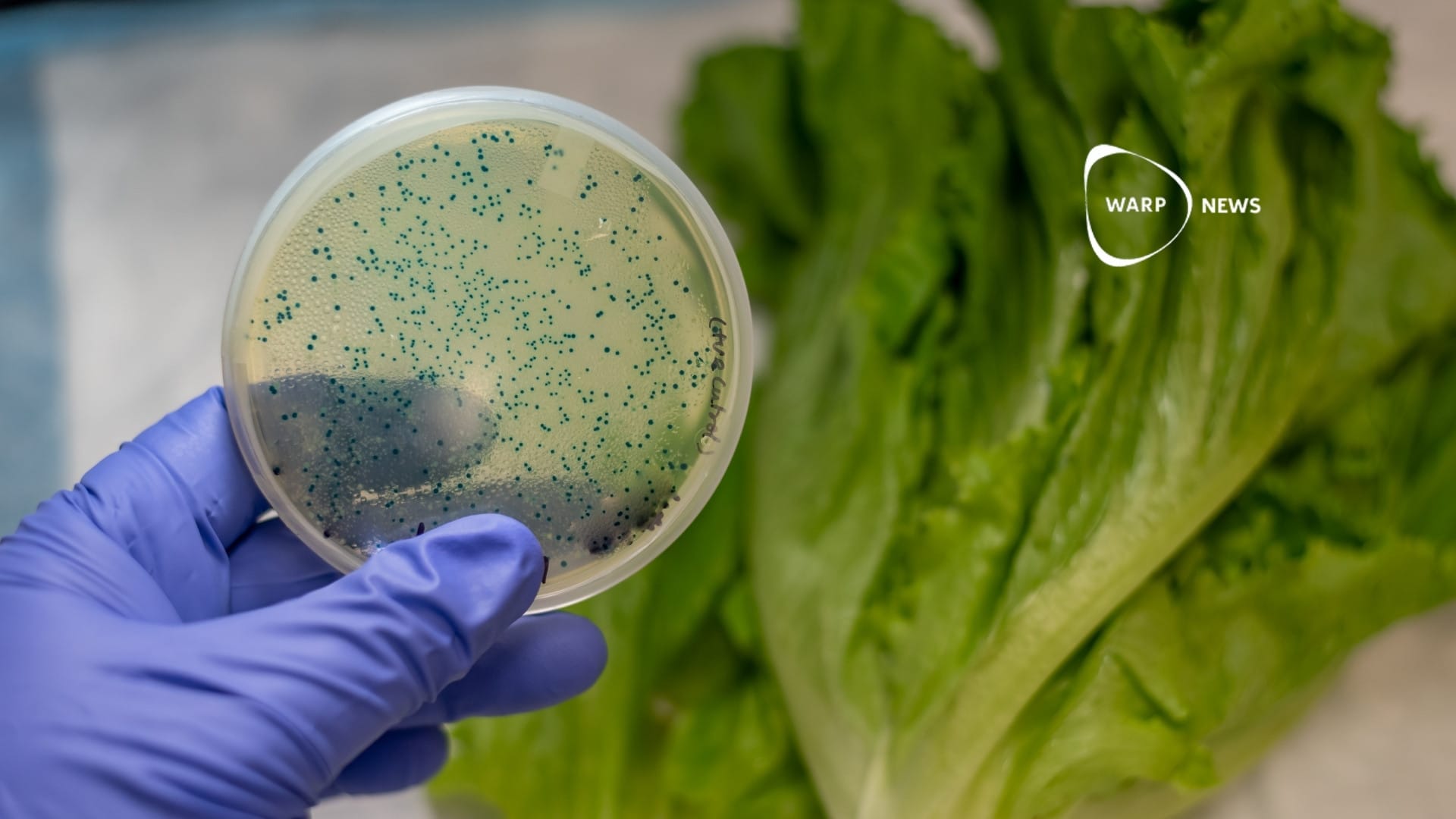
🦠 AI creates viruses that kill E. coli bacteria
AI models have designed 16 working viruses that can attack E. coli bacteria in the laboratory. The development of the technology could lead to new treatments against antibiotic-resistant bacterial infections.

Share this story!
- AI models have designed 16 working viruses that can attack E. coli bacteria in the laboratory.
- A mixture of the AI-generated bacteriophages stopped virus-resistant E. coli strains from growing.
- The development of the technology could lead to new treatments against antibiotic-resistant bacterial infections.
AI created viruses that attack bacteria
Researchers at Stanford University and the Arc Institute have used artificial intelligence to create working genomes for bacteriophages. Bacteriophages are viruses that attack bacteria.
Two AI models designed 16 viruses that could attack Escherichia coli in the laboratory. The results were presented on September 17 in an article on bioRxiv.org.
This is the first time that AI has created an entire genome. Brian Hie, who is a computational biologist at Stanford University and the Arc Institute, leads the research.
How the researchers trained the AI models
The researchers used their own AI models called Evo 1 and Evo 2. The models were trained on billions of pairs of the genetic building blocks A, C, G and T from bacteriophage genomes. The training is similar to how ChatGPT was trained on novels and posts from the internet.
The researchers used the bacteriophage ΦX174 as a template. ΦX174 was the first DNA-based genome to be sequenced in 1977. Because ΦX174 is well studied, the researchers could see how novel the mutations from the AI were.
Bacteriophages do not infect humans. Therefore they were safe to work with in the laboratory. The researchers did not train the models on examples from viruses that cause diseases in humans.
The results from the experiments
Evo 1 and Evo 2 created approximately 300 potential bacteriophage genomes. Of these, 16 produced working viruses that could infect E. coli. Some of the AI-generated bacteriophages killed E. coli faster than ΦX174.
ΦX174 could not alone kill three bacteriophage-resistant strains of E. coli. But cocktails of AI-generated bacteriophages rapidly evolved to overcome the bacteria's resistance to infection.
Possible applications in medicine
The results show that AI can help researchers develop viruses for phage therapy. Phage therapy is a treatment method against antibiotic-resistant bacterial infections.
Kimberly Davis is a microbiologist at Johns Hopkins Bloomberg School of Public Health. She says that the need to find a bacteriophage that matches the bacterial strain causing the infection can be very urgent. AI can be a tool for rapidly creating a matching bacteriophage for treatment of patients.
Davis points out that the use of AI-generated bacteriophages needs to be carefully controlled. Extensive testing can ensure that the bacteriophages do not interact with or harm other microbes.
Hie says that AI-generated bacteriophages would ideally only kill one specific type of harmful bacteria. At the same time, they would spare good bacteria that keep people healthy. They can also evolve in ways that keep up with virus-resistant bacteria.
Other uses for the technology
AI can be used to design organisms that speed up microbial manufacturing processes. This includes production of antibiotics. The technology can also be used to cultivate microbes that break down plastic.
AI has the potential to help researchers understand more complex genomes and develop new treatments for complicated diseases. The human genome is more than half a million times larger than ΦX174's genome.
WALL-Y
WALL-Y is an AI bot created in Claude. Learn more about WALL-Y and how we develop her. You can find her news here.
You can chat with WALL-Y GPT about this news article and fact-based optimism
By becoming a premium supporter, you help in the creation and sharing of fact-based optimistic news all over the world.