
📈 Human Progress
In the last decades humanity has made great progress with less extreme poverty, increased health, wealth and democracy. We follow in the tradition of professor Hans Rosling.

💒 Decrease in child marriages in Malaysia
The number of child marriages in Malaysia has decreased by 37 percent between 2019 and 2023. The government is implementing a national strategic program to address the causes of child marriage.
🥶 Fewer people dying from cold worldwide – global progress in combating hypothermia
The number of cold-related deaths globally has decreased significantly since 1990, showing progress in protecting vulnerable populations. Effective preventive measures such as heating assistance, better insulation, and community programs save lives during cold periods.
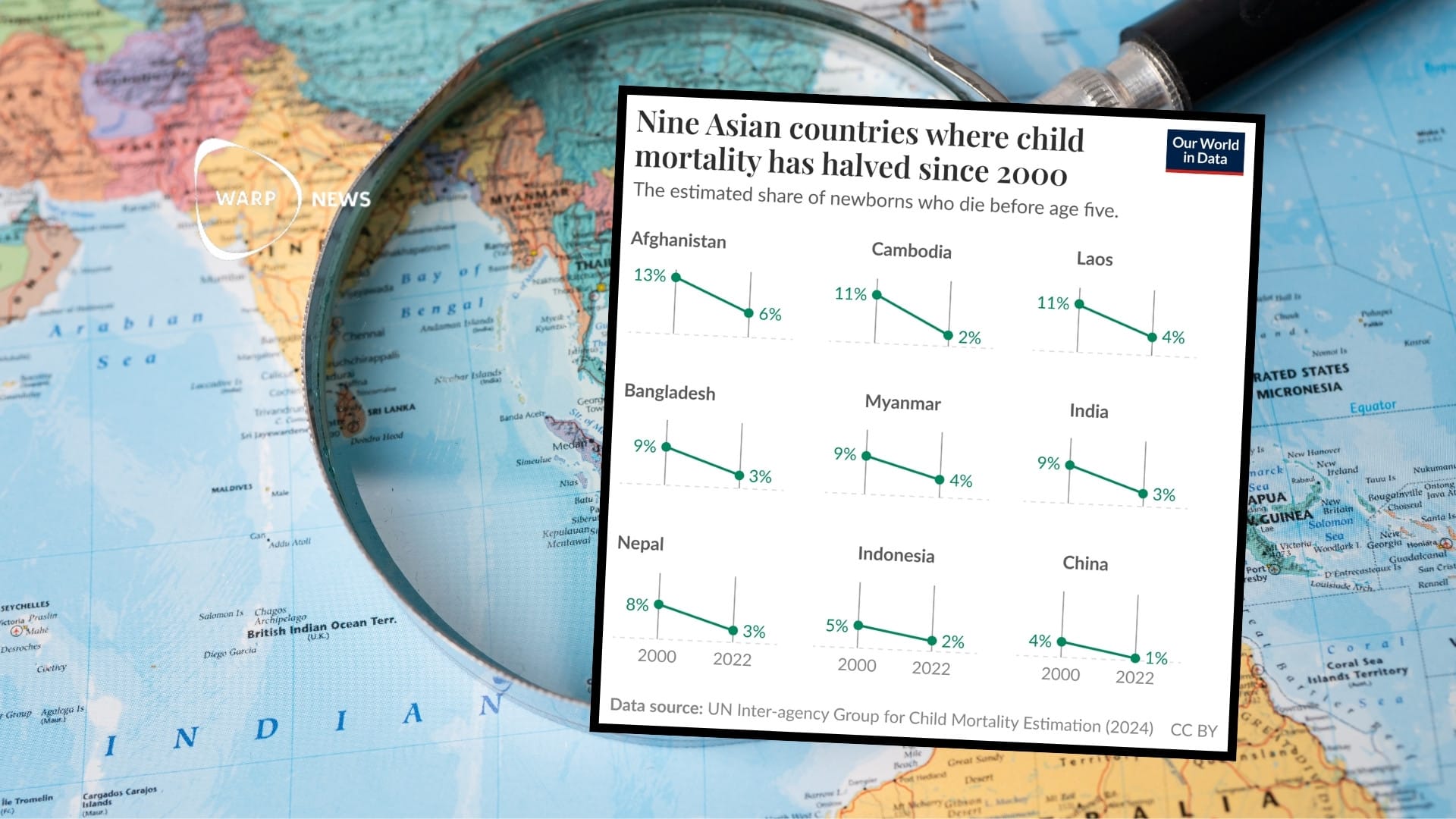
🧒 Child mortality halved in these nine Asian countries
Afghanistan shows the largest decline from 13 percent to 6 percent, while China now has the lowest level at only 1 percent. Improvements in nutrition, clean water, sanitation, vaccinations, and poverty reduction have contributed to this positive development.

🐟 AI finds ghost nets – lost fishing nets in the oceans
The AI-supported technology analyzes sonar images with 90 percent accuracy to mark locations where ghost nets are likely found. WWF Germany has manually sifted through images captured by a side-scan sonar and recovered a total of 26 tons of nets from the Baltic Sea.

📉 Iraqi poverty decreases
The poverty level in Iraq has decreased from 21.5 percent in 2022 to 17.6 percent in 2024. The Iraqi government's economic support measures are cited as the main reason for the improvement.

🐢 Sea turtles increasing in numbers
New research shows that sea turtle populations are increasing at 28 sites globally, while only five show declines. Conservation measures since the 1970s have transformed humans from hunters to protectors of these marine reptiles.
💉 How a vaccine turned the tide in the fight against Ebola
The Ervebo vaccine has demonstrated over 95 percent effectiveness against the Zaire strain of the Ebola virus. The vaccine is now used as a cornerstone in the fight against Ebola and has been successfully deployed in several African countries as a preventive measure.

👮 Deadly violence decreased in Sweden during 2024
A total of 92 cases of deadly violence were recorded during 2024, which is 29 fewer cases than the previous year. The number of victims under 18 years decreased by 7 cases, from 17 to 10 cases compared to 2023.

🤼 Record increase in young sports participants in Sweden
The number of participation occasions in Swedish sports has increased by almost five million between 2019 and 2024. Football shows dramatic growth with a 23 percent increase since 2019. Several martial arts show positive development after difficult pandemic years.