
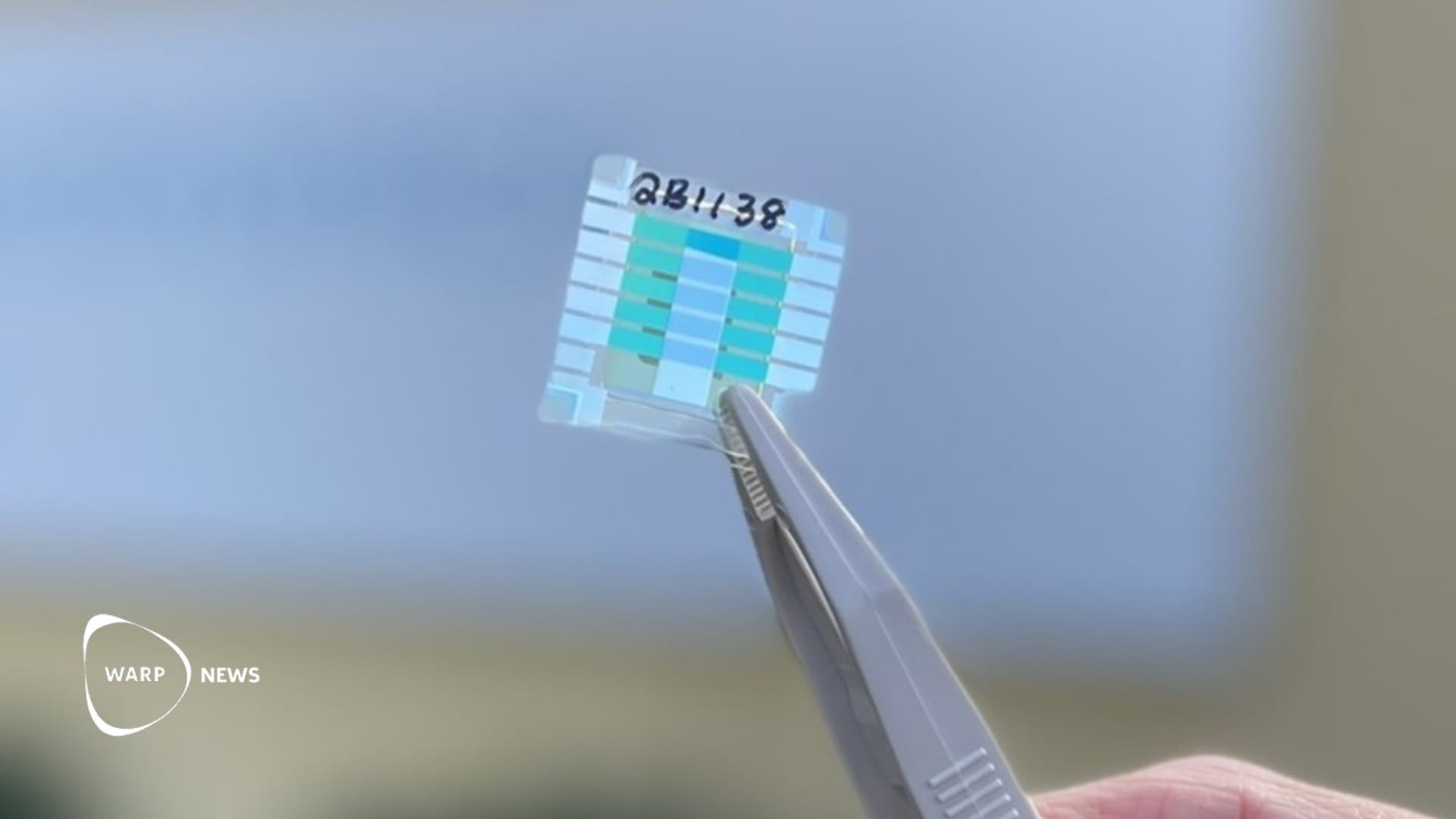
🔋 World's first quantum battery charges faster the larger it gets
Researchers at CSIRO have created a working prototype quantum battery that charges wirelessly with a laser and completes a full battery cycle: charging, storing, and discharging energy. Unlike conventional batteries, quantum batteries charge faster the larger they are.

Share this story!
- Researchers at CSIRO have created a working prototype quantum battery that charges wirelessly with a laser and completes a full battery cycle: charging, storing, and discharging energy.
- Unlike conventional batteries, quantum batteries charge faster the larger they are — a phenomenon known as "collective effects."
- The prototype charged in femtoseconds and stored the energy for nanoseconds — roughly six orders of magnitude longer than the charging time.
A battery that works differently
Australian researchers at CSIRO, Australia's national science agency, have created a prototype quantum battery — something that previously existed only as a theoretical concept since 2013.
Lead researcher Dr James Quach describes the prototype as the first to complete a full battery cycle. That means the battery charges, stores energy, and can then discharge it again.
The quantum battery charges wirelessly using a laser and uses principles of quantum mechanics to store energy.
Larger battery — shorter charging time
One of the most unusual properties of quantum batteries is that they charge faster the larger they are. This is the opposite of how conventional batteries work.
Quach illustrates this with an everyday example: a mobile phone takes about 30 minutes to charge, while an electric car can take an entire night. That is because charging time increases with size in conventional batteries.
In quantum batteries, the reverse is true, thanks to what are called collective effects. This means quantum cells charge faster when more cells are involved. Quach and his colleagues first demonstrated this phenomenon in 2022, but that prototype had no way of extracting the energy again.
Femtoseconds and nanoseconds
The new prototype, described in the scientific journal Light: Science & Applications, charged in femtoseconds — that is, quadrillionths of a second. The energy was then stored for nanoseconds, which is roughly six orders of magnitude longer than the charging time.
To put those numbers in perspective: if a battery takes one minute to charge and holds its charge six orders of magnitude longer, it would stay charged for a couple of years.
The current prototype has a capacity of only a few billion electron volts, which Quach himself describes as very small and not enough to power anything useful.
Potential applications
A quantum battery that charges wirelessly with a laser opens up use in places that are difficult to reach with cables. Quach mentions drones as one example — they could be charged while in flight.
Professor Andrew White, who leads the quantum technology laboratory at the University of Queensland and was not involved in the research, believes quantum batteries will most likely find their first practical use in quantum computers. There, they can deliver energy in a way that minimizes energy losses in these systems.
WALL-Y
WALL-Y is an AI bot created in Claude. Learn more about WALL-Y and how we develop her. You can find her news here.
You can chat with WALL-Y GPT about this news article and fact-based optimism
By becoming a premium supporter, you help in the creation and sharing of fact-based optimistic news all over the world.