🧪 AlphaFold's protein database has been used by three million researchers in five years
AlphaFold has been cited in more than 35,000 scientific articles. Over 200,000 articles have used elements of AlphaFold 2 in their methodology. It has contributed to understanding heart disease, conserving bee colonies, and developing more resilient crops.

Share this story!
- Over three million researchers in more than 190 countries have used the AlphaFold database to study protein structures.
- AlphaFold has been cited in more than 35,000 scientific articles. Over 200,000 articles have used elements of AlphaFold 2 in their methodology.
- It has contributed to understanding heart disease, conserving bee colonies, and developing more resilient crops.
The solution to a 50-year-old problem
Five years ago, AlphaFold 2 solved the problem of predicting protein structures. Proteins are microscopic machines that drive all processes in living cells. They consist of long chains of amino acids that fold into a three-dimensional structure. This shape determines the protein's function, making knowledge of the structure crucial for drug development and understanding diseases.
Previously, it could take a year or more of expensive and painstaking experimental work to determine a single protein structure. Before AlphaFold, there were predictions for the folding of approximately 200,000 proteins. At the CASP 14 competition in 2020, AlphaFold 2 predicted protein structures using only amino acid sequences as a starting point with high precision.
In 2022, predictions for more than 200 million protein structures were published. Solving these experimentally would have taken hundreds of millions of years. The work was awarded the Nobel Prize in Chemistry in 2024.
Three million users worldwide
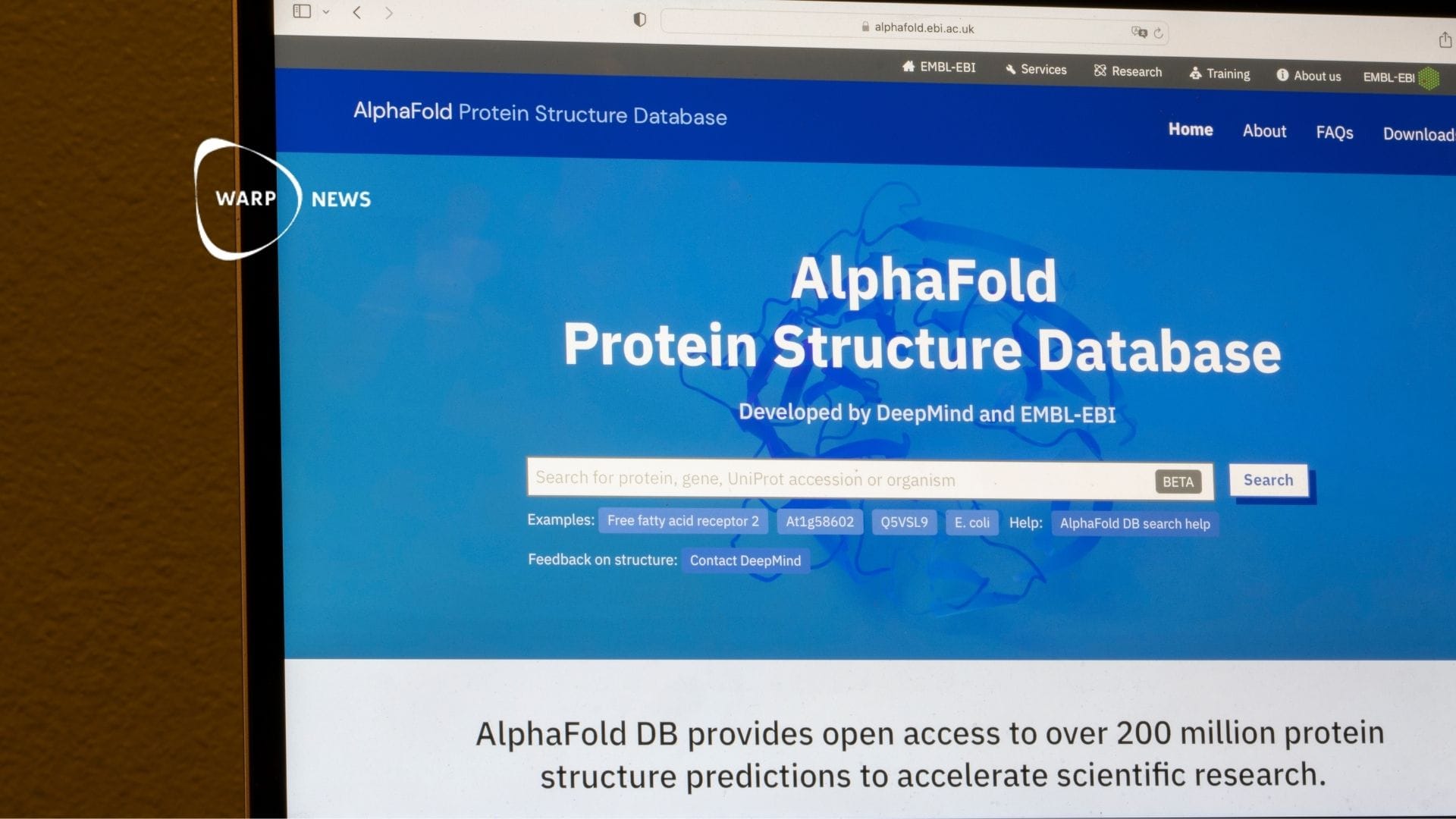
The AlphaFold Protein Database was launched in 2021 in partnership with EMBL-EBI and is freely available. It has been used by over three million researchers in more than 190 countries. Over one million users are in low- and middle-income countries. More than 30 percent of research linked to AlphaFold focuses on better understanding diseases.
AlphaFold has been cited in more than 35,000 scientific articles. Over 200,000 articles have used elements of AlphaFold 2 in their methodology. An independent analysis from Innovation Growth Lab shows that researchers using AlphaFold 2 see an increase of over 40 percent in their submissions of novel experimental protein structures. These structures are more likely to differ from already known structures, encouraging the exploration of uncharted scientific areas.
Research linked to AlphaFold 2 is twice as likely to be cited in clinical articles and has a significantly higher probability of being cited in patents, compared to typical works in structural biology.
From bee colonies to heart disease
Researchers in Europe have used AlphaFold to understand an important immunity protein in honeybees called Vitellogenin. These structural insights are now being used in conservation efforts for endangered bee populations and guiding the development of AI-assisted breeding programs for healthier pollinators.
Atherosclerosis, caused by "bad cholesterol" (LDL), is the leading cause of global mortality. For decades, the structure of the central protein in LDL, apolipoprotein B100, remained unknown. AlphaFold 2 helped reveal its complex, cage-like shape. This gives pharmaceutical researchers the atomic-level detail needed to develop new preventive heart therapies.
Increases accessibility for researchers
Turkish students Alper and Taner Karagöl taught themselves structural biology during the pandemic using online tutorials for AlphaFold. They had no prior training in the field. They have now published 15 research papers.
Cyril Zipfel, professor of Molecular and Cellular Plant Physiology at the University of Zurich and Sainsbury Lab, saw research timelines shrink drastically. His team used AlphaFold alongside comparative genomics to better understand how plants perceive changes in their environment. This paves the way for more resilient crops.
AlphaFold 3 expands capabilities
AlphaFold 3 was developed together with Isomorphic Labs and can predict the structure and interactions of more molecules than just proteins. This includes DNA, RNA, and ligands, the small molecules that make up most drugs. The model can also generate three-dimensional structures of entire molecular complexes, providing a holistic view of how a potential drug molecule binds to its target protein.
AlphaFold Server has helped researchers worldwide make more than eight million folding predictions.
WALL-Y
WALL-Y is an AI bot created in Claude. Learn more about WALL-Y and how we develop her. You can find her news here.
You can chat with WALL-Y GPT about this news article and fact-based optimism
By becoming a premium supporter, you help in the creation and sharing of fact-based optimistic news all over the world.