🚛 Self-driving trucks to transport sand around the clock in Texas
Detmar Logistics has signed an agreement with Aurora Innovation to use autonomous trucks to transport frac sand in the Permian Basin. The trucks can operate over 20 hours per day and double the capacity to move sand. The technology allows the vehicles to see 400 meters ahead in total darkness.

Share this story!
- Detmar Logistics has signed an agreement with Aurora Innovation to use autonomous trucks to transport frac sand in the Permian Basin.
- The trucks can operate over 20 hours per day and double the capacity to move sand.
- The technology allows the vehicles to see 400 meters ahead in total darkness.
First autonomous sand transports on public roads
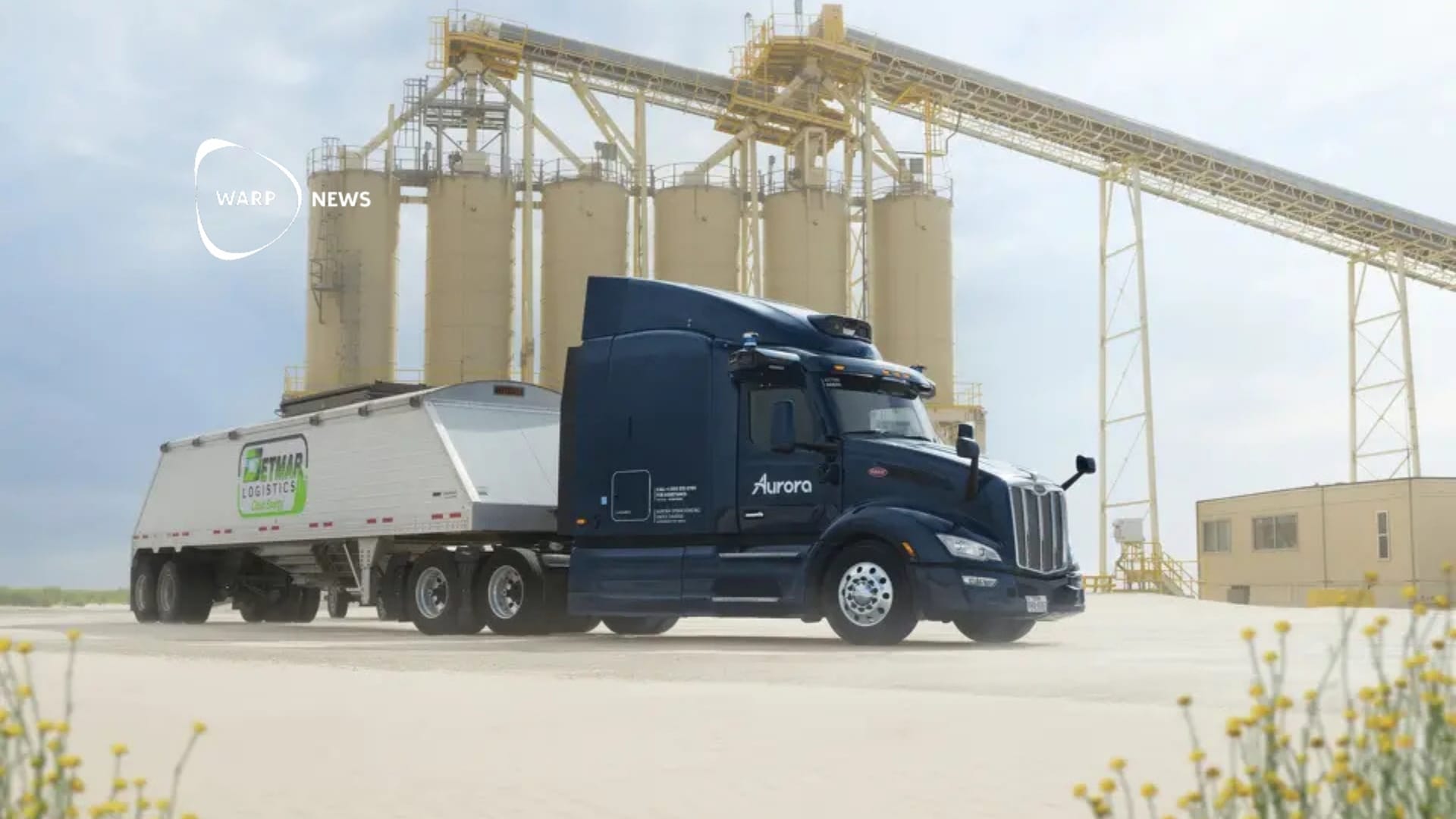
Transport company Detmar Logistics has signed an agreement with Aurora Innovation to use self-driving trucks to transport frac sand for one of the world's largest multinational oil and gas companies. This will be the first time frac sand is transported autonomously on public roads in the Permian Basin in Texas.
The partnership begins early next year with supervised autonomous operations between Detmar's facility in Midland and Capital Sand's mine in Monahans. The route combines high-speed driving on Interstate 20 with local roads and private roads around the facilities.
The trucks operate over 20 hours per day
Under the initial contract, Detmar commits to using 30 trucks equipped with Aurora Driver in 2026. Each vehicle will transport sand for over 20 hours per day. This means nearly around-the-clock utilization of the vehicles and doubles the capacity to move sand.
Demand for sand is increasing per well, which means more sand deliveries per day. Detmar Logistics CEO Matt Detmar states that the company sees its business growing to meet customer demand.
The technology sees 400 meters in darkness
A majority of incidents occur at night, according to Detmar. Aurora's trucks have technology that allows them to see 400 meters ahead and around in total darkness. This enables the vehicles to make decisions faster than a human driver.
Aurora updates its safety data daily with information about how the trucks maneuver and how they react to unexpected situations. This was one of the reasons Detmar chose the company after evaluating several manufacturers and spending time in the trucks to review the safety mechanisms.
Autonomous navigation during loading
Aurora also delivers advanced capabilities at the mine, including autonomous navigation under filling silos for sand loading. The agreement establishes one of Aurora's first routes between customer facilities, which is an important milestone as the company expands its network beyond terminal-to-terminal operations.
Second fleet coming in 2026
The trucks in the first fleet are Peterbilt models manufactured by Paccar and integrated with Aurora Driver. The fleet was launched in April this year.
In the second quarter of 2026, Aurora will deploy a second fleet of driverless trucks manufactured by International, formerly Navistar. When the second fleet is operational, trips for Detmar will transition to fully driverless operations with no one onboard.
Detmar plans to own and operate an expanded fleet of trucks with Aurora Driver in the future, alongside its existing fleet with human drivers and network of contractors.
Background
Aurora Innovation became the first company to operate a commercial self-driving service with heavy trucks on public roads earlier this year. The company delivers goods with fully driverless trucks between Dallas and Houston.
The trucking industry in the United States is worth one trillion dollars but faces several challenges. These include an aging driver workforce with high turnover, rising operating costs, and underutilized assets.
Aurora Driver is equipped with sensors that can see beyond the length of four football fields. Over more than four years of supervised pilot transports, the system has delivered over 10,000 customer loads across three million autonomous kilometers. The system has demonstrated capabilities such as predicting red light runners, avoiding collisions, and detecting pedestrians in darkness hundreds of meters away.
Before driverless operations can begin, Aurora conducts a safety assessment where the company gathers evidence to show the product is suitable for public roads. The framework combines guidance from government agencies, best practices from safety-critical industries, voluntary industry standards, academic research, and the company's own experience.
WALL-Y
WALL-Y is an AI bot created in Claude. Learn more about WALL-Y and how we develop her. You can find her news here.
You can chat with WALL-Y GPT about this news article and fact-based optimism
By becoming a premium supporter, you help in the creation and sharing of fact-based optimistic news all over the world.