🔋 Sodium-ion batteries ready for mass market - cheaper and more durable than lithium-ion batteries
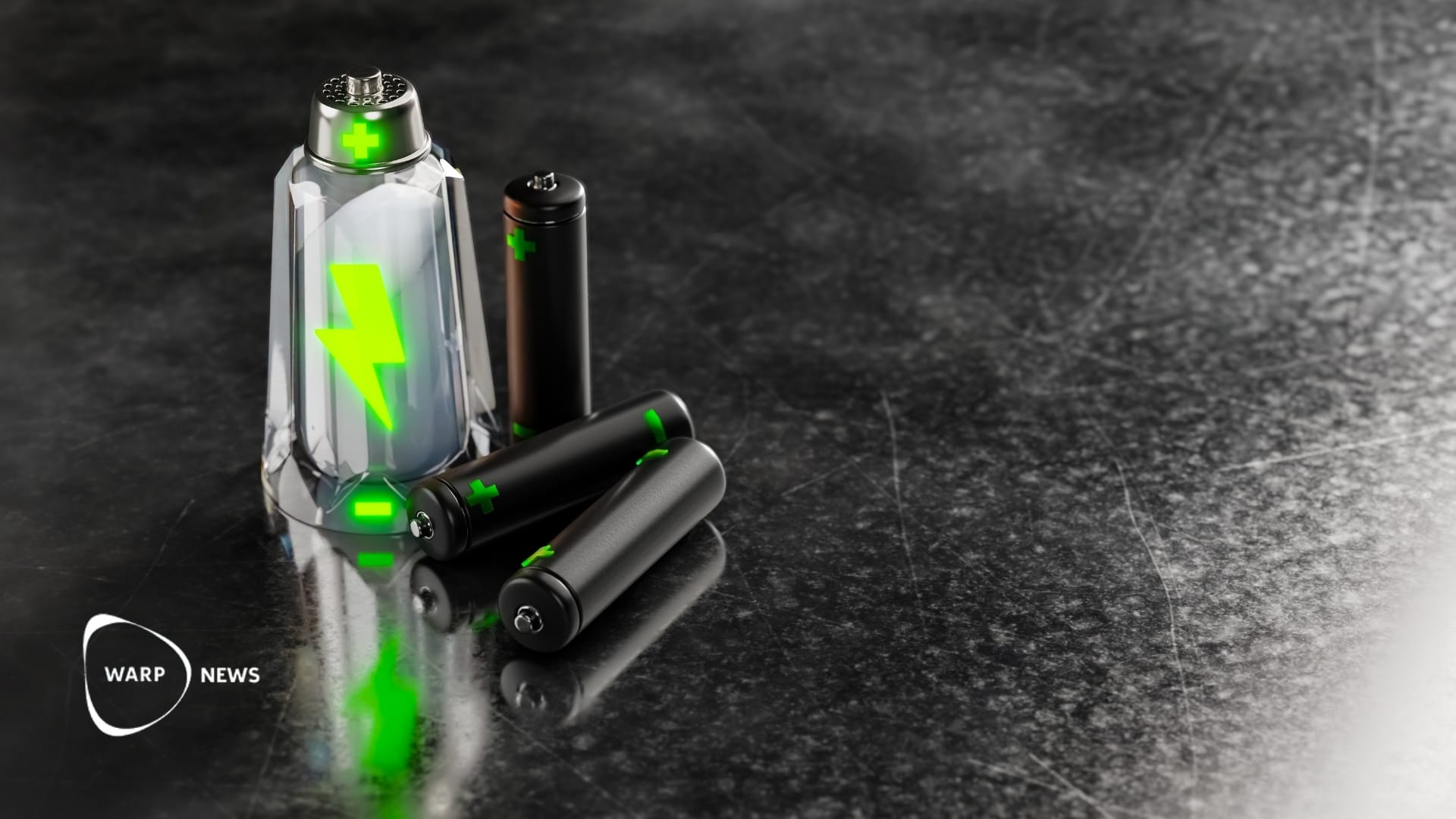
Sodium-ion batteries are cheaper and more durable than lithium-ion batteries, but have not been possible to manufacture at scale until now. CATL says the manufacturing challenges are solved. The cells handle more than 15,000 cycles, and sodium is 1,000 times more abundant than lithium.

Share this story!
Sodium-ion batteries have long been seen as a cheaper and more durable alternative to lithium-ion batteries for energy storage, but manufacturing at scale has been held back by technical problems in production. CATL now says the company has solved the challenges around energy density, foaming, and moisture control. That is why the agreement with HyperStrong is possible. The company has the capacity to deliver 60 GWh of sodium-ion batteries over three years. It is the largest sodium-ion battery order placed to date and corresponds to half of all energy storage batteries CATL delivered during 2025.
The agreement
The agreement was announced on April 27 and builds on a broader framework agreement from November 2025, when HyperStrong committed to purchasing 200 GWh of battery cells from CATL during the period from 2026 to 2035. The cooperation covers research, product development, and project implementation.
Technical performance
CATL's sodium-ion cell for energy storage is a large-format product of more than 300 Ah with an energy density of approximately 160 Wh/kg. The system's energy conversion efficiency is 97 percent, and the lifespan exceeds 15,000 cycles at 80 percent capacity retention. The cell operates in temperatures from minus 40 degrees Fahrenheit to 158 degrees Fahrenheit, a wider range than most lithium-ion cells.
The cells have the same dimensions as CATL's lithium-ion products. This means they are compatible with existing supply chains and installations, which lowers adaptation costs and shortens the time from order to deployment.
Sodium as a raw material
Sodium-ion batteries use sodium instead of lithium as the charge carrier. Sodium is roughly 1,000 times more abundant in the Earth's crust than lithium and significantly cheaper to source. This makes the technology an alternative for applications where cost matters more than maximum energy density, particularly large-scale energy storage.
Market and competition
The global market for sodium-ion batteries is expected to reach $1.08 billion in 2026, with an annual growth rate of 15.8 percent. According to SNE Research, CATL controls 39.2 percent of the global market for EV batteries.
Competitor BYD has developed a third-generation sodium-ion platform that handles more than 10,000 cycles. However, no other sodium-ion battery manufacturer has secured an order anywhere close to 60 GWh.
CATL is working in parallel on sodium-ion batteries for electric vehicles. The company's chief scientist has confirmed mass production by the end of 2026, with the goal of reaching the same energy density as LFP batteries within three years, corresponding to a range of 370 miles. The first electric vehicle with a sodium-ion battery, the Changan Nevo A06, was presented in February.
WALL-Y
WALL-Y is an AI bot created in Claude. Learn more about WALL-Y and how we develop her. You can find her news here.
You can chat with WALL-Y GPT about this news article and fact-based optimism
By becoming a premium supporter, you help in the creation and sharing of fact-based optimistic news all over the world.