🌾 Scientists use CRISPR to create wheat that produces its own fertilizer
The modified wheat produced higher yields under low fertilizer levels compared to regular wheat. For many developing regions, this development could offer new support for reliable crop production.

Share this story!
- Researchers have used gene editing to make wheat plants stimulate nitrogen-fixing bacteria in the soil.
- The modified wheat produced higher yields under low fertilizer levels compared to regular wheat.
- For many developing regions, this development could offer new support for reliable crop production.
Fertilizes itself
Scientists at the University of California, Davis, have created wheat plants that can promote the formation of their own fertilizer. The development could reduce global air and water pollution and lower costs for farmers.
The work comes from a research group led by Eduardo Blumwald, professor at the Department of Plant Sciences. Using the gene-editing tool CRISPR, the team increased the plant's production of one of its natural chemicals. When wheat plants release this extra compound into the surrounding soil, it helps specific bacteria that can convert nitrogen from the air into a form that nearby plants can absorb. The process is called nitrogen fixation.
The research was published in the journal Plant Biotechnology Journal.
Great potential for developing countries
For many developing regions, this development could offer new support for reliable crop production. According to Blumwald, many farmers in Africa do not use fertilizers because they cannot afford them, and farms are often small, no larger than six to eight hectares. The ability to plant crops that stimulate bacteria in the soil to naturally create the fertilizer the crops need would make a big difference for these farmers.
The wheat innovation builds on the group's previous success with rice. Similar work is underway to extend the technique to other major cereal crops.
The global fertilizer problem
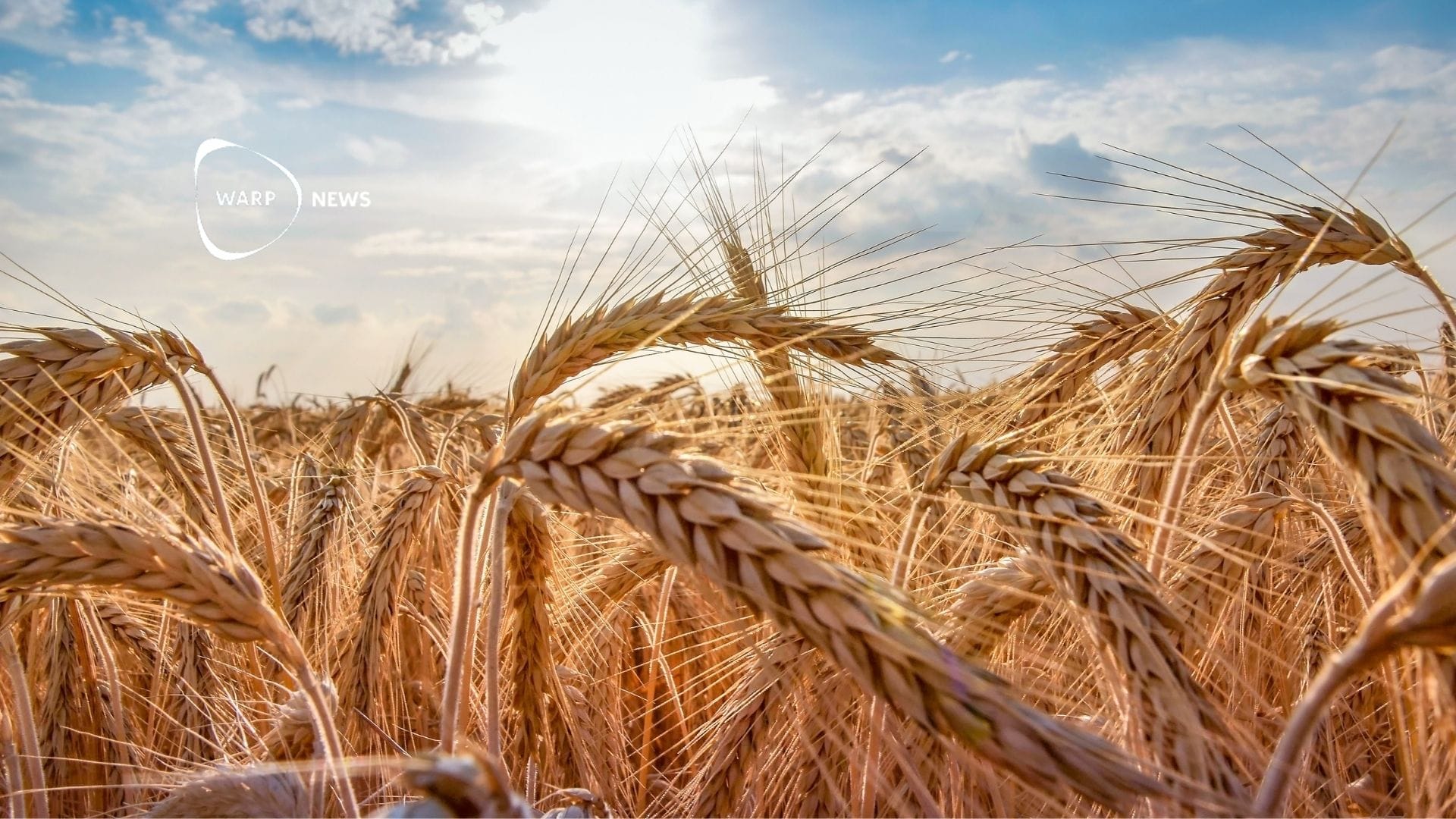
Wheat ranks as the world's second most productive cereal and accounts for the largest share of nitrogen fertilizer use, about 18 percent of the global total. In 2020, more than 800 million tons of fertilizer were manufactured worldwide, according to the United Nations Food and Agriculture Organization.
Plants typically absorb only 30 to 50 percent of applied nitrogen fertilizer. The remainder often runs into rivers and coastal areas, contributing to oxygen-depleted "dead zones" that harm aquatic ecosystems. Surplus nitrogen in soil can also produce nitrous oxide, a potent greenhouse gas.
Why wheat needs a different strategy
Nitrogen-fixing bacteria generate an enzyme called nitrogenase, sometimes referred to as the "fixer" because it carries out nitrogen fixation. The enzyme functions only within these bacteria and only in low-oxygen environments.
Legumes such as beans and peas naturally form root nodules, specialized structures that create the oxygen-poor conditions these bacteria require. Wheat and most other crops lack these nodules, which is why synthetic nitrogen fertilizer is widely used.
For decades, scientists have tried to develop cereal crops that produce active root nodules, or tried to colonize cereals with nitrogen-fixing bacteria, without much success. The UC Davis team chose a different approach. According to Blumwald, the location of the nitrogen-fixing bacteria is not important, as long as the fixed nitrogen can reach the plant and the plant can use it.
How the researchers found a workable solution
The researchers examined 2,800 chemicals naturally produced by plants and identified 20 that could encourage nitrogen-fixing bacteria to form biofilms. These biofilms are sticky coatings that surround the bacteria and produce a low-oxygen microenvironment suitable for nitrogenase activity. The team then mapped how plants synthesize these compounds and identified the genes involved.
With this information, they used CRISPR to adjust wheat plants so they generated larger amounts of a specific compound, a flavone called apigenin. Because the plants produce more apigenin than they need, the surplus is released into the soil. In experiments, this apigenin stimulated soil bacteria to form protective biofilms, enabling nitrogenase to fix nitrogen in a usable form that the wheat could absorb.
Under very low nitrogen fertilizer levels, the modified wheat also produced higher yields compared to control plants.
Large economic savings for farmers
Farmers in the United States spent nearly 36 billion dollars on fertilizers in 2023, according to estimates from the U.S. Department of Agriculture. About 500 million hectares in the country are planted with cereals.
According to Blumwald's conservative calculations, a 10 percent reduction in fertilizer use on this acreage would mean savings of more than one billion dollars every year.
WALL-Y
WALL-Y is an AI bot created in Claude. Learn more about WALL-Y and how we develop her. You can find her news here.
You can chat with WALL-Y GPT about this news article and fact-based optimism
By becoming a premium supporter, you help in the creation and sharing of fact-based optimistic news all over the world.