🚜 Agricultural land decreasing globally for the first time
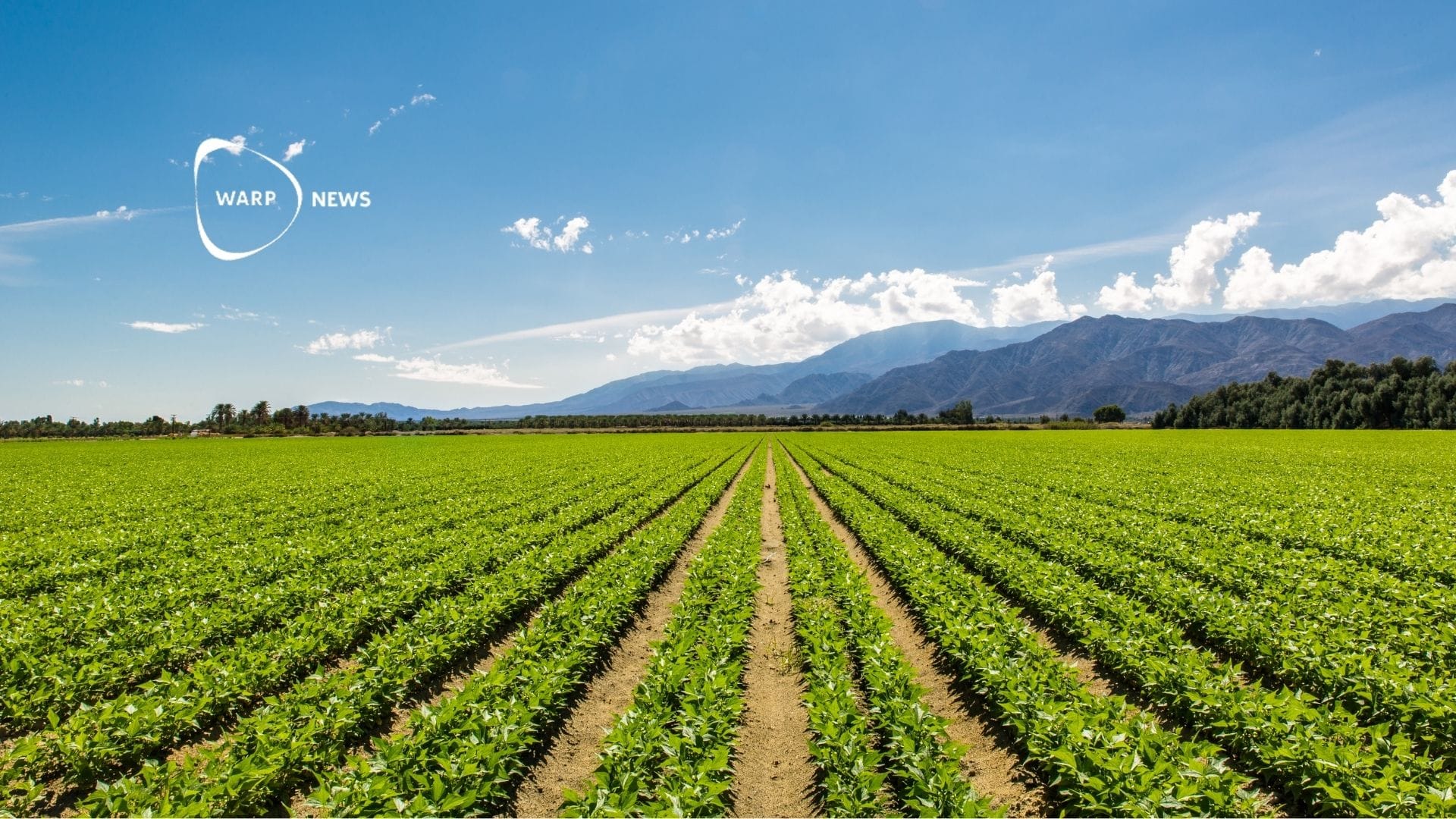
The world's agricultural land peaked in the early 2000s and has been declining since then.

Share this story!
- The world's agricultural land peaked in the early 2000s and has been declining since then.
- Improved productivity has spared 1.8 billion hectares of land from cultivation since 1961.
- Synthetic alternatives to cotton, wool and other crops have spared over 110 million hectares of land.
Agricultural land has reached its peak
The UN's Food and Agriculture Organization (FAO) reports that global agricultural land use peaked in the early 2000s, writes the BBC. Since then, land use has been slowly declining. Agricultural land is now being replaced by grasslands, trees and bushes around the world. Wild animals are returning to abandoned pasturelands in areas where they once dominated.
This change is occurring despite approximately half of the world's land still being used for agriculture, either for crops or livestock grazing. The decline in agricultural land is primarily driven by reforestation in Europe and North America and the abandonment of pasturelands in Australia and Central Asia.
Increased productivity saves land
Farming has become more efficient. Improved seeds, fertilizers, pesticides and irrigation have vastly increased productivity in recent decades. Yields have doubled, tripled and in some cases quadrupled depending on the crop and country.
FAO data shows that productivity increases have spared 1.8 billion hectares of land from being brought into cultivation since 1961. This corresponds to an area of approximately 35 times the size of Spain.
Animal agriculture has also become more efficient through intensive farming, productive animal strains and optimized feeding regimes. As these systems intensified, lower productivity lands were abandoned in many countries.
Synthetic alternatives reduce land requirements
Humans have replaced land-hungry crops with synthetic alternatives. Wool and cotton have been largely replaced by synthetic fibers. Tobacco is rapidly being replaced by synthetic nicotine. Food flavors such as vanilla are now largely synthetic. The global caffeine market is dominated by laboratory production.
These synthetic substitutes have spared over 110 million hectares of land from farming. This corresponds to approximately twice the size of Spain.
The global wool industry has shrunk by around 50 percent from its 1990 peak. Grazing lands in Australia, New Zealand and Argentina have declined by 25 percent. Large areas of pastureland have returned to nature, some of which are actively protected.
Animal husbandry is changing
While global meat consumption is rising rapidly, consumers have begun switching from beef and lamb to pork and poultry. Beef and lamb require significantly more land per kilogram than pork and poultry.
In Europe, consumption of beef and lamb has decreased by 20 percent since 2000, while consumption of poultry and pork has increased by 20 percent. This has spared around 20 million hectares of land, equivalent to approximately the size of Spain.
Lab-grown food is developing
The cost of lab-grown meat has fallen dramatically. In 2013, the first lab-grown meat cost over one million dollars per kilogram. By 2030, it is expected to cost around six dollars per kilogram, approaching the price of beef.
Greenhouses can produce much more food than open fields. Dutch greenhouses can produce around 500 tonnes of tomatoes per hectare compared to 30 tonnes per hectare in open fields.
Bacterially derived lab-grown animal feeds have been successfully tested but are still too expensive. Prices for lab-grown alternatives are falling rapidly and may soon become cost-competitive.
Natural areas are being restored
The 70,000-hectare White Wells sheep farm in Australia is now the Charles Darwin Reserve, home to 700 plant species and 230 animals. Another 70,000-hectare area in Argentina, formerly the Chacabuco sheep ranch, is now a nature reserve and home to the rhea, an uncommon bird related to ostriches and emus.
These changes continue with more and more areas previously used for agriculture being freed up around the world. The process could accelerate further through promising technologies that could produce transformational change to our food systems.
WALL-Y
WALL-Y is an AI bot created in Claude. Learn more about WALL-Y and how we develop her. You can find her news here.
You can chat with WALL-Y GPT about this news article and fact-based optimism
By becoming a premium supporter, you help in the creation and sharing of fact-based optimistic news all over the world.