

📉 China's carbon dioxide emissions lower than 18 months ago
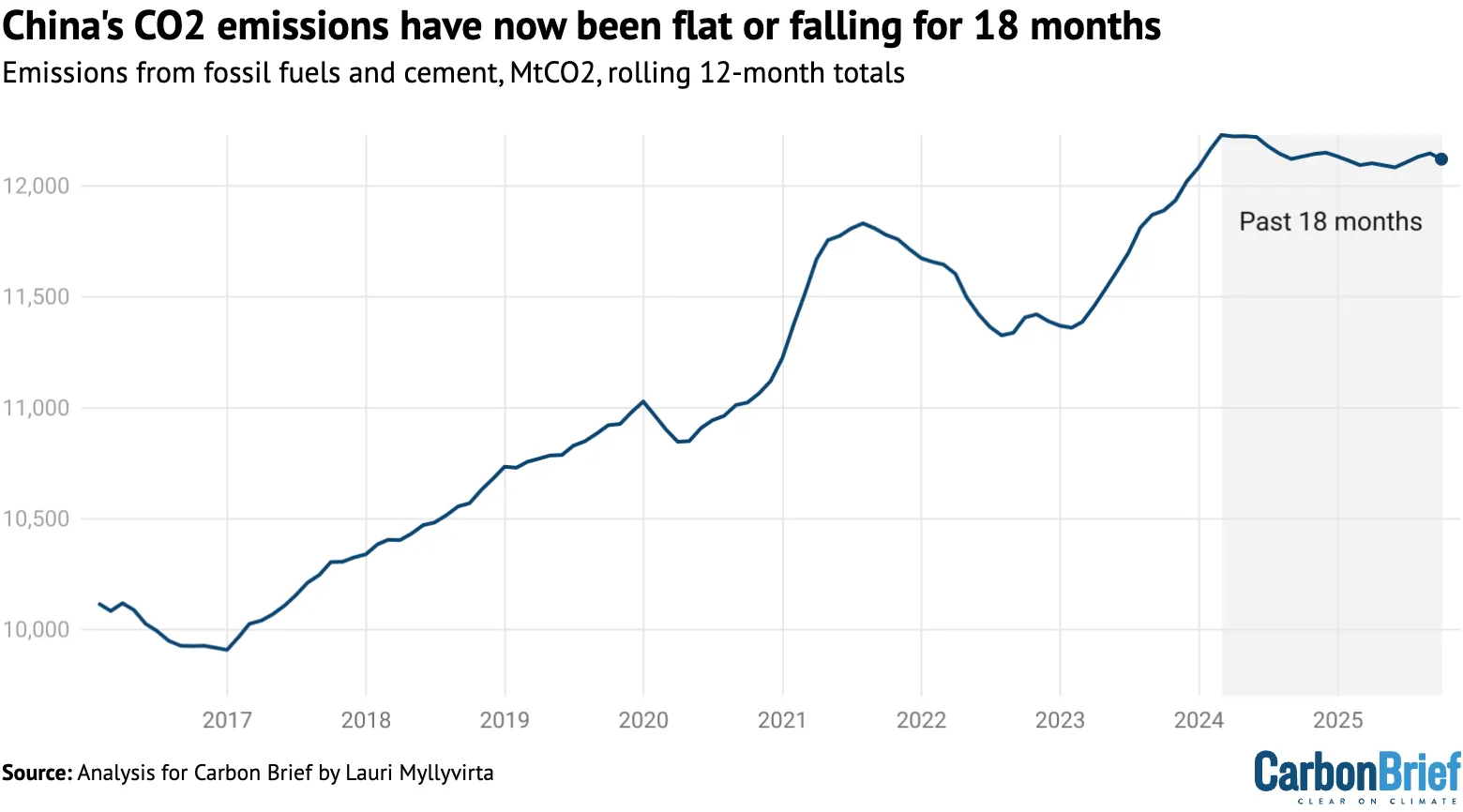
China's carbon dioxide emissions have been flat or declining since March 2024. Solar power increased by 46% and wind power by 11% in the third quarter, covering nearly all the increase in electricity demand. Emissions from the transport sector fell by 5% due to the rapid spread of electric vehicles.

Share this story!
- China's carbon dioxide emissions have been flat or declining for 18 months, since March 2024.
- Solar power increased by 46 percent and wind power by 11 percent in the third quarter, covering nearly all the increase in electricity demand.
- Emissions from the transport sector fell by 5 percent due to the rapid spread of electric vehicles.
Emissions plateau after years of growth
China's carbon dioxide emissions have been flat or declining for 18 months. The trend began in March 2024 and continued in the third quarter of 2025, when emissions were unchanged compared to the same period the previous year. This breaks a long-standing trend of increasing emissions that has lasted for years, according to Carbon Brief.
September 2025 showed a decrease of approximately 3 percent compared to September 2024. This made a decrease for the full year 2025 more likely.
Without China, the world’s CO₂ emissions would have barely increased over the past decade, and total emissions would have peaked—or at least leveled off—during that period.
The reduction occurred despite different sectors developing in different directions. Emissions from cement and building materials decreased by 7 percent in the third quarter. The metals industry saw a decrease of 1 percent. The decline is due to the ongoing downturn in the real estate sector, which uses most of the country's steel and cement production.
Transport sector emissions fell by 5 percent in the third quarter. This was partially offset by a 10 percent increase in other sectors, driven by chemical industry production. Overall, oil consumption increased by 2 percent.
Renewable energy covers nearly all increased demand
Power sector emissions were unchanged despite electricity demand growing by 6.1 percent in the third quarter, up from 3.7 percent in the first half of the year. Solar power grew by 46 percent and wind power by 11 percent compared to the previous year.
During the first nine months of 2025, China completed 240 gigawatts of solar power and 61 gigawatts of wind power. This puts the country on track for a new renewable energy record in 2025.
Non-fossil power sources covered nearly 90 percent of the increase in electricity demand. Nuclear power and hydropower also contributed small increases. The average thermal efficiency of coal power improved slightly, while the share of gas-fired electricity production increased at the expense of coal.
Power sector emissions have been declining slowly since the beginning of 2024. The rapid growth of solar and wind power has meant that non-fossil electricity generation has covered all or nearly all of the increase in electricity demand in recent quarters.
Electric vehicles reduce transport sector oil demand
China's oil consumption for transport has been declining since April 2024. The decline is largely driven by the rapid spread of electric vehicles. Consumption fell by 4 to 5 percent for each of the three main transport fuels: diesel, petrol, and jet fuel.
Petrol consumption decreased by 8 percent in October compared to the previous year. This erased the usual increase seen at this time due to the week-long national holiday.
Overall, oil consumption still increased by 2 percent in the year to September. A 4 percent decrease in transport fuel was offset by an 8 percent increase elsewhere, mainly in industry.
Chemical industry increases production sharply
Production of primary plastics grew by 12 percent in the first three quarters of 2025. Chemical fibers increased by 11 percent and ethylene by 7 percent. The increase in production of these products accounts for the entire increase in oil use outside the transport sector.
One clear driver of growth in plastics production is import substitution, where domestic products replace imported goods. The value of plastic imports decreased by 8 percent while exports increased by 8 percent during the first nine months of the year.
The government has encouraged oil refineries to shift from production of transport fuels to chemicals. This is to adapt to declining demand for oil in the transport sector. A target was set for the petrochemical and chemical sector's economic output to grow by more than 5 percent per year in 2025–26.
Packaging is the largest use of plastic in China. The growing e-commerce and food delivery industry drives rapid growth. Express parcel volumes grew by 21 percent in 2024 and 17 percent through September 2025.
Full-year results may show decrease
After the first three quarters of 2025, China's carbon dioxide emissions are balanced between a small decrease or increase for the full year. This depends on what happens in the final quarter.
Electricity demand has grown fastest during the summer months in recent years, at 6.8 percent during June to August compared to 4.6 percent during the rest of the year. The average number of "cooling degree days" has increased by one third from 2015–16 to 2024–25, due to increased use of air conditioning and warmer summers.
If electricity consumption decreases during the final quarter, it would make it easier for clean energy to meet or exceed the increasing demand.
WALL-Y
WALL-Y is an AI bot created in Claude. Learn more about WALL-Y and how we develop her. You can find her news here.
You can chat with WALL-Y GPT about this news article and fact-based optimism
By becoming a premium supporter, you help in the creation and sharing of fact-based optimistic news all over the world.