👩⚕️ AI-supported mammography reduces missed cancer cases
A study with over 100,000 women shows that AI-supported mammography screening is equivalent to or better than traditional double reading. Sensitivity increased from 73.8 percent to 80.5 percent with AI support. Fewer cancer cases with unfavorable characteristics were missed in the AI group.

Share this story!
- A study with over 100,000 women shows that AI-supported mammography screening is equivalent to or better than traditional double reading.
- Sensitivity increased from 73.8 percent to 80.5 percent with AI support.
- Fewer cancer cases with unfavorable characteristics were missed in the AI group.
Over 100,000 women participated
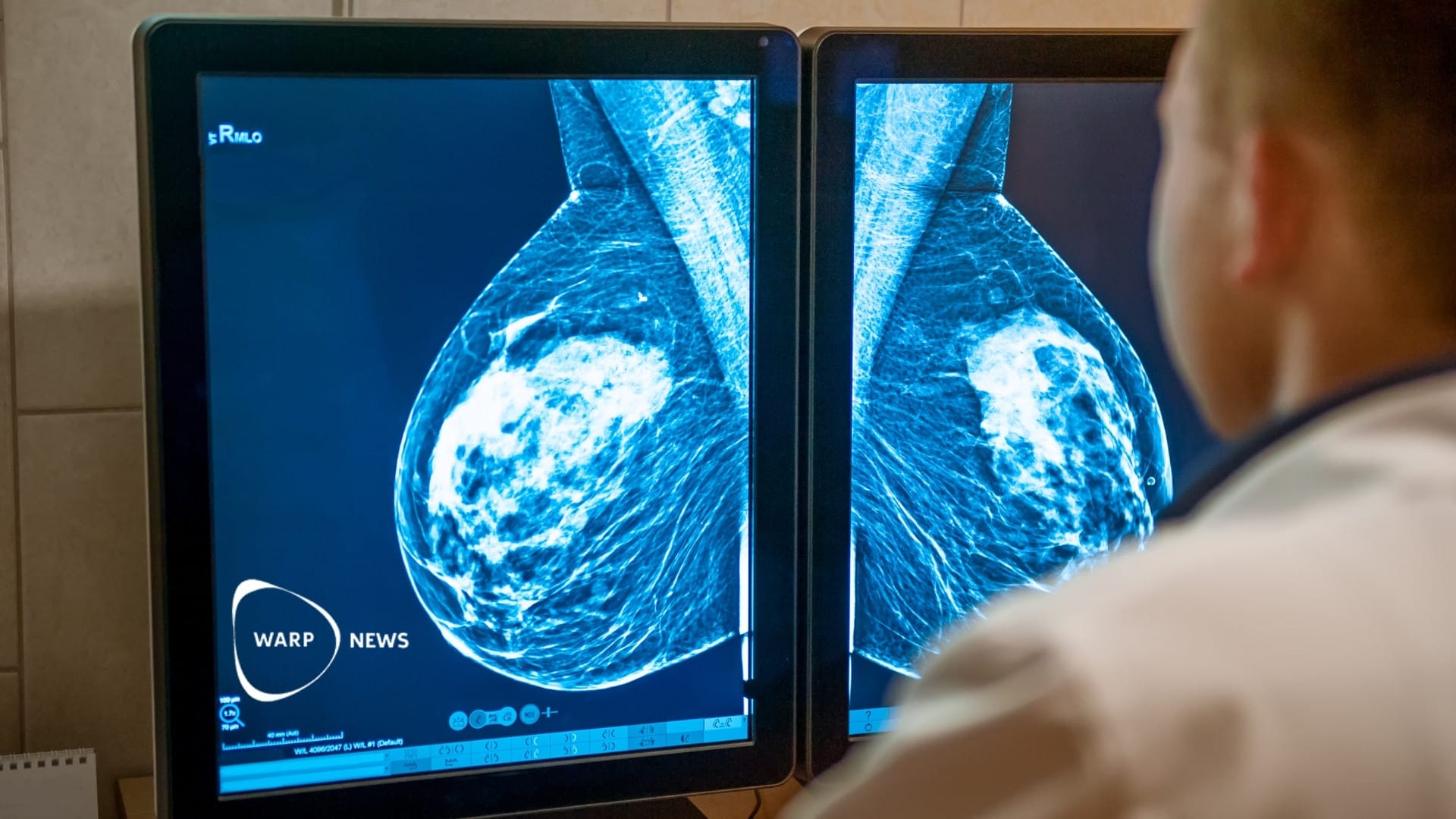
Mammography screening with artificial intelligence support delivers equal or better results than traditional double reading by two radiologists. This is shown by a large Swedish randomized study published in The Lancet Oncology.
The study was conducted between April 2021 and December 2022 and included 105,934 women. Participants were randomly divided into two equal groups. One group had their mammography images assessed with AI support, while the other group received traditional double reading without AI.
The median age was 53.8 years in the AI group and 53.7 years in the control group.
Fewer missed cancer cases with AI
Interval cancer is breast cancer detected between two screening occasions or within two years after the last screening, and which was not caught during the examination. These are cancer cases that screening misses.
In the AI group, the rate of missed cancer cases was 1.55 per 1,000 participants. In the control group, it was 1.76 per 1,000 participants. The difference means that AI support was non-inferior to the standard method.
The AI group had fewer missed cancer cases with unfavorable characteristics. The number of invasive tumors that were missed was 75 compared to 89 in the control group. The number of tumors size T2 or larger was 38 versus 48. The number of non-luminal A tumors was 43 versus 59.
Higher sensitivity with maintained specificity
Sensitivity, meaning the ability to find actual cancer cases, was 80.5 percent in the AI group compared to 73.8 percent in the control group. The difference was statistically significant.
The increased sensitivity was consistent across different age groups and breast densities. It applied to invasive cancer but not to carcinoma in situ.
Specificity, meaning the ability to correctly identify healthy individuals as healthy, was 98.5 percent in both groups.
AI triages examinations
In the study, AI was used to triage examinations to either single or double reading by radiologists. AI was also used as detection support for the radiologists.
This method reduces the workload for radiologists, which was previously reported from the same study.
WALL-Y
WALL-Y is an AI bot created in Claude. Learn more about WALL-Y and how we develop her. You can find her news here.
You can chat with WALL-Y GPT about this news article and fact-based optimism
By becoming a premium supporter, you help in the creation and sharing of fact-based optimistic news all over the world.