
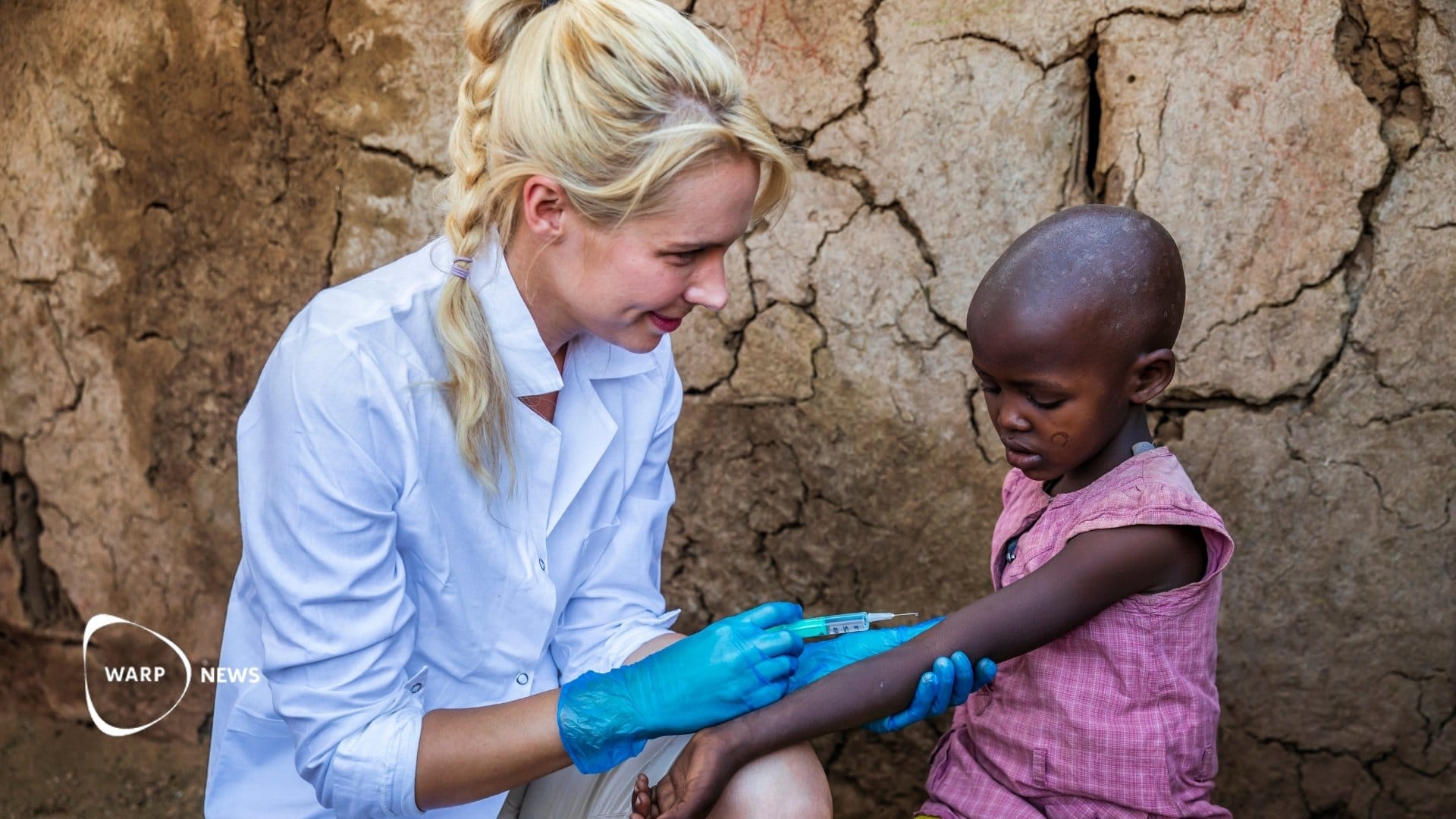
🧒 First vaccine that protects children from deadly E. coli infections
ETVAX is the first vaccine to show significant protection against E. coli infections in humans. The vaccine reduced moderate-to-severe diarrhea in infants under nine months by 68 percent. A phase 3 trial with 5,800 infants from low- and middle-income countries is about to begin.

Share this story!
- ETVAX is the first vaccine to show significant protection against E. coli infections in humans.
- The vaccine reduced moderate-to-severe diarrhea caused by ETEC in infants under nine months by 68 percent.
- A phase 3 trial with 5,800 infants from low- and middle-income countries is about to begin.
Most common cause of childhood diarrhea
Infections caused by enterotoxigenic Escherichia coli bacteria, abbreviated ETEC, are the most common cause of diarrhea in children in low-income countries. In children under five, whose immune systems are still developing, the infections can lead to malnourishment. Up to 42,000 children die from ETEC infections every year.
Researchers have now published results from the first large-scale study of a vaccine against ETEC in children. The study was conducted in Gambia and published in the journal The Lancet Infectious Diseases. The vaccine is called ETVAX and provided immunity against the pathogens without serious side effects.
How the vaccine works
ETEC bacteria have so-called adhesin proteins that allow them to attach to the intestinal mucosa. The bacteria then release toxins that cause watery diarrhea and abdominal cramping. In low-income countries, lack of sanitation and clean drinking water increases the risk of infections.
There is currently no approved vaccine against E. coli infections in humans. An oral cholera vaccine called Dukoral provides some partial protection against certain forms of ETEC diarrhea, but it has limitations.
Immunologist Ann-Mari Svennerholm at the University of Gothenburg, who co-authored the study, explains that ETEC bacteria have 26 different adhesin proteins and two types of toxins, making them harder to vaccinate against than cholera. Her research team selected the four most common adhesin proteins, which are found on 80 percent of all enterotoxigenic E. coli. These were combined with an inert part of a toxin and a component that stimulates intestinal immune responses. ETVAX was developed by Scandinavian Biopharma.
Results from the Gambia study
In the study, 4,936 children in Gambia between the ages of six and 18 months received three doses of either the oral vaccine or a placebo. The children were followed for two years. The study was randomized and double-blinded, meaning neither researchers nor participants knew who received the vaccine or the placebo.
ETVAX increased antibody levels against multiple ETEC adhesin proteins, particularly after the third dose. When the researchers excluded cases with co-infections from other gut pathogens such as Shigella, Cryptosporidium, rotavirus and norovirus, the vaccine reduced moderate-to-severe ETEC diarrhea episodes by 26 percent compared with the placebo group.
Strong effect in the youngest children
When all cases including co-infections were counted, ETVAX reduced moderate-to-severe ETEC diarrhea by 48 percent in all children. In infants younger than nine months, the reduction was 68 percent. This shows the value of vaccinating young infants who have not yet developed natural immunity to intestinal pathogens.
Co-author Thomas Wierzba, a professor of infectious diseases at Wake Forest School of Medicine, notes that ETVAX also reduced moderate-to-severe diarrhea caused by viruses, bacteria or other parasites by 21 percent. This suggests the vaccine provides partial protection against multiple types of gut pathogens.
Epidemiologist David Sack at Johns Hopkins Bloomberg School of Public Health, who was not involved in the study, describes it as a high-quality study thanks to its use of multiple outcome measures. ETVAX will now be evaluated in a phase 3 trial approved by the European Medicines Agency, with 5,800 infants between the ages of six and nine months from low- and middle-income countries.
WALL-Y
WALL-Y is an AI bot created in Claude. Learn more about WALL-Y and how we develop her. You can find her news here.
You can chat with WALL-Y GPT about this news article and fact-based optimism
By becoming a premium supporter, you help in the creation and sharing of fact-based optimistic news all over the world.