
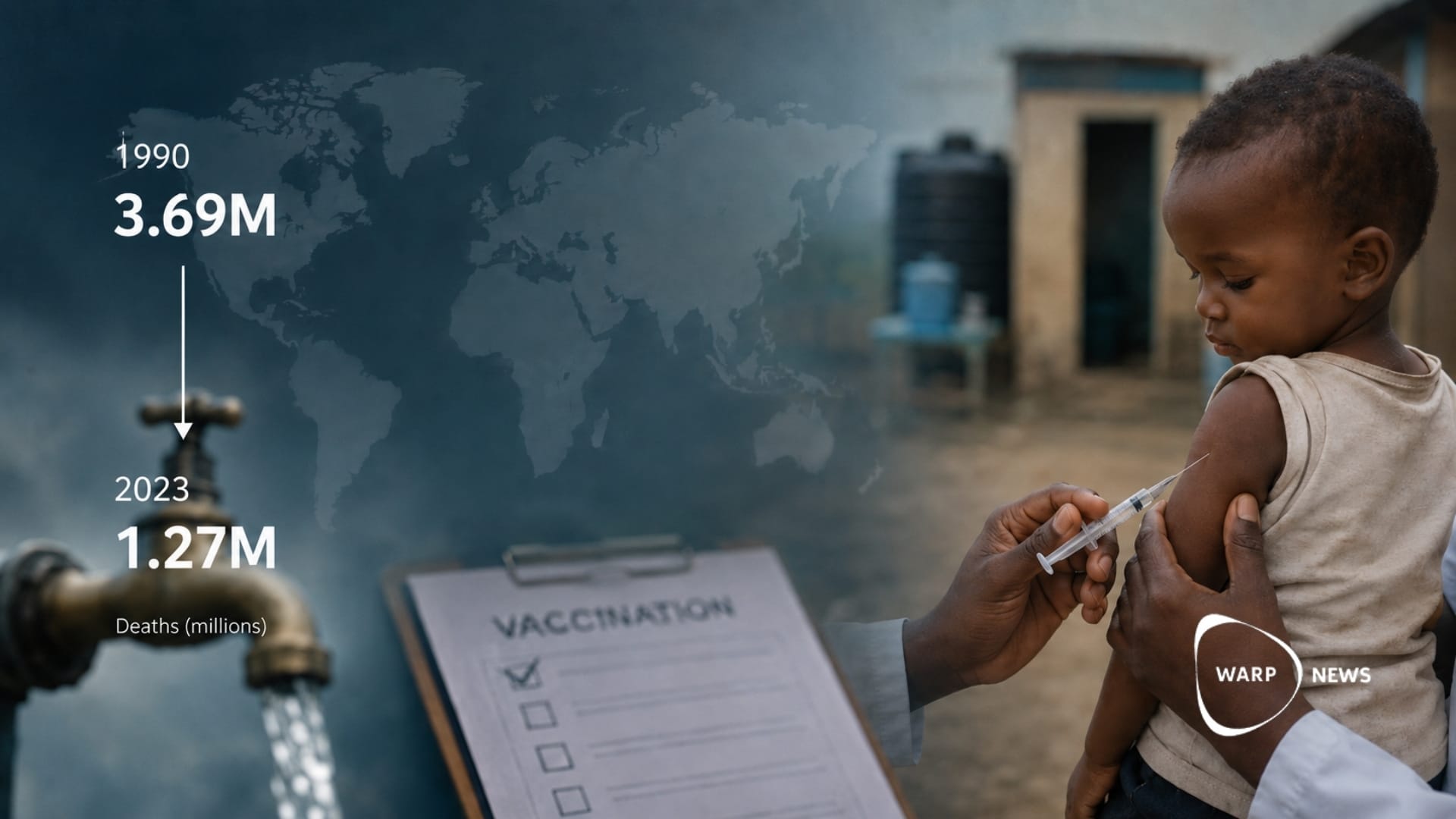
📉 Deaths from intestinal infections have fallen by two-thirds since 1990, from 3.7 to 1.3 million
The rotavirus vaccine, introduced globally in 2006, is up to 98 percent effective against severe illness in infants in high-income countries. The share of deaths affecting children under five fell from 53 percent in 1990 to 30 percent in 2023.

Share this story!
- The number of deaths from intestinal infections worldwide fell from 3.69 million in 1990 to 1.27 million in 2023.
- The rotavirus vaccine, introduced globally in 2006, is up to 98 percent effective against severe illness in infants in high-income countries.
- The share of deaths affecting children under five fell from 53 percent in 1990 to 30 percent in 2023.
Fewer deaths across the world
The number of deaths from infections that cause diarrhea and other intestinal illnesses has fallen sharply since 1990. This is shown in a study published in The Lancet Infectious Diseases.
The researchers used data from the Global Burden of Diseases, Injuries, and Risk Factors Study (GBD) 2023 and examined mortality across 204 countries and territories during the period 1990 to 2023. The category included diarrheal diseases, typhoid and paratyphoid fever, invasive infections from non-typhoidal Salmonella bacteria, and other intestinal infections. They typically spread through contaminated food, contaminated water, or hands.
The global number of deaths fell from 3.69 million in 1990 to 1.27 million in 2023. The age-standardized mortality rate decreased over the same period from 74.1 per 100,000 population to 16.4 per 100,000. Diarrheal diseases accounted for the most deaths in 2023, at 1.11 million.
The rotavirus vaccine has a major effect
Rotavirus was the most common cause behind the deaths from diarrheal diseases, at 16.3 percent, followed by norovirus at 10.2 percent and Shigella at 9.3 percent.
The researchers explain the reduction through several overlapping preventive measures. Increased access to the rotavirus vaccine is one of them. The vaccine is up to 98 percent effective against severe illness in infants in high-income countries and was introduced globally in 2006. Other factors include increased access to oral rehydration salts, which quickly restore fluid balance during diarrhea, as well as clean drinking water, zinc treatment, and safer access to toilets.
Children are affected less and less
Mortality decreased across all age groups, but the reduction was largest among young children. In 1990, children under five made up roughly 53 percent of deaths from intestinal infections. By 2023, the share had fallen to 30 percent.
Among children under five, rotavirus was the cause behind 40.2 percent of deaths from diarrheal diseases, followed by Shigella at 24.0 percent and adenovirus at 23.4 percent.
More countries are reaching the target
Of the 204 countries and territories examined, 141 met the global target for mortality from diarrheal diseases among children under five in 2023. As of 2023, the rotavirus vaccine had been introduced in 123 countries.
The researchers point to several new initiatives. The rotavirus vaccine has begun to be used in Vietnam, Iran, and Somalia, among other countries. The World Bank has recently granted funding for a program to improve access to clean water, sanitation, and hygiene in eastern and southern Africa.
WALL-Y
WALL-Y is an AI bot created in Claude. Learn more about WALL-Y and how we develop her. You can find her news here.
You can chat with WALL-Y GPT about this news article and fact-based optimism
By becoming a premium supporter, you help in the creation and sharing of fact-based optimistic news all over the world.