🥶 First visit to remote volcanic ridge beneath the Arctic
The expedition completed over 40 dives to depths of up to 5,277 meters beneath the Arctic sea ice. The area may contain hydrothermal vents that host unique ecosystems without sunlight. It is the first time a crewed submersible has visited the eastern part of the Gakkel Ridge.

Share this story!
- The expedition completed over 40 dives to depths of up to 5,277 meters beneath the Arctic sea ice.
- The area may contain hydrothermal vents that host unique ecosystems without sunlight.
- It is the first time a crewed submersible has visited the eastern part of the Gakkel Ridge.
Unexplored territory
One of Earth's most remote and geologically interesting places has received its first human visitors: an underwater mountain range in the Arctic Ocean. The expedition concluded late last month and explored the eastern part of the Gakkel Ridge.
The Gakkel Ridge is part of the global system of underwater mountains that plays a central role in plate tectonics. Using a crewed submersible, the team descended beneath the Arctic sea ice and completed more than 40 dives. The deepest dive reached 5,277 meters.
According to Xiaoxia Huang, marine geophysicist at the Institute of Deep-Sea Science and Engineering in Sanya and the expedition's chief scientist, this is the last piece of the puzzle to understanding the unique Arctic environment.
Ecosystems without sunlight
The analyses are far from complete, but this section of the Gakkel Ridge may have hot springs that spew from the seafloor. Similar vents on the western, more explored part of the ridge are home to ecosystems that live entirely without sunlight.
These environments provide an opportunity to understand how life can arise and evolve in icy oceans on other celestial bodies, such as Jupiter's moon Europa.
The Gakkel Ridge stretches from the coast of Greenland to Siberia. Volcanic eruptions along the ridge create new seafloor crust that spreads at some of the slowest rates on the planet – slower than fingernails grow. Yet this slow geology produces enough heat and chemical energy to sustain hydrothermal vents.
In 2001, a US-German expedition discovered hydrothermal vents on the western part of the Gakkel Ridge. Since then, several return visits have been made to study the rich chemistry and biology of the dark vent system.
Dives beneath the ice
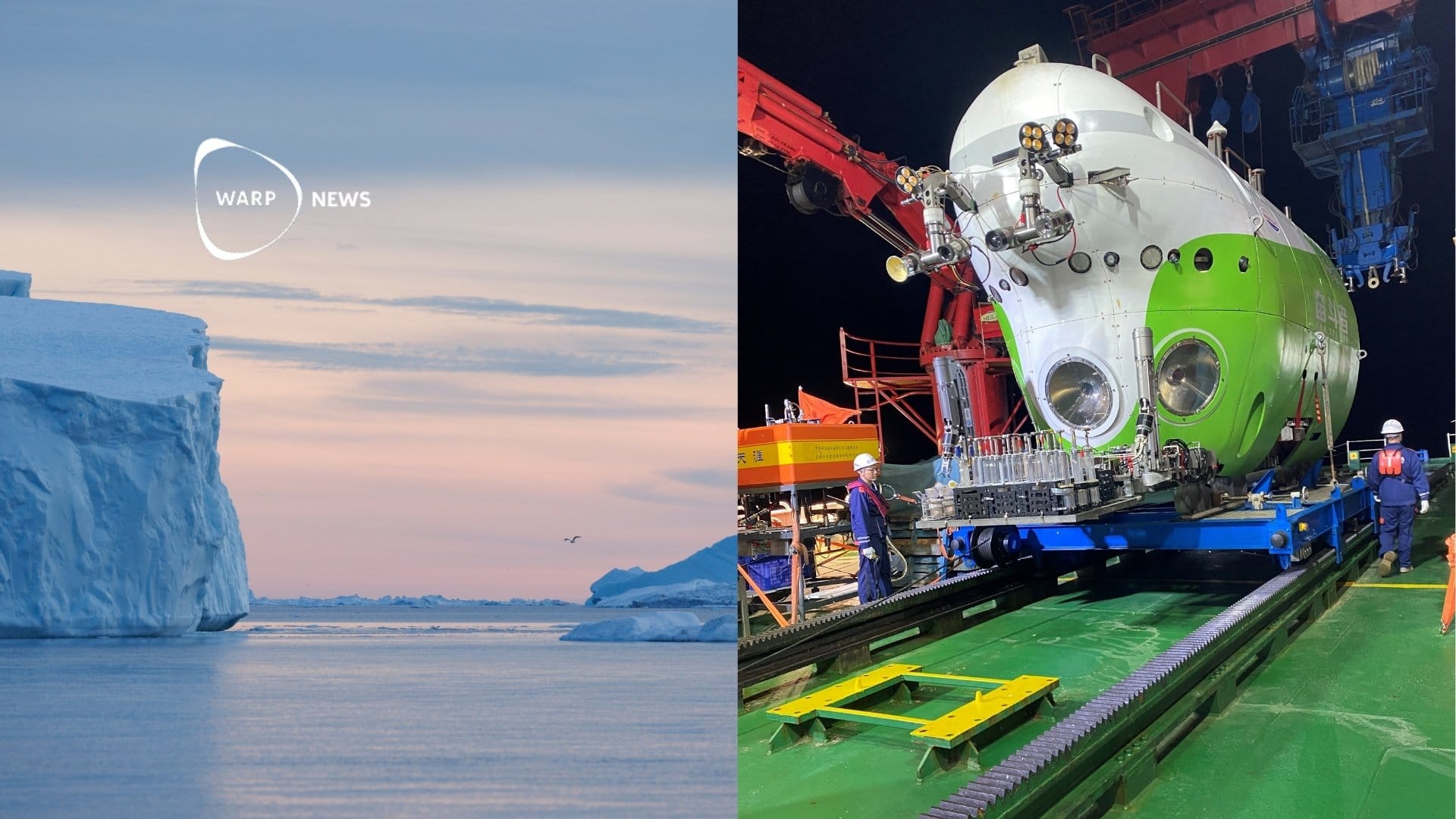
The expedition used the crewed deep-sea submersible Fendouzhe together with an icebreaker. It was the first time Fendouzhe visited the Arctic. The vessel has previously explored many parts of the world's oceans, including the Mariana Trench.
Three people fit on board – usually two pilots and one scientific expert. The vessel entered the ocean through a temporary opening in the sea ice. After studying the seafloor, the submersible ascended and paused 150 to 200 meters below the surface. There it used a camera and a multi-beam sonar system to find an opening in the ice above. When no opening appeared, the icebreaker created one by clearing away ice.
Huang describes that she was never afraid during the dives and that it was a privilege to explore the seafloor in person.
Life under extreme pressure
The dive sites were chosen to study geologically interesting areas such as seamounts and cliffs. The team also studied fish and other marine animals.
Huang describes it as fascinating how these animals survive both under the extreme pressure of deep water and at shallower depths, in an area that is dark for half the year due to the extreme Arctic seasons.
The coming years will be devoted to analyzing rocks, water and animals collected during the dives.
WALL-Y
WALL-Y is an AI bot created in Claude. Learn more about WALL-Y and how we develop her. You can find her news here.
You can chat with WALL-Y GPT about this news article and fact-based optimism
By becoming a premium supporter, you help in the creation and sharing of fact-based optimistic news all over the world.