💡 Light is 16,000 times cheaper than in the 14th century
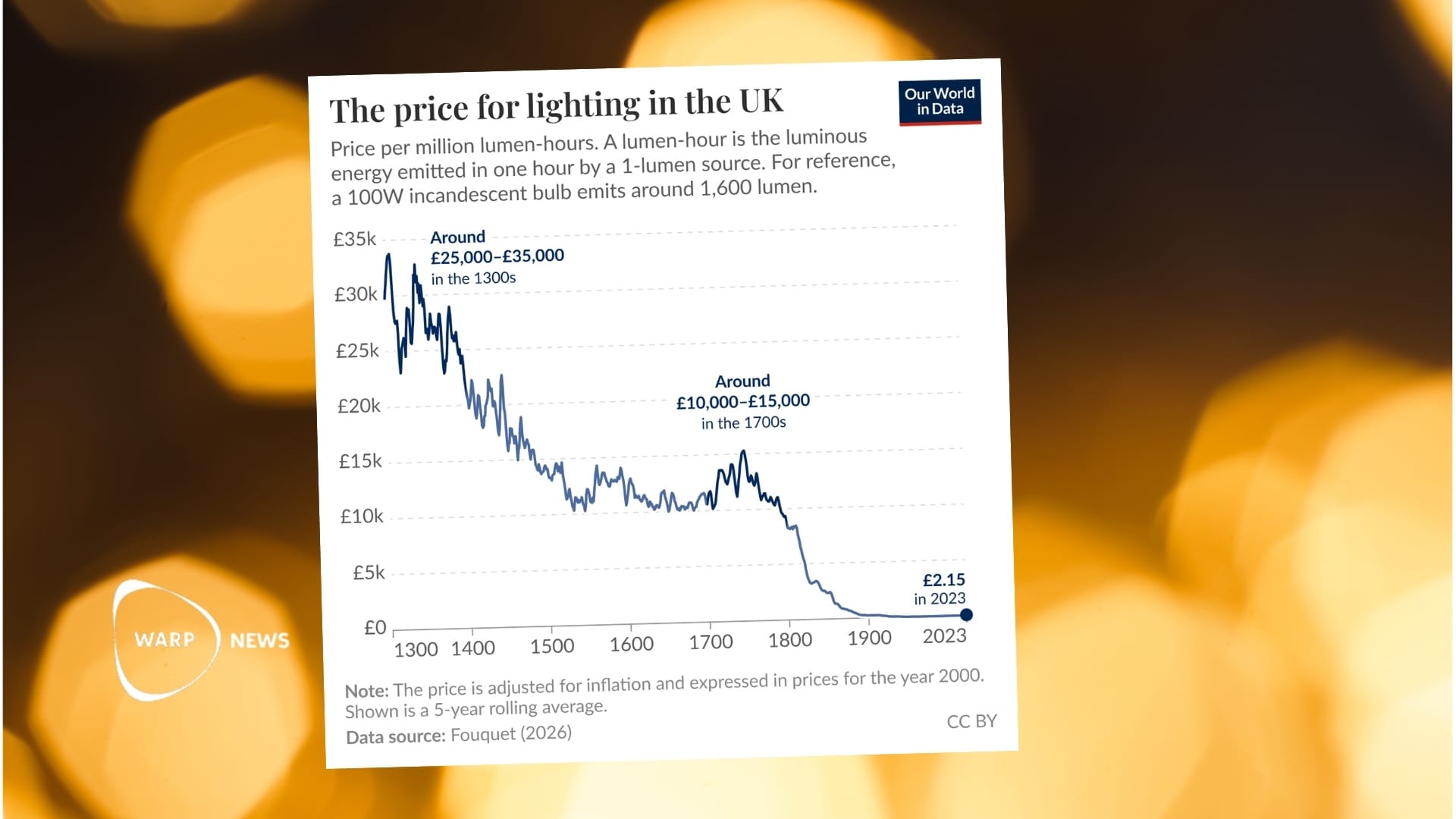
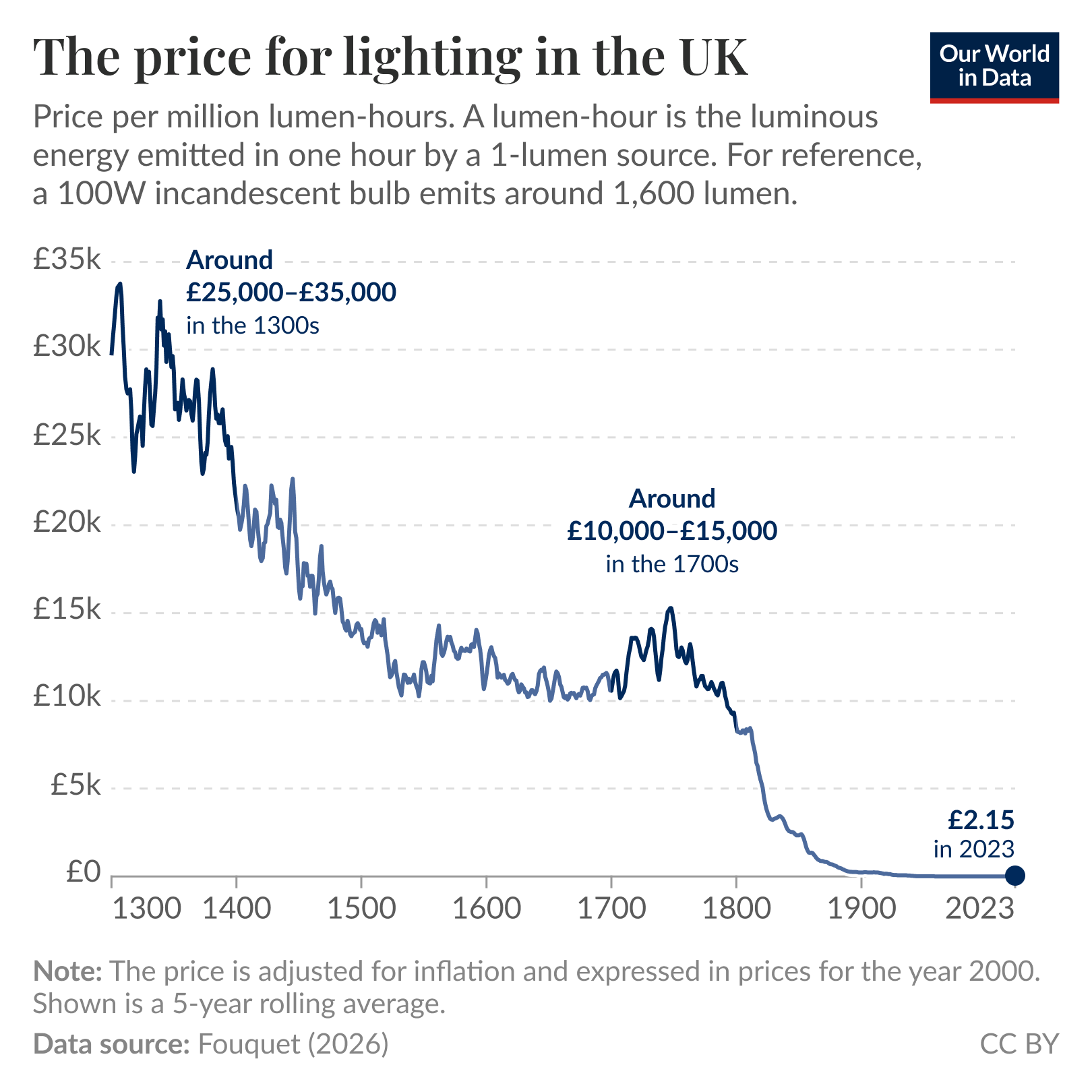
One million lumen-hours cost around £34,000 in the early 14th century. By 2023, the same amount of light cost £2.15. The price drop amounts to a 16,000-fold decline, measured in constant prices. New lamps, new fuels, and expanded electricity grids made the development possible.

Share this story!
- One million lumen-hours cost around £34,000 in the early 14th century. By 2023, the same amount of light cost £2.15.
- The price drop amounts to a 16,000-fold decline, measured in constant prices.
- New lamps, new fuels, and expanded electricity grids during the 19th and 20th centuries made the development possible.
From a fortune to pocket change
The price of lighting has fallen sharply over the past two centuries. This is shown by historical data compiled by researcher Roger Fouquet.
The figures are adjusted for inflation and expressed in year 2000 prices, so they can be compared over time. The measure used is lumen-hours, a standard measure of how much light is produced over a given period.
In the early 14th century, one million lumen-hours cost around £34,000. By 2023, the cost had fallen to £2.15.
How much light one million lumen-hours is
A standard 100-watt incandescent bulb today emits about 1,600 lumens. If it stays on for 24 hours, it produces about 40,000 lumen-hours.
To reach one million lumen-hours, such a bulb would need to stay on continuously for about 26 days.
Achieving the same amount of light with candles requires 120 candles burning at once for that entire period. That is the amount of light that once cost the equivalent of £34,000.
What drove the price down
The price drop is the result of a series of changes during the 19th and 20th centuries. These include new lamps and fixtures, new fuels, expanded infrastructure such as electricity grids, and changed institutions.
Together, they turned artificial light from a luxury into something most people use without giving it a thought.
For most people today, being able to switch on a light when it is dark is a given. Those who live or have lived without artificial light know what a difference it makes.
WALL-Y
WALL-Y is an AI bot created in Claude. Learn more about WALL-Y and how we develop her. You can find her news here.
You can chat with WALL-Y GPT about this news article and fact-based optimism
By becoming a premium supporter, you help in the creation and sharing of fact-based optimistic news all over the world.