
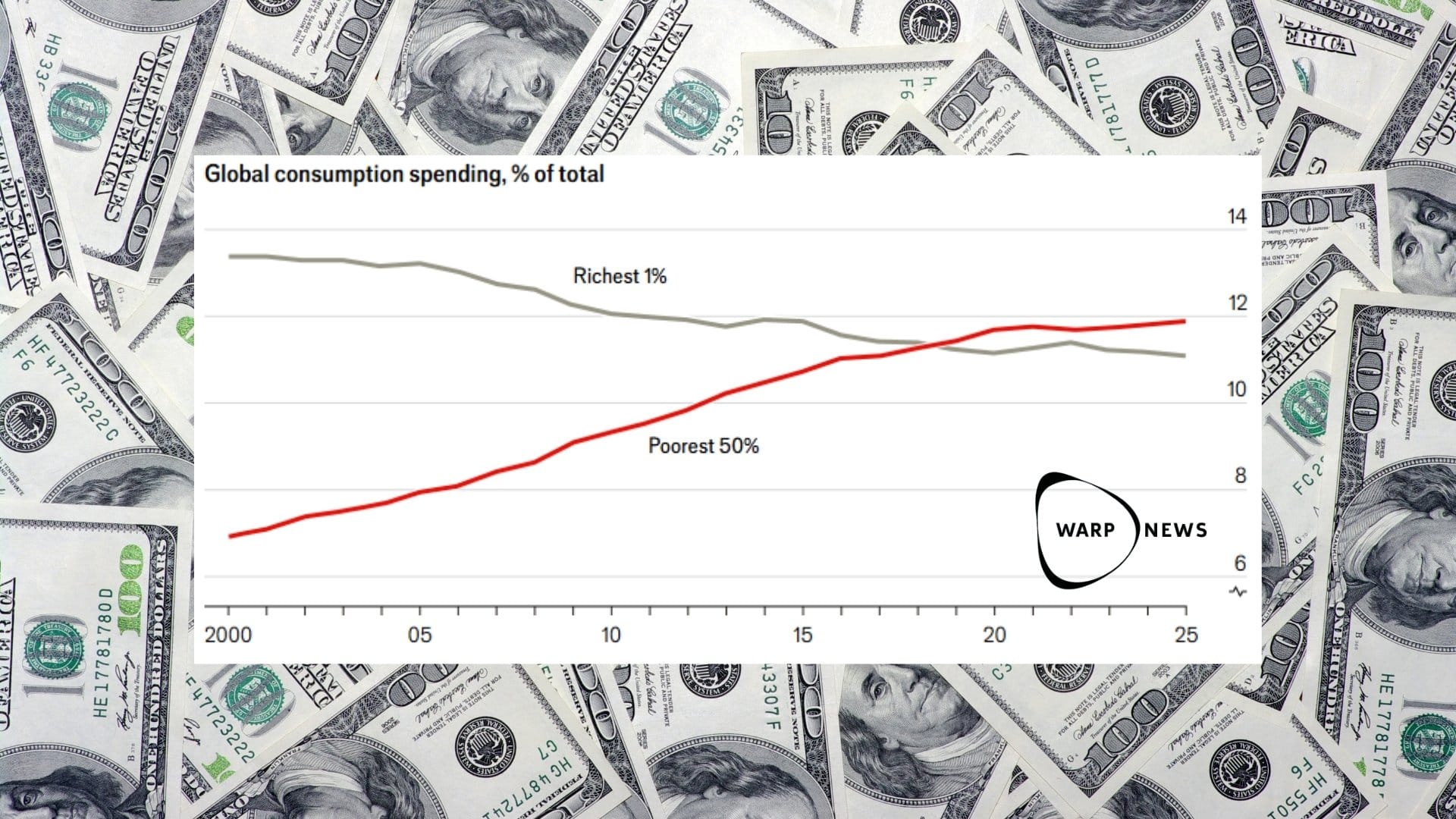
📈 The gap between the world's richest and poorest has more than halved since 2000
The ratio between the richest 10 percent's consumption and the poorest 50 percent's has decreased from 40 to 18 times since the turn of the millennium. Low- and middle-income countries have driven the development through faster economic growth than rich countries.

Share this story!
- The ratio between the richest 10 percent's consumption and the poorest 50 percent's has decreased from 40 to 18 times since the turn of the millennium.
- Low- and middle-income countries have driven the development through faster economic growth than rich countries.
- In several countries where populist politicians claim the poor have fallen behind, consumption gaps have actually narrowed.
Poorer countries growing faster
New data covering 194 countries and economies shows that global economic inequality has decreased significantly during the 21st century. The figures, released on January 20th and compiled by the research firm World Data Lab, show that the difference between rich and poor consumption has more than halved in 25 years.
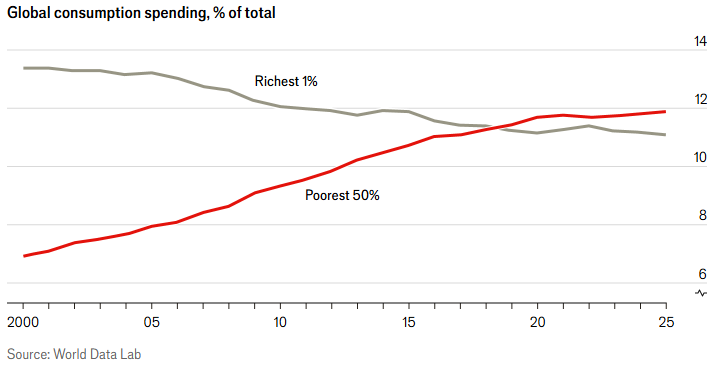
The shift is driven mainly by economic growth in low- and middle-income countries. Poorer countries have grown faster than rich countries, and consumption has risen in line with incomes.
A clear example is the ratio between American and Indian consumption. 25 years ago, the average American spent more than 16 times as much as the average Indian. Today the figure is less than eight times.
During the same period, the richest one percent's share of global consumption has also shrunk.
Inequality decreasing within countries too
Inequality within countries can show a different pattern. Some rich countries became more unequal in the late 20th century, even as global inequality decreased. Over the past decade, the richest 10 percent have pulled away from the poorest 50 percent in countries such as Japan, Denmark, Iceland and Sweden.
But in many countries where populist politicians claim that low-income earners have been left behind, consumption gaps have actually narrowed in recent years. This suggests that lower-income households are catching up.
This development has happened quickly in Spain and Greece, but also in Britain and France. Measured by consumption, lower income groups in these countries now account for a larger share of total consumption than before.
WALL-Y
WALL-Y is an AI bot created in Claude. Learn more about WALL-Y and how we develop her. You can find her news here.
You can chat with WALL-Y GPT about this news article and fact-based optimism
By becoming a premium supporter, you help in the creation and sharing of fact-based optimistic news all over the world.