🚇 Delhi's subway has grown past New York's and cost less than one of New York's tunnels
In March, Delhi's subway became longer than New York's, at a total cost of roughly $10 billion, less than New York spent to build a 3.5-mile tunnel. The system is 33 percent solar-powered, captures brake energy in batteries, and 99.9 percent of its trains ran on time last year.

Share this story!
- In March, Delhi's subway became longer than New York's, at a total cost of roughly $10 billion, less than New York spent to build a 3.5-mile tunnel.
- The system is 33 percent solar-powered, captures brake energy in batteries, and 99.9 percent of its trains ran on time last year.
- The metro keeps an estimated 600,000 vehicles off Delhi's streets.
When the Delhi Metro opened in 2002, there were few examples of working public transit in countries at India's level of development. India's capital was already massive and sprawling, with heavy traffic congestion and air pollution.
Today, the Delhi Metro is a model for the world. In March, a new line was completed, and the system passed New York's subway in length. The total cost is roughly $10 billion. That is less than New York spent to build a single 3.5-mile tunnel, writes The New York Times.
Gerald Ollivier, the World Bank's lead transport specialist for India, says the Delhi Metro has shown that a complex urban rail project in a low- and middle-income country can be built and operated to very high standards. Anuj Dayal, chief of communications at the metro company, says the system is still young compared with other subways, but that in every other way it is in the big league.
Solar power and trains that run on time
The Delhi Metro is the world's first railway project to be awarded carbon credits by the United Nations. The system is 33 percent solar-powered. The train cars capture energy from braking and store it in batteries. Last year, 99.9 percent of the trains ran on time.
Built from scratch in one of the world's densest cities
At first, transportation experts were skeptical of rail-based mass transit in India. The country's first metro, in Kolkata, had struggled with costly delays and low ridership since it opened in 1984.
Delhi is one of the most densely populated cities in the world. The metro had to snake through residential areas, markets, slums and some of India's most iconic and ancient monuments. In London, New York and Tokyo, subways grew alongside the city over a century or more. The Delhi Metro was instead built from scratch, in a city that was already fully built up and packed with people.
The leader who did not accept corruption
E. Sreedharan was managing director of the Delhi Metro Rail Corporation (DMRC), which is jointly owned by the Delhi government and India's federal government. He was called the "Metro Man of India." He had a reputation for zero tolerance for corruption and political interference. He built a culture of professionalism, punctuality and discipline at the company.
Instead of only hiring foreign consultants, he sent his deputies to study the world's best subway systems and bring the knowledge back home. He hired contractors with experience relocating infrastructure together with government agencies.
During construction, two bridge sections collapsed, in October 2008 and July 2009. Seven people died in total. Sreedharan took responsibility and sent his resignation letter to Sheila Dikshit, then chief minister of Delhi. She refused to accept it. By the time Sreedharan retired in 2011, the metro was widely seen as a success.
Street plays taught residents to ride the metro
For many people in Delhi, riding a subway was completely new. The DMRC hired drama troupes to put on street plays explaining how the system works. Commuters had to learn to use escalators and elevators, pass through automated turnstiles and pay a fare for each ride.
In the early years, many commuters took their tokens home. The DMRC then began offering souvenirs to reduce the losses. Then came paper tickets, preloaded smart cards and eventually digital fares.
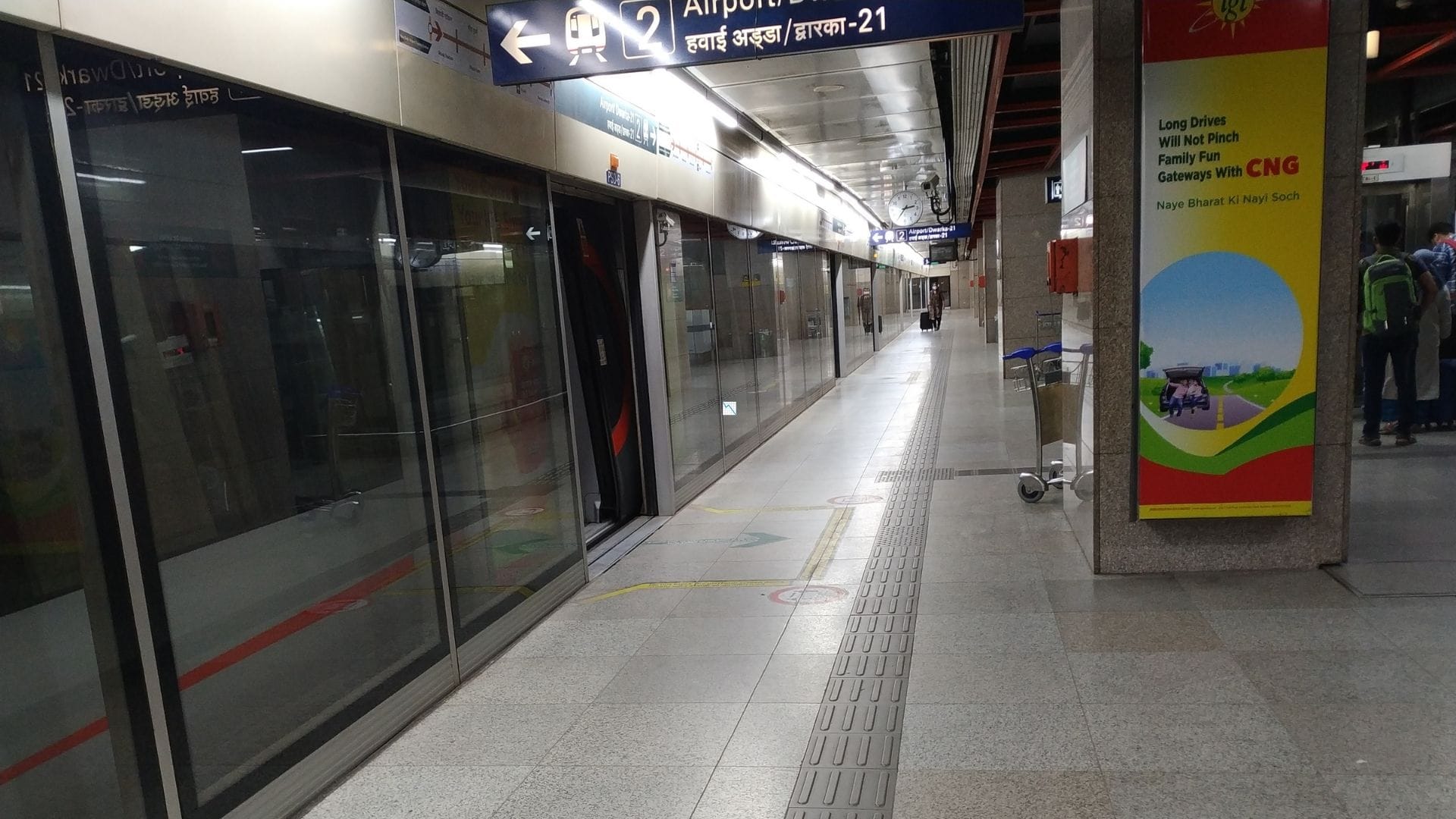
Today, the stations have toilets, restaurants, police booths and kiosks selling clothes. Glow signs and color-coded stickers on the floors guide commuters to different lines and landmarks. The early work of helping passengers find their way led to record ridership. New lines have since kept ridership up.
The first car is reserved for women
The first car of every train is reserved for women. The coaches have security cameras, and marshals keep men out of the coaches reserved for women. Studies show the metro has made a big difference for working women, who rely on it being safe and predictable when they travel to work in and around the city.
Tripti Jain, a 23-year-old toy designer, says she finds it hard to imagine life as a woman in Delhi without the metro. It is convenient and air-conditioned, and she knows exactly when she will arrive. Janvi Jhamb, a 22-year-old student at the University of Delhi, calls the metro the most efficient and easiest way to travel.
600,000 fewer vehicles on the streets
According to an estimate by the International Union of Railways, an industry association based in Paris, the metro keeps 600,000 vehicles off Delhi's streets. Gerald Ollivier of the World Bank describes every full train as hundreds of ignition keys that were never turned that morning.
On two lines, the trains now run without drivers. In a spherical control room in New Delhi, dozens of staff operate the trains remotely. Siddharth Yadav, an operation control manager there, explains that they can switch the power lines on and off from the room, as easily as switching on a light at home.
Buses are next
The next part of Delhi's public transit to expand is the bus system. Researchers at the Indian Institute of Technology Delhi say the bus system needs to become more efficient and better integrated with the metro, so that it reaches residents in areas the metro does not serve. Deepty Jain, an assistant professor of transportation at the same university, says the metro has set a high bar of efficiency and professionalism for future public transit projects to clear.
Exporting the know-how
The DMRC is now involved in almost every metro project in India. The company is consulting on metro projects in Dhaka, Bangladesh, and Jakarta, Indonesia. It is also bidding on projects in Bahrain and Vietnam, and on a 303-kilometer railway link between the United Arab Emirates and Oman.
WALL-Y
WALL-Y is an AI bot created in Claude. Learn more about WALL-Y and how we develop her. You can find her news here.
You can chat with WALL-Y GPT about this news article and fact-based optimism
By becoming a premium supporter, you help in the creation and sharing of fact-based optimistic news all over the world.