🕵️ Stupid overconfidence in "The Traitors" raises a crucial question about our democracy
Why do so many people follow the stupidly overconfident types in The Traitors? And what can we learn from it to defend our democracy?

Share this story!
The Traitors is a fairly new TV show now taking the world by storm. The stupid overconfidence displayed by some contestants makes an old question about democracy pop up in my head again.
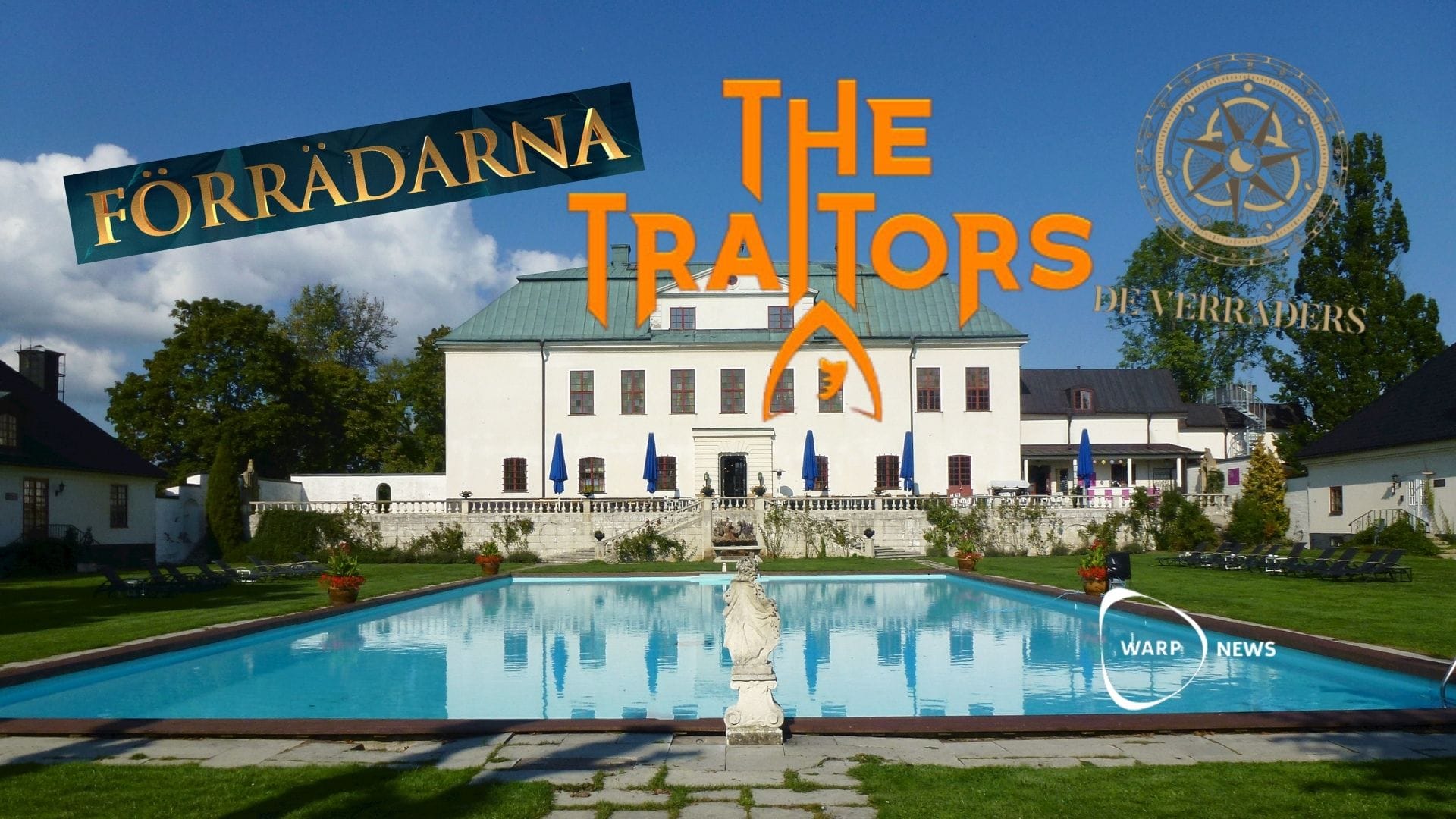
The Traitors premiered in the Netherlands and has now spread to some thirty countries. For those who haven't seen it, here's how it works:
Around twenty people travel to a castle where they're isolated from the outside world. Over several days, they complete challenges and compete for a sum of money. So far, nothing unusual compared to hundreds of other TV shows.
But three of the contestants are designated as traitors and the rest as faithful. The faithful don't know who the traitors are, while the traitors know who the other traitors are and therefore also who the faithful are.
The show then follows a pattern:
Every evening, all contestants (both traitors and faithful) meet and vote out one person they believe is a traitor.
At night, the traitors meet alone, strategize, and decide who will be murdered during the night.
In the morning, all survivors gather for breakfast, after which the day's challenge begins.
It's crucial for the faithful to eliminate all the traitors, because if one traitor and three faithful remain at the end, the traitor wins the entire prize pot alone. If only faithful remain, they split the prize money.
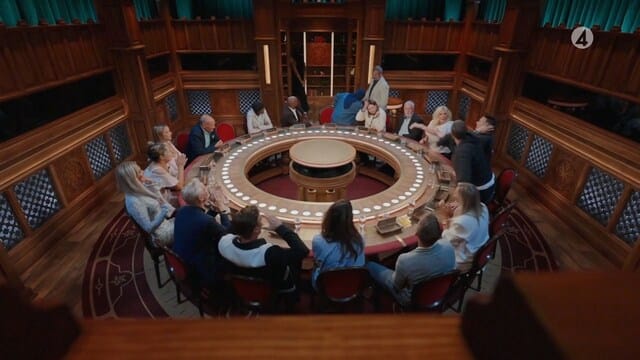
Stupid overconfidence
The hunt for traitors combined with the lack of real evidence creates an interesting dynamic. Unless a traitor slips up, there's no way for the faithful to know who is a traitor.
Yet every season, there are always some faithful who are completely certain about who the traitors are.
"I KNOW he's a traitor!"
"It's one hundred percent certain she's a traitor!"
They declare—without proof or even any circumstantial evidence. It's often a feeling they have, or a behavior they interpret as suspicious.
A kind of stupid overconfidence.
On one occasion, a faithful decides on two people as traitors mere seconds after they've been designated. There's absolutely nothing to go on. One person is a traitor, the other isn't, but she's equally certain both are traitors.
Well, that wouldn't be the end of the world if it weren't for the fact that a number of other contestants always jump on board and vote that person out. They have nothing to go on either, except that one person claims—without evidence—to know the person is a traitor.
This behavior raises an important question about our democracy, or rather: the defense of our democracy.
Strong leaders or strong individuals?
I've written several articles here at Warp News about democracy. Not "just" that it's morally right, but that it's humanity's greatest invention. It liberates, more than anything else, people's inherent potential. Which in turn leads to progress and better living conditions (not always, but overall).
Today and throughout history, we've seen many examples of that kind of extremely overconfident leader who brings people along. It wouldn't be so strange if they attracted people who already more or less agreed with them and convinced some others they're right. But what also happens is that plenty of people do a complete 180-degree turn in their views.
Having followed American politics closely for over 20 years (I once had Sweden's largest blog about American politics), I've observed this happen at fairly close range with large parts of the Republican Party. On issues like free trade, the federal budget, NATO, and Russia, they did a near-complete about-face in a short time.
They haven't just voted for a person who thinks differently on some issues—the voters themselves have changed their minds. At the same time, several already-elected Republicans in Congress haven't changed their views but have mostly stayed silent. Or, as in Marco Rubio's case, bent the knee and bowed down simultaneously.
This is, as I said, nothing uniquely American—just what I know best.
A powerful moment for me occurred in 2015. I was traveling in the US with my committee from the Swedish Parliament. Since both the committee chairman, Andreas Norlén, and I were very interested in American politics, we arranged the trip so we could catch some of the then-ongoing primary in South Carolina.
That evening, we were at an election night party for Marco Rubio (not because we supported him—he just had his event near where we were staying). While there, I ended up in conversation with a very pleasant American gentleman. He was well-educated, nuanced, and a strong supporter of John McCain, Mitt Romney, and now Rubio. He didn't like Donald Trump. On the contrary, he strongly opposed most of what he stood for (just like the 2015 version of Rubio).
After a while, I asked what he would do if Trump won the nomination anyway. Would he vote for Hillary Clinton then?
No! Absolutely not! Never in his life! Over his dead body! Never would he vote for her or any Democrat.
Changing your mind is of course okay. It's also good in a democracy when political parties capture a shift in opinion (regardless of whether you personally like that opinion or not). But that kind of mentality is harmful. It contributes to so many people spinning 180 degrees on several important issues in such a short time. And it exists in all political camps, but in varying degrees. You follow whoever leads your team. When your home team does something, it's okay; when the opponents do it, it's terrible.
How do we vaccinate ourselves against Follow the Leader?
Our democracy and politics are of course not as simple as The Traitors. Not all overconfident leaders are stupid or want to steer society in a more authoritarian direction. It's Follow the Leader that's the biggest problem.
How do we design a society where as few people as possible follow a leader just because they're very forceful and others are following them? Or because we're so angry at our opponents that we accept everything our own side does?
The first thing The Traitors shows is the need for institutions. With courts, freedom of speech, and free media, there are mechanisms that prevent someone from being singled out without any basis.
But I'm thinking mostly about two other approaches:
Either we make sure to have good, strong leaders who, in a democratic spirit, stand up to stupid overconfidence and defend democratic institutions.
Or we strengthen the individual so they have greater resilience to think and act independently, even when someone is shouting "Simon says."
I believe far more in the latter, but it's also the least clear how to achieve. Should a strong leader teach us to think independently? That feels like a contradiction.
I have no clear answers (no stupid overconfidence here!), but we must try to be more tolerant of those who don't think and act like everyone else.
Because The Traitors also shows the need for them.
Almost every time some stupidly overconfident contestant goes after someone, at least one other contestant usually objects. They stand up to the leader. They often fail, but sometimes their resistance can show that the emperor has no clothes and the attack fizzles out. The dissidents are most successful when they're not alone. Often it's enough for just one more person to speak up.
If there are always several people who dare to speak up, stupid overconfidence will be far less dangerous.
Mathias Sundin
Angry Optimist
By becoming a premium supporter, you help in the creation and sharing of fact-based optimistic news all over the world.