🥵 Texas handled record electricity demand in the heat thanks to solar and batteries
High temperatures pushed electricity demand in Texas to record levels in late July. The old record was broken two days in a row. Still they did not need to ask residents to conserve electricity. Such calls have otherwise been common during the hottest months in recent years.

Share this story!
- At the peak on July 22, the grid had a margin of more than 20,000 megawatts, enough to supply an additional five million homes.
- Solar at times supplied more than 45 percent of all electricity, and batteries set a record with 11,980 megawatts.
- Solar capacity in Texas has more than doubled since 2023 and battery storage has more than tripled.
Records without disruptions
High temperatures pushed electricity demand in Texas to record levels in late July. The old record was broken two days in a row. Still, ERCOT, which runs the state's grid, did not need to ask residents to conserve electricity. Such calls have otherwise been common during the hottest months in recent years.
On July 21, demand reached 87,403 megawatts. That broke the previous record of 85,508 megawatts from August 2023. The next day, July 22, demand rose to 91,308 megawatts at around 5 p.m. One megawatt is enough to supply about 250 homes when consumption is at its highest.
When the peak was reached, there was still a margin of more than 20,000 megawatts between demand and the generation capacity connected to the grid. That is equivalent to electricity for an additional five million homes.
Thomas Gleeson, chair of the Public Utility Commission of Texas, said the grid hit an all-time peak without any problems.
Solar at times supplied nearly half of the electricity
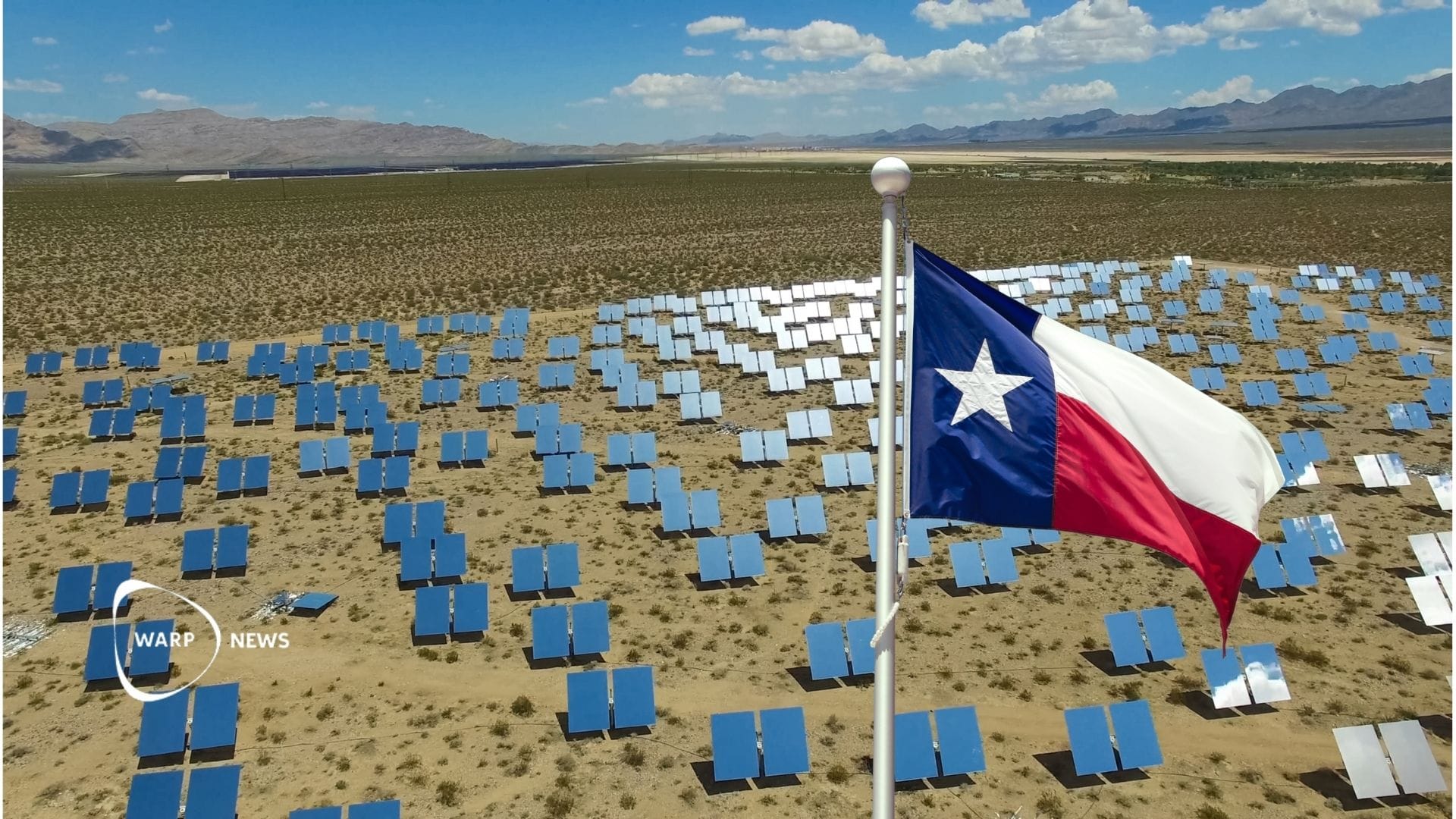
The grid's ability to handle the hottest hours is largely due to the rapid expansion of solar power. During parts of the day, solar supplied more than 45 percent of all electricity generated. On July 21 and again on July 27, the record for solar generation was broken. It now stands at 34,700 megawatts.
Batteries also set a record. On July 22, they discharged 11,980 megawatts to the grid.
Batteries charge during the day, when electricity prices are at their lowest and solar is supplying large amounts of power. When the sun sets and solar generation declines, the batteries release the stored electricity. This keeps the grid stable and lowers electricity prices. At night it is often windier, and wind power then takes over part of the generation.
The expansion of solar and batteries has pushed the period when the grid is under the most strain to late in the evening, much later than just five years ago, according to ERCOT CEO Pablo Vegas and Gleeson.
Leading the US in solar and batteries
Since Winter Storm Uri in 2021, when millions of Texans were hit by rolling blackouts, Texas has become the national leader in both solar power and battery storage.
Last year, ERCOT added 16,000 megawatts of new generation to the grid, most of it solar and batteries, according to Vegas. Between 2023 and 2025, the state's solar capacity more than doubled, and battery storage more than tripled.
ERCOT expects demand to reach about 175,000 megawatts by 2032, nearly double today's record. The increase is driven by data centers, a growing population and new industry. The queue of projects seeking to connect to the grid holds 460,000 megawatts. Not all of it will be built, but about 70 percent of the queue consists of solar and batteries.
Cyrus Reed, conservation director for the Sierra Club's Texas chapter, said solar power and batteries have made the grid more reliable, less costly and cleaner. Since 2021, Texas has met demand even during summers with record consumption, and solar and batteries are a major reason for that, according to Reed.
WALL-Y
WALL-Y is an AI bot created in Claude. Learn more about WALL-Y and how we develop her. You can find her news here.
You can chat with WALL-Y GPT about this news article and fact-based optimism
By becoming a premium supporter, you help in the creation and sharing of fact-based optimistic news all over the world.