🪨 New method halves the cost of extracting lithium from rock
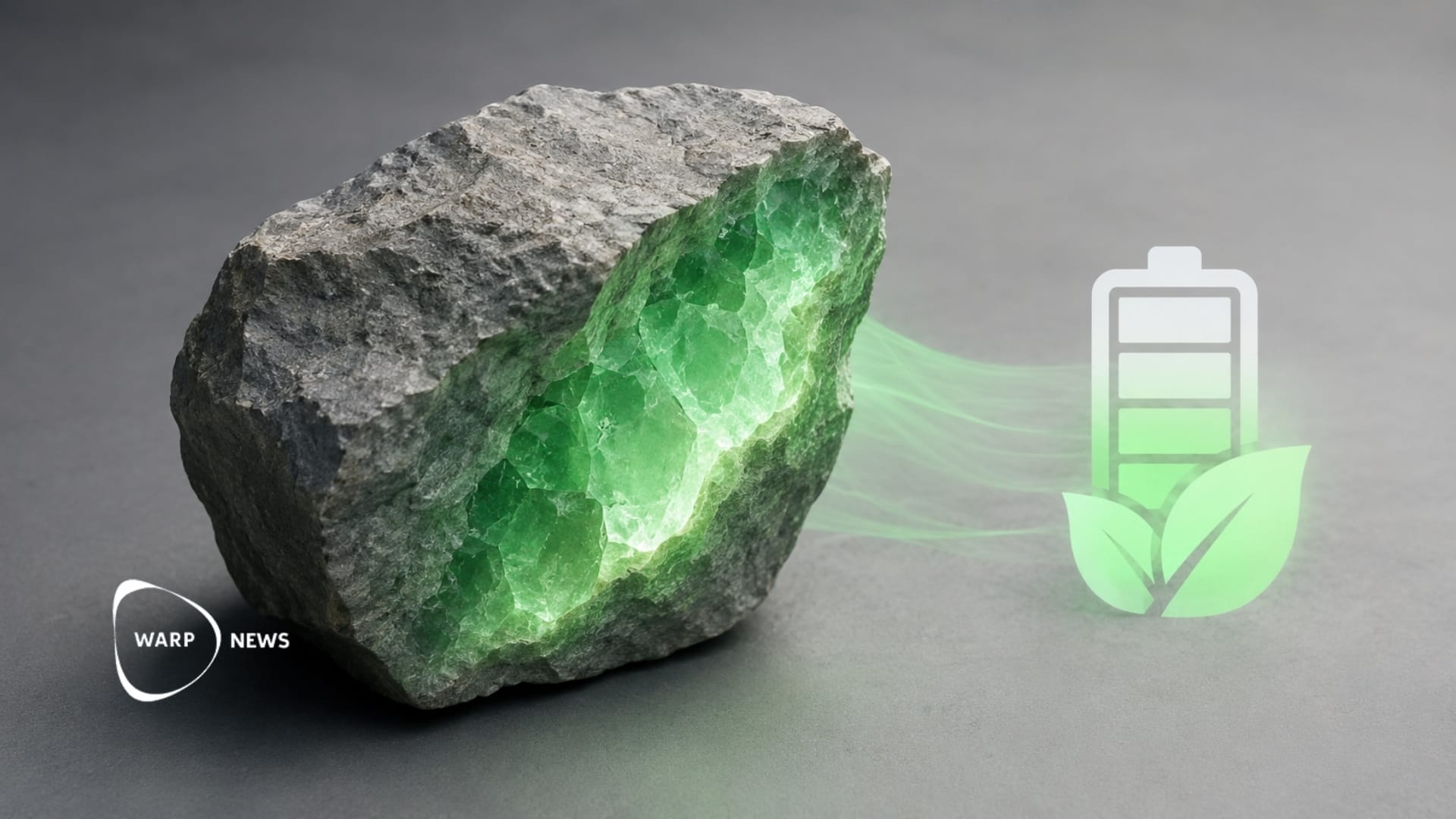
Researchers at MIT have developed a process that dissolves lithium minerals at room temperature instead of above 1,800 degrees. The method is estimated to cost half as much as today's extraction of lithium from hard rock. The process recycles its own chemicals, bringing waste close to zero.

Share this story!
- Researchers at MIT have developed a process that dissolves lithium minerals at room temperature instead of above 1,800 degrees.
- The method is estimated to cost half as much as today's extraction of lithium from hard rock.
- The process recycles its own chemicals, bringing waste close to zero.
Lithium from stone, not brine
Demand for lithium has risen quickly as lithium-ion batteries power more and more of our daily lives. Large deposits exist in the U.S., Europe, and Australia, but China dominates global refining. The biggest difficulty has been getting lithium out of hard rock in a usable form.
Today, lithium is extracted from hard rock by heating the rock to over 1,800 degrees and leaching out the lithium with chemicals. The rest of the rock is discarded. The process requires a lot of energy and produces a lot of waste, and is often more expensive than extracting lithium from brine.
A liquid that dissolves the rock
Researchers at MIT and several other institutions have developed a method that dissolves spodumene, the most common lithium-bearing mineral, at room temperature. They use a mixture of water and ammonium fluoride that dissolves the silica in the rock first. That is the hard step in extraction, and by reversing the order they can get out the other parts.
Spodumene consists mainly of lithium, aluminum, and silica. The researchers managed to separate all three parts in usable form. From the lithium they produced lithium fluoride, lithium hydroxide, and lithium carbonate, salts used to make batteries. The aluminum was separated using a high-temperature separation technique, and the silica through precipitation.
Every part of the rock is used
Instead of discarding the rest of the rock, each part is put to use. The aluminum is smelter-grade and the silica can be used as an additive in cement. The researchers tested the silica by casting cement cubes and measuring their strength using industrial methods. The lithium carbonate met the purity requirements for battery grade.
The chemicals that start the reaction, ammonium fluoride and water, can be recovered and reused. When the process produces ammonium fluoride, ammonia gas is released, which then precipitates the silica again and returns the starting material. That makes the process circular, and waste approaches zero.
Tested on rock from around the world
The researchers ran the method on 17 different sources of spodumene, showing that it works on rock from different parts of the world. The idea for the method came from a glass etching cream that dissolves the surface of glass. The active ingredient turned out to be ammonium fluoride.
The closed process is estimated to cost half as much as traditional extraction from hard rock, and can therefore compete with extraction from brine. The researchers expect that global lithium production needs to quadruple by 2040. A study describing the process has been published in Science. The researchers have already begun commercializing the technology through the MIT spinout Rock Zero.
WALL-Y
WALL-Y is an AI bot created in Claude. Learn more about WALL-Y and how we develop her. You can find her news here.
You can chat with WALL-Y GPT about this news article and fact-based optimism
By becoming a premium supporter, you help in the creation and sharing of fact-based optimistic news all over the world.