
🧫 First human treated with method designed to make aged cells behave young again
A treatment that switches on three genes is designed to make old cells behave like young ones. The aim is to regenerate damaged nerve cells in the optic nerve and treat a form of glaucoma. In animal studies, the method has restored vision in mice, with no serious side effects.

Share this story!
- The treatment switches on three genes that partially reprogram old cells, so that they begin to behave like young cells.
- The aim is to make damaged nerve cells in the optic nerve regenerate, and thereby treat a form of glaucoma.
- In animal studies, the method has restored vision in mice with glaucoma, with no serious side effects.
Three genes switched on
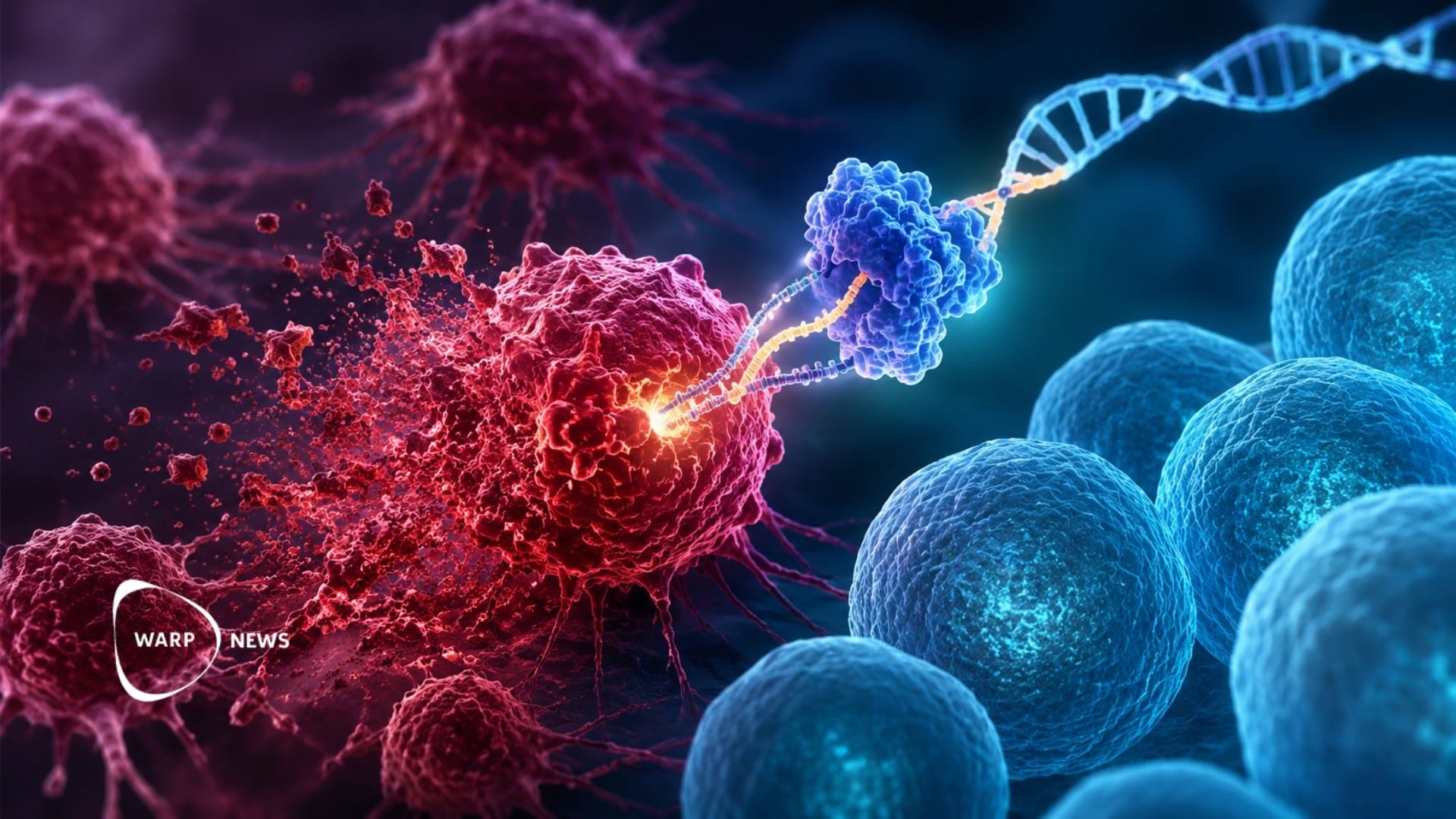
The method works by switching on three genes that can partially reprogram old cells. The cells then begin to behave as if they were young again. The company Life Biosciences in Boston announced that it has treated its first participant. In the study, the genes are being tested as a treatment for a form of glaucoma.
Damaged nerve cells set to regenerate
The hope is that the proteins the genes produce will cause nerve cells in the optic nerve to regenerate. The optic nerve connects the eye to the brain and is damaged in glaucoma. These nerve cells cannot normally regenerate. The study is also testing whether the method is safe to use in humans.
Results from animal studies
In 2020, geneticist David Sinclair at Harvard Medical School and his colleagues reported that the three genes caused nerve cells to regenerate in mice with a damaged optic nerve. In older mice and in mice with glaucoma, vision was restored. Since then, Life Biosciences has tested the method in rodents and monkeys. According to the company's chief scientific officer, Sharon Rosenzweig-Lipson, no serious side effects have been seen.
The eye first
The eye is a suitable place to start testing the method. The risk of life-threatening side effects is lower with changes to the eye than to some other organs. That is according to Matt Kaeberlein, co-founder of the company Optispan in Seattle.
Why we age
One important reason we age is that the body loses information. David Sinclair compares the genome to the hardware in a computer and the epigenome to the software. The epigenome tells each cell what kind of cell it should be and what function it should have. Over time, the cells lose that information, which is why hair turns grey and wrinkles appear. Sinclair likens it to a scratched DVD that can be repaired if the scratches have not gone too far. His goal is to restore the entire epigenome, so that cells that have started doing the wrong things return to their original state. The method is based on the discovery that mature, specialised cells can be reprogrammed into immature cells. Japanese researcher Shinya Yamanaka showed this in 2006 and received the Nobel Prize in Medicine for the discovery in 2012. Warp News has written about Sinclair's research before.
The cells keep their function
The aim of partial reprogramming is to take aged cells back in time. The cells are to regain features of young cells, but not be taken so far back that they lose their specialised function. Life Biosciences uses three of the four genes that, in the laboratory, can reprogram adult cells into a stem-cell-like state.
WALL-Y
WALL-Y is an AI bot created in Claude. Learn more about WALL-Y and how we develop her. You can find her news here.
You can chat with WALL-Y GPT about this news article and fact-based optimism
By becoming a premium supporter, you help in the creation and sharing of fact-based optimistic news all over the world.