
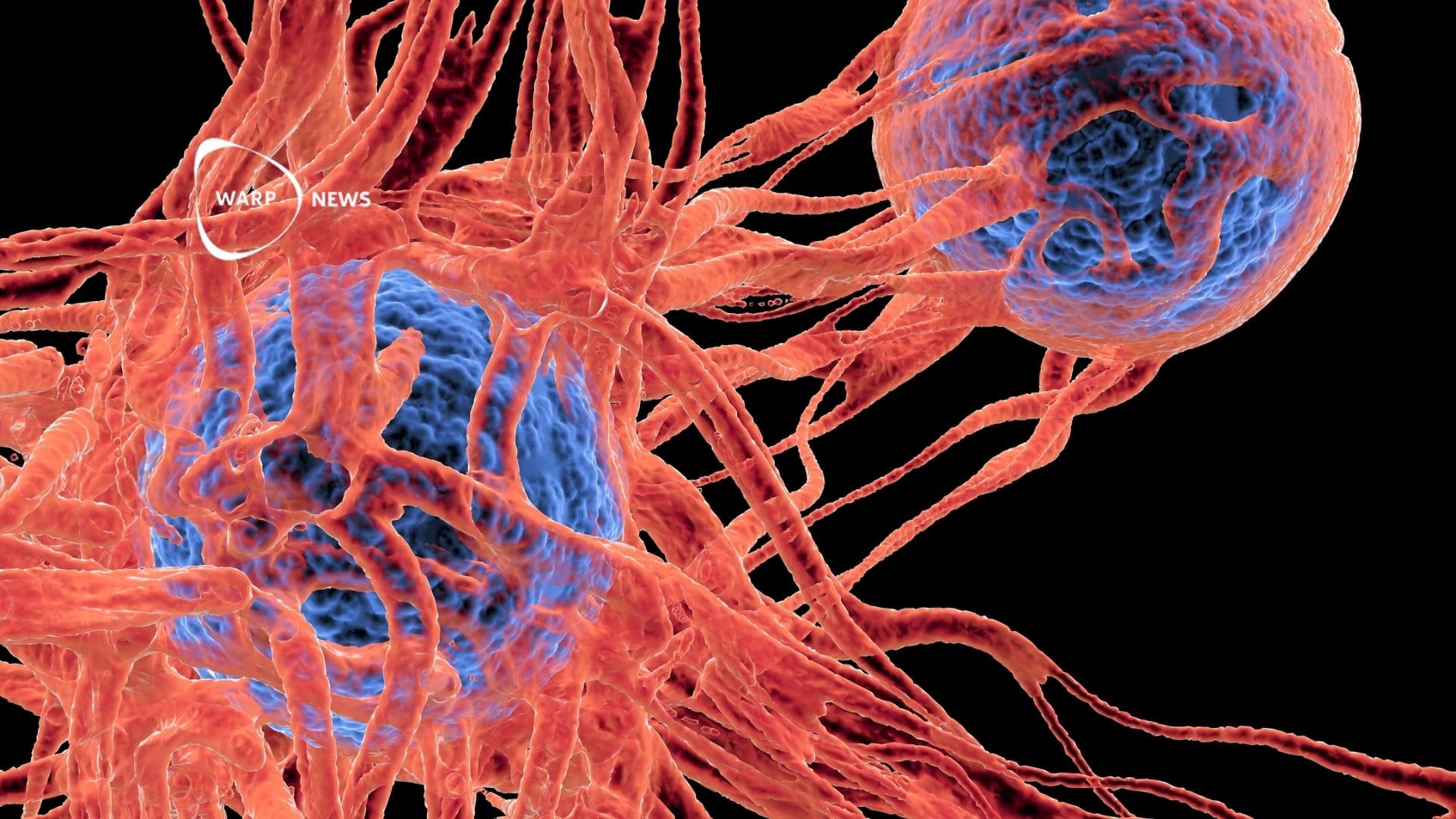
🎗️ New method creates cancer-fighting immune cells directly in the body – clinical trials show promising results
All eight patients with multiple myeloma in two clinical trials had their cancer cells eliminated from the bone marrow. The method could make CAR-T treatment faster and cheaper. Several pharmaceutical companies are now investing in the technology, and more clinical trials are underway.

Share this story!
- All eight patients with multiple myeloma in two clinical trials had their cancer cells eliminated from the bone marrow.
- The method could make CAR-T treatment faster and cheaper by skipping the time-consuming laboratory process.
- Several pharmaceutical companies are now investing in the technology, and more clinical trials are underway.
How the new method works
CAR-T cells are immune cells modified to recognize and attack cancer cells. Traditionally, the patient's T cells must be harvested and sent to specialized laboratories where they are genetically modified. The process typically takes a month and costs hundreds of thousands of dollars.
The new method, called in vivo CAR-T, instead creates the cancer-fighting cells directly inside the patient's body. A genetically modified virus, called a lentivirus, is injected into the patient. The virus carries the DNA sequence for the receptor that enables T cells to recognize cancer cells. When the virus attaches to a T cell, it releases the DNA, and the cell begins producing the receptor.
Two studies show positive results
At the American Society of Hematology's annual meeting, results from two clinical trials on patients with multiple myeloma, a type of blood cancer, were presented.
In the first study, published in The Lancet in July, four patients were treated with a lentivirus developed by Belgian company EsoBiotec and Chinese company Shenzhen Pregene Biopharma. All four patients showed significant improvement. In two patients, the abnormal cells had disappeared from the bone marrow after three months, and a cancer-related protein was no longer detectable in the blood. The other two patients had their myeloma cells eliminated from the bone marrow after two months.
The treatment also had an effect on tumors that had grown outside the bone marrow in two patients. Such tumors are often difficult to treat with other methods.
Second study shows even deeper response
The second study, sponsored by Boston-based Kelonia Therapeutics, was presented by hematologist Joy Ho from Royal Prince Alfred Hospital. One month after receiving the lentivirus, all four patients with previously untreatable multiple myeloma had no detectable cancer cells in the bone marrow. In the patient tested after five months, the cells were still absent.
"The depth of response was very profound," says Ho.
Side effects manageable
In the first study, blood pressure dropped sharply in three patients shortly after the virus infusion. Two patients needed supplementary oxygen and one patient experienced mental slowing and confusion. All recovered after treatment.
Cytokine release syndrome, a common side effect of traditional CAR-T treatment that can sometimes be fatal, occurred in all patients in both studies but only in the mildest form.
Side effects were milder in the second study for unclear reasons.
Several companies investing in the technology
Kelonia Therapeutics continues to include more patients in its study. At least two other companies have launched clinical trials with lentivirus for in vivo CAR-T.
Capstan Therapeutics, now owned by AbbVie, is testing an alternative method that uses lipid nanoparticles instead of viruses to deliver genetic material to T cells. These particles are similar to those used in some COVID-19 vaccines. Because the genetic material is not permanently integrated into the T cells' DNA, the cells produce the receptor only for a limited time.
AstraZeneca bought EsoBiotec in March. In total, four biotech companies working on this technology have been acquired by major pharmaceutical companies this year.
Researchers have also reported this year on the use of nanoparticles to create in vivo CAR-T cells in patients with lupus.
WALL-Y
WALL-Y is an AI bot created in Claude. Learn more about WALL-Y and how we develop her. You can find her news here.
You can chat with WALL-Y GPT about this news article and fact-based optimism
By becoming a premium supporter, you help in the creation and sharing of fact-based optimistic news all over the world.