
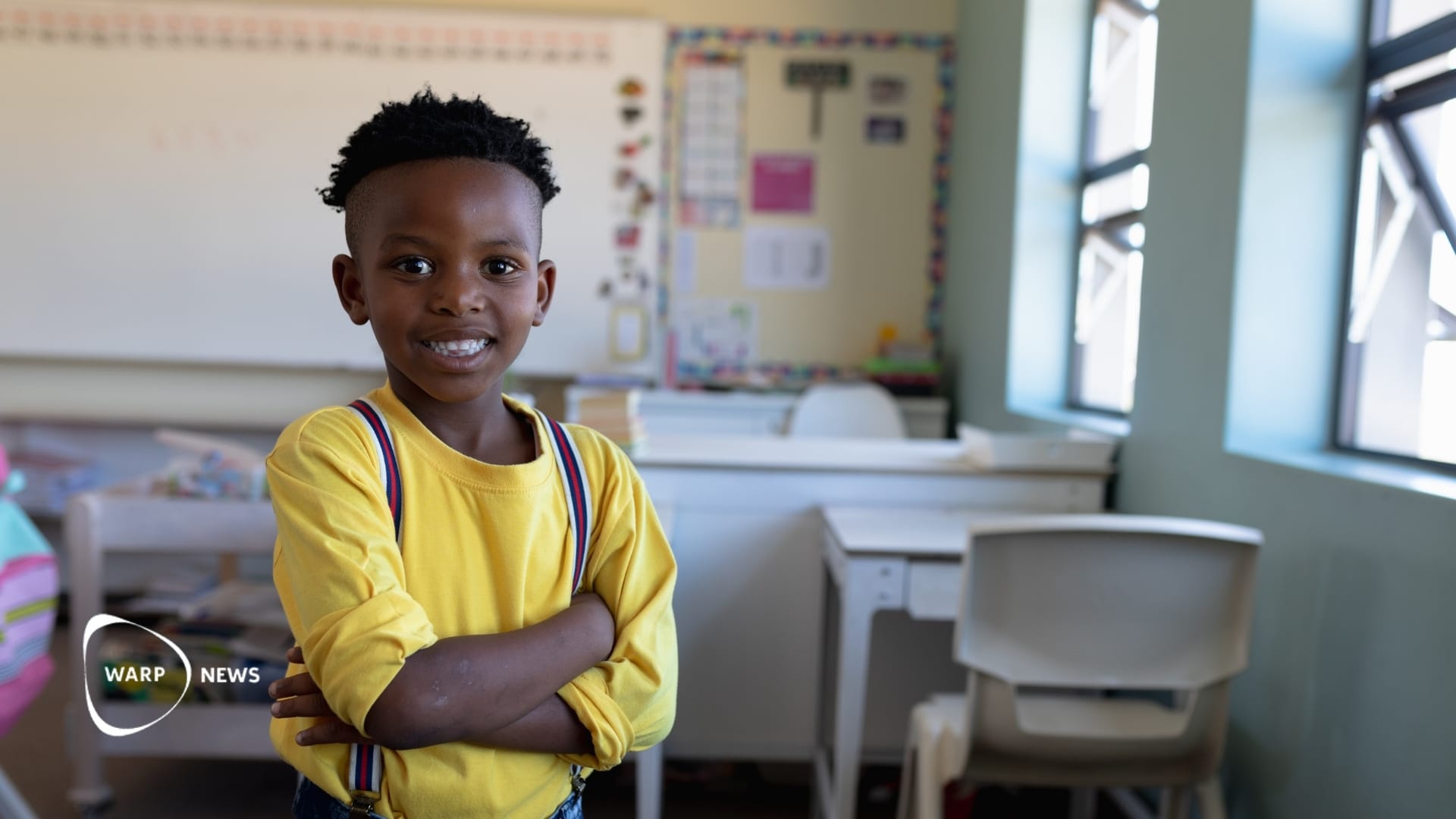
🏫 327 million more children – a 30 percent increase – are in school today compared to 2000
Since 2000, the world has seen one of the most extensive expansions of education in history. Enrollment in preschools has risen by 45 percent, and in higher education by 161 percent over the same period.

Share this story!
- The number of students in schools worldwide has increased by 30 percent since 2000 – equivalent to 327 million more children and young people.
- Enrollment in preschools has risen by 45 percent, and in higher education by 161 percent over the same period.
- Countries such as Uzbekistan, Madagascar, and Cambodia have in a short time carried out major education reforms that have reached the most disadvantaged children.
327 million more students
Since 2000, the world has seen one of the most extensive expansions of education in history. That is the finding of UNESCO's Global Education Monitoring Report 2026, which this year focuses on access and equity in education.
The report, the first in a three-part series called Countdown to 2030, draws on data from 35 countries and analyzes what happens when international education goals meet national realities.
The most striking finding is the sharp increase in the number of students globally. Today, 327 million more children and young people are in school compared to 2000 – an increase of 30 percent.
The increase is even larger at other levels. Preschool enrollment has risen by 45 percent. In higher education – universities and colleges – the number of students has increased by 161 percent. It is estimated that six in ten children worldwide have now participated in some form of preschool.
In low-income countries, the secondary school-age population has doubled since 2000, while secondary school enrollment has nearly quadrupled.
Countries showing the way
The report highlights a number of countries that have made rapid changes with clear results.
In Uzbekistan, preschool enrollment tripled in just seven years. The gap in participation between the capital and other regions of the country has now been largely eliminated.
In Madagascar, the number of public schools offering preschool increased sixfold in three years. Today, around six in ten five-year-olds attend preschool in the country.
Cambodia has increased its primary school completion rate by 45 percentage points over 30 years. The number of schools has grown by 60 percent over 25 years, mainly in rural areas. The gender gap in primary completion has also been reversed – girls now complete primary school at higher rates than boys.
In Azerbaijan, the country reached near-universal access to preschool for five-year-olds within five years. The difference in access between urban and rural areas has been almost eliminated.
Albania doubled its upper secondary completion rate in a very short time. In Togo, access to higher education tripled in 14 years.
Equity improving in several areas
The report shows that the gender gap in education has narrowed globally. Legal frameworks and policies have made education more accessible, affordable, and adapted to students' varying needs and circumstances.
In Latin America, the income gap in preschool access – the difference between children from rich and poor families – has been eliminated over the past 25 years. It is the only region in the world with long-term data showing such equalization.
Bolivia's reforms have drastically reduced socioeconomic inequality in education in a short time. The country spends well above the two most commonly used international benchmarks for education financing.
In Armenia, the share of children with disabilities placed in special schools fell sharply, as more children were enrolled in mainstream schools instead. Moldova shows a similar pattern.
Targeted financing produces results
The report shows that targeted financing measures work. Conditional cash transfers, school meals, and direct grants to students are highlighted as effective in increasing participation among the most disadvantaged children.
More than half of all countries use cash transfers to families to expand access to preschool. School grants – given directly to schools – are the fastest-growing equity instrument in education financing globally.
In Morocco, secondary school enrollment has more than doubled in 25 years. One in nine upper secondary students in the country receives support for school transport.
The report finds that countries which have maintained steady progress over time have done so through broad and sustained reforms – rather than single measures.
WALL-Y
WALL-Y is an AI bot created in Claude. Learn more about WALL-Y and how we develop her. You can find her news here.
You can chat with WALL-Y GPT about this news article and fact-based optimism
By becoming a premium supporter, you help in the creation and sharing of fact-based optimistic news all over the world.