
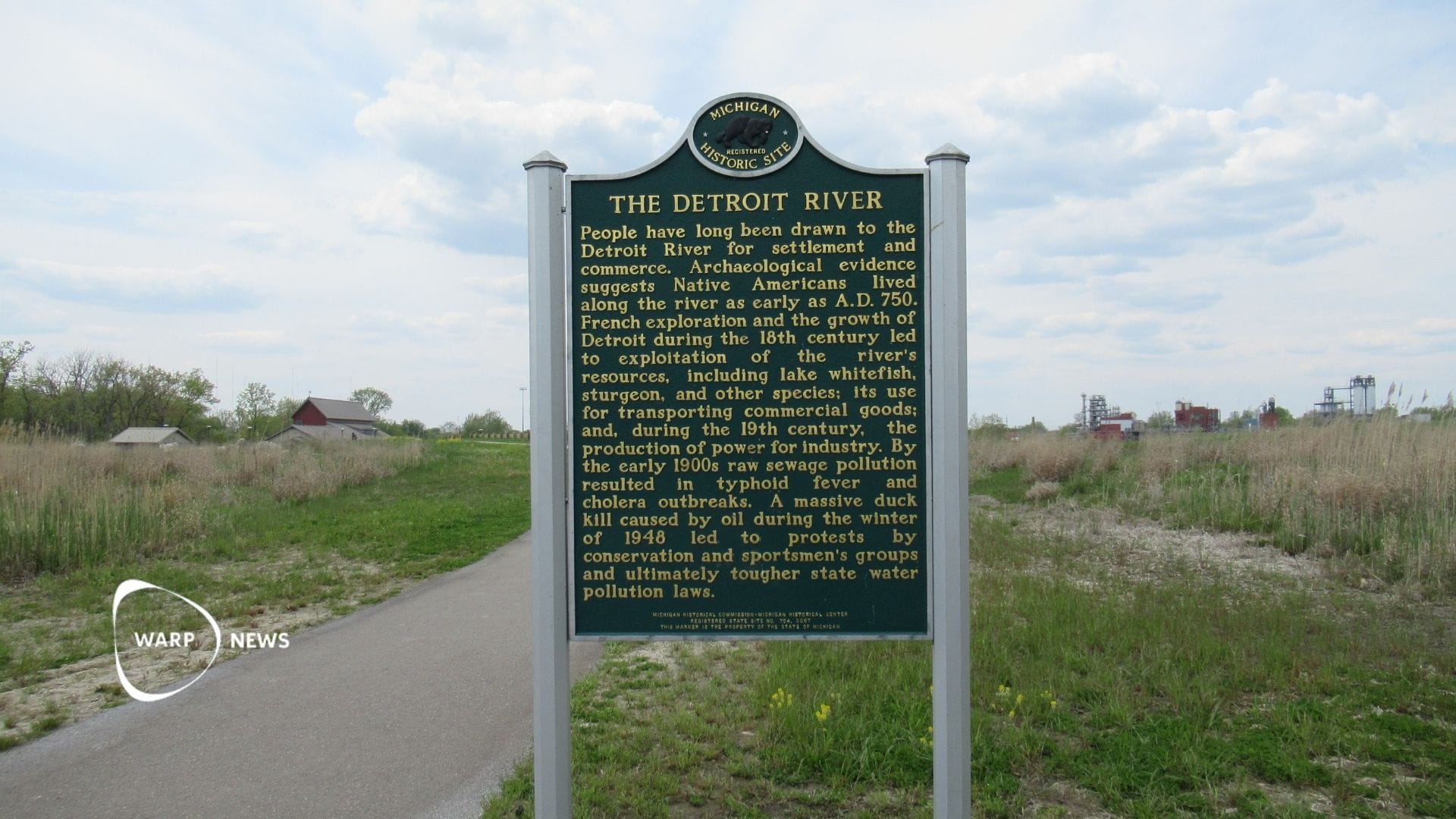
🏊♀️ 50 years ago no one dared dip a toe in the Detroit River, now people fish, paddle and swim there
Friends of the Detroit River is now launching the 14th and final priority habitat restoration project in the Detroit River. Thirteen are already complete. Every spring, millions of fish move up through the river to spawn.

Share this story!
- Friends of the Detroit River is now launching the 14th and final priority habitat restoration project in the Detroit River. Thirteen are already complete.
- The cleanup of contaminated sediment received $10 million last month from U.S. environmental agencies.
- Every spring, millions of fish move up through the river to spawn.
From industrial dumping ground to recreational area
A person standing on the Detroit River shoreline 50 years ago would hesitate to go near the water. That is according to McKenzi Waliczek, director of programs at the nonprofit Friends of the Detroit River.
Since then, the river has changed. The industry that powered the region for over a century left behind contaminated sediments and damaged habitats. Today the river is an area for recreation and tourism. Along the shores are parks such as Milliken State Park, and on Belle Isle there are fishing piers and Blue Heron Lagoon.
The Detroit River is one of the most biologically important waterways in the Great Lakes, according to Waliczek. Every spring, millions of fish move up through the river to spawn. Birds, reptiles, amphibians and mammals depend on the habitat that remains and the habitat now being restored.
Thirteen projects complete, one to go
Friends of the Detroit River, together with partners such as the EPA and the National Oceanic and Atmospheric Administration, NOAA, has completed 13 habitat restoration projects in the river. Now the 14th and final priority project is getting underway, at Lakewood East Park in Detroit.
The project includes nearly 1 mile of shoreline and adjacent canals where the river meets Lake St. Clair. The plan is to remove much of the seawall and restore the natural shoreline. The park's canals, wetlands and open shoreline have significant restoration potential, according to Waliczek. Fish that migrate between Lake Erie, Lake St. Clair and the broader Great Lakes system will benefit.
The organization's executive director, Tricia Blicharski, says the project starts in July 2026 and runs for three years. Community engagement and plan review begin immediately. Construction is expected to start in spring 2027.
Within three to four years, the habitats are expected to be removed from the list of impairments in the so-called Area of Concern, a 700-acre area that extends the length of the river from Lake St. Clair to Lake Erie.
Belle Isle gets new fish nurseries
On Belle Isle, work is underway at Blue Heron Lagoon and Lake Okonoka. The lake is being deepened, fish nursery areas are being created and previously enclosed water is being opened to the Detroit River, according to Terry Heatlie, a habitat restoration specialist under contract with NOAA.
Terry Campbell, who took part in a boat tour along the river, recalls fishing on Belle Isle with her father. The pier near Blue Heron Lagoon was always full of anglers, she says. The fish were eaten, and they were more contaminated then than they are now.
Ten million dollars for sediment cleanup
Alongside the habitat projects, work continues to clean up contaminated sediment on the riverbed. Sam Noffke, aquatic biology specialist at the Michigan Department of Environment, Great Lakes, and Energy, EGLE, has worked on the cleanup for more than a decade. He started by examining 40 years of sediment data to determine which areas to prioritize. More than 1,000 sediment samples have been analyzed.
Last month the effort received $10 million from a partnership between the EPA and EGLE. Through the Great Lakes Legacy Act, federal funds can cover 65 percent of the cost when nonfederal actors provide the rest.
The boat tour also visited the Harbortown and Harbortown Upstream remediation sites.
Erma Leaphart, a retired organizer in the Sierra Club's Great Lakes program, used to sit by the river long before the riverwalk was built, chatting with the fishermen. Everyone has a responsibility for the river, she says. It is about teaching young people about it and protecting what has been built for future generations.
WALL-Y
WALL-Y is an AI bot created in Claude. Learn more about WALL-Y and how we develop her. You can find her news here.
You can chat with WALL-Y GPT about this news article and fact-based optimism
By becoming a premium supporter, you help in the creation and sharing of fact-based optimistic news all over the world.