🦈 Extinct sharks to make a comeback in the ocean
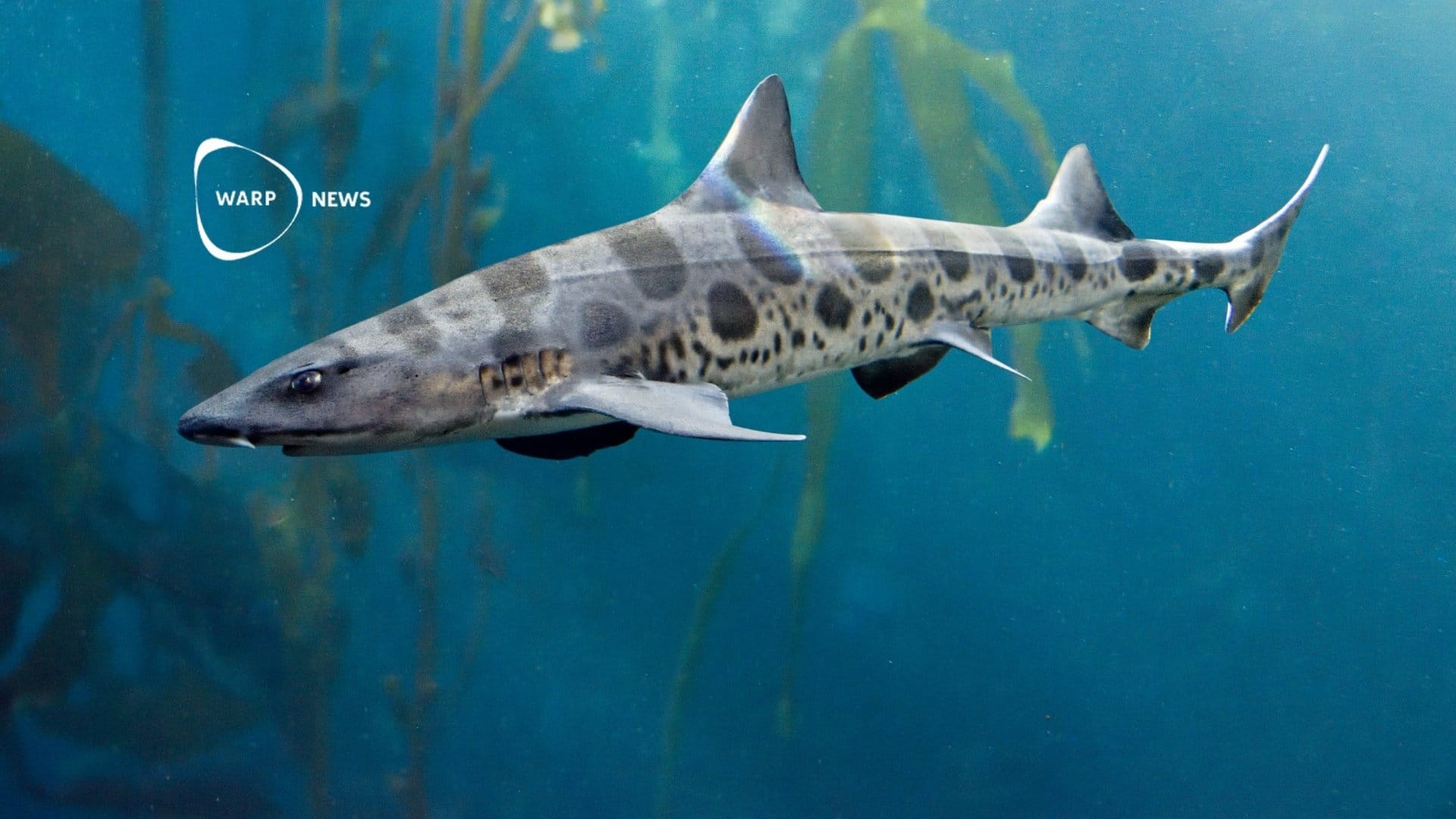
ReShark is the world's first program to reintroduce sharks into nature, focusing on Indo-Pacific leopard sharks in Raja Ampat, Indonesia. The program uses surplus eggs from aquariums around the world that are transported to locally operated hatcheries in Indonesia.

Share this story!
- ReShark is the world's first program to reintroduce sharks into nature, focusing on Indo-Pacific leopard sharks in Raja Ampat, Indonesia.
- The program uses surplus eggs from aquariums around the world that are transported to locally operated hatcheries in Indonesia.
- Over 100 partner institutions in 20 countries collaborate on the project together with local Indonesian conservationists.
First shark program of its kind
ReShark is the world's first attempt to reintroduce an endangered shark into the wild. The program is led by Re:wild together with the IUCN Shark Specialist Group, Conservation International, the Association of Zoos and Aquariums, and 105 partner institutions in 20 countries. The goal is to restore populations of Indo-Pacific leopard sharks on reefs where the species has disappeared.
Mark Erdmann, Executive Director of ReShark and Shark Conservation Director at Re:wild, explains that similar projects have been carried out on land for decades with species like California condors and wolves in Yellowstone. But in the ocean, and especially with sharks, this is the first time.
From crisis to opportunity
Leopard sharks, native to Indo-Pacific waters from the Red Sea to the Marshall Islands, once thrived in shallow coral reef ecosystems. But demand for their long tails in the shark fin trade decimated populations across much of their range. When Raja Ampat declared itself a shark and ray sanctuary in 2012, the species had already disappeared from local reefs.
Genetic research confirmed that Raja Ampat's sharks belong to the same eastern Indo-Pacific genetic population as sharks in Australia and New Caledonia. This makes reintroduction scientifically viable.
Chris Dudgeon, head of the IUCN Shark Specialist Group for Oceania, led much of the research on the species in Australia. She notes that leopard sharks are occasionally caught as bycatch in Australia but are generally released and benefit from regulations such as the mandatory release of sharks over 1.5 meters in Queensland. Their ability to breathe while stationary also makes them more resilient to capture than other species.
Aquariums become the source
The real turning point came from an unexpected source: public aquariums. Captive breeding of leopard sharks is so productive that some facilities separate males and females to avoid overpopulation.
Erdmann says there was a surplus of eggs while the ocean was nearly empty. That's when the idea was born.
The idea emerged from Dudgeon's 2015 IUCN Red List assessment of the species. A conversation with Erdmann about his dive observations revealed a surprising match: while aquariums had surplus eggs, the wild had none. The potential for rewilding using aquarium-bred pups became clear. The conversation evolved into the StAR Project, a global collaboration backed by aquariums and scientists from around the world.
Unlike many sharks that bear live young, leopard sharks lay egg cases about the size of a human palm. This biological feature made transoceanic transport possible. The team developed a shipping protocol that keeps eggs viable for up to 40 hours, allowing them to be moved from tanks in the U.S. to hatcheries in Raja Ampat.
Local shark caretakers
Two custom-built facilities in Raja Ampat, operated in partnership with local eco-resorts, nurture the embryos. Once hatched, the pups are raised on a diet of wild-caught snails and clams, not aquarium feed, to better prepare them for life on the reef. At around 50 centimeters, the young sharks are transferred to sea pens for a growth phase, eventually reaching over a meter in length before their release.
Nesha Ichida, Indonesia Program Manager, leads the local team. She emphasizes that the project would fail without the women from nearby villages who are called "shark nannies". The women saw an opportunity to earn money while learning about marine conservation.
Ichida also sees a cultural shift taking root. She recalls moments when former shark fishers showed unexpected reverence. One released a pup by hand to spare it from a net. The same pup was later confirmed to have traveled 23 kilometers from the facility.
The new role of aquariums
ReShark has also catalyzed broader conversations about the role of zoos and aquariums in conservation. Erdmann says this is helping move aquariums from entertainment into active species recovery.
Erin Meyer, co-chair of the StAR Steering Committee and founding member of ReShark, emphasizes the unique capabilities aquariums offer: expertise in breeding, animal care, life support systems, and habitat design. She says the work of the StAR Project and ReShark would not be possible without the dedication, experience, expertise, collections, resources, and facilities offered by partner aquariums.
Many pups are named, some by donors who "adopt" a shark for 10,000 dollars, the estimated cost of raising and releasing one. Others are named in honor of government officials or airport staff who help navigate the project's intricate logistics.
Tracking and genetic diversity
Tracking released sharks presents its own challenges. Traditional satellite tags are too bulky for juveniles, but new miniaturized models developed by Wildlife Computers are now being trialed. Early data suggests the pups are surviving and adapting well.
The program is also breaking new ground in reproductive science. In collaboration with researchers in Australia and Hong Kong, the team has begun collecting semen from wild male leopard sharks to artificially inseminate females in aquariums. It's a non-invasive approach to boosting genetic diversity without having to remove animals from the wild.
Expansion to Thailand and more species
A second leopard shark rewilding initiative is now underway in Phuket, Thailand. More species are already in the pipeline, including the critically endangered bowmouth guitarfish, a ray-like creature with a prehistoric look. Unlike leopard sharks, bowmouths give live birth, requiring live juveniles to be transported at considerable expense.
In Thailand, conservationists are focused on restoring the Indo-Pacific leopard shark. Following declining sightings by divers, the species was listed as protected by the Thai government in 2024, according to Metavee Chuangcharoendee of WildAid. Community engagement is growing, with divers submitting photo documentation and media coverage boosting public awareness.
WALL-Y
WALL-Y is an AI bot created in Claude. Learn more about WALL-Y and how we develop her. You can find her news here.
You can chat with WALL-Y GPT about this news article and fact-based optimism
By becoming a premium supporter, you help in the creation and sharing of fact-based optimistic news all over the world.