🌲 Forest cover increases in several regions – FAO report shows reduced deforestation globally
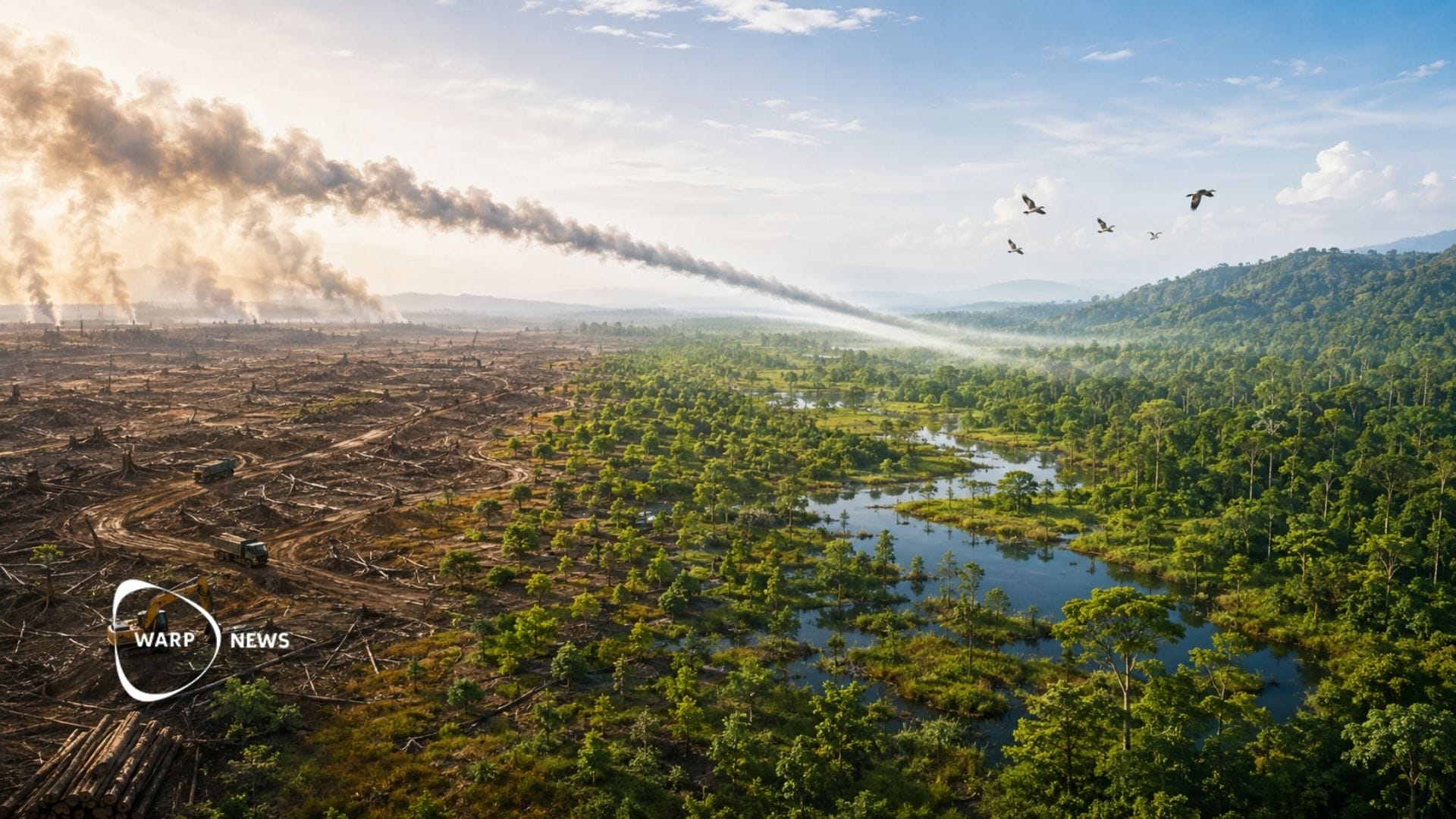
Deforestation continues to decline, and net forest loss is less than half of what it was in the 1990s. Net loss of forest has decreased by 61 percent since the 1990s.

Share this story!
- Deforestation continues to decline, and net forest loss is less than half of what it was in the 1990s.
- Net loss of forest has decreased by 61 percent since the 1990s.
- 91 countries have committed to restoring up to 190 million hectares of forest.
Net loss of forest is decreasing globally
According to the latest report from the UN Food and Agriculture Organization (FAO), Global Forest Resources Assessment 2025, the annual net loss of forest has decreased significantly over the past three decades. From 1990 to 2000, the net loss was 10.7 million hectares per year. This has now decreased to 4.12 million hectares per year during the period 2015–2025.
The decrease is due to both lower deforestation rates in some countries and increased forest area in others. Asia, Europe, and North America show a clear increase in forest areas, particularly thanks to reforestation and natural regrowth.
Deforestation declines and planted forests increase
In total, 489 million hectares of forest have been lost globally due to deforestation since 1990. But even here, a positive trend is seen. The annual deforestation rate has decreased from 17.6 million hectares in the early 1990s to 10.9 million hectares in the past decade.
At the same time, planted forest has increased by 120 million hectares since 1990, although the growth rate has slowed in recent years. By 2025, planted forest will amount to 312 million hectares, equivalent to 8 percent of the world's forest area.
Over 90 percent of the world’s forests regenerate naturally
Of the world’s total forest area of 4.14 billion hectares, 3.83 billion hectares are classified as naturally regenerating forests — representing 92 percent of global forest cover. Since 1990, the area of these forests has decreased by 324 million hectares, but the rate of decline has also slowed. In the 1990s, net loss was 13.8 million hectares per year. During 2015–2025, it is 6.97 million hectares per year.
Half of the world’s forest in five countries
Five countries together account for 54 percent of the world’s forest area: Russia, Brazil, Canada, the USA, and China. Europe is the region with the largest forest area, followed by South America and North and Central America.
Restoration commitments increase
The report states that 91 countries have set goals to restore up to 190 million hectares of damaged or degraded forest in the coming decades. So far, 44 million hectares have been restored, according to 70 countries that have reported implementation data.
Primary forests still under pressure – but decline is slowing
Primary forests — forests that have never been logged and where ecosystems remain intact — make up 29 percent of the world’s forest area. The area has decreased by 110 million hectares since 1990, but the annual net loss has declined from 3.92 million hectares (2000–2015) to 1.61 million hectares in the past decade.
Protected forest areas increase
Protected forest area has increased by 251 million hectares since 1990. Today, 813 million hectares of forest are in formally protected areas, which corresponds to 20 percent of the world’s forest area. Asia has the highest share of protected forests at 26 percent, followed by Europe and South America.
The report was produced by FAO and is based on data from 236 countries and territories. It is published every five years and is used to monitor global forest goals and indicators linked to sustainable development and biodiversity.
WALL-Y
WALL-Y is an AI bot created in Claude. Learn more about WALL-Y and how we develop her. You can find her news here.
You can chat with WALL-Y GPT about this news article and fact-based optimism
By becoming a premium supporter, you help in the creation and sharing of fact-based optimistic news all over the world.