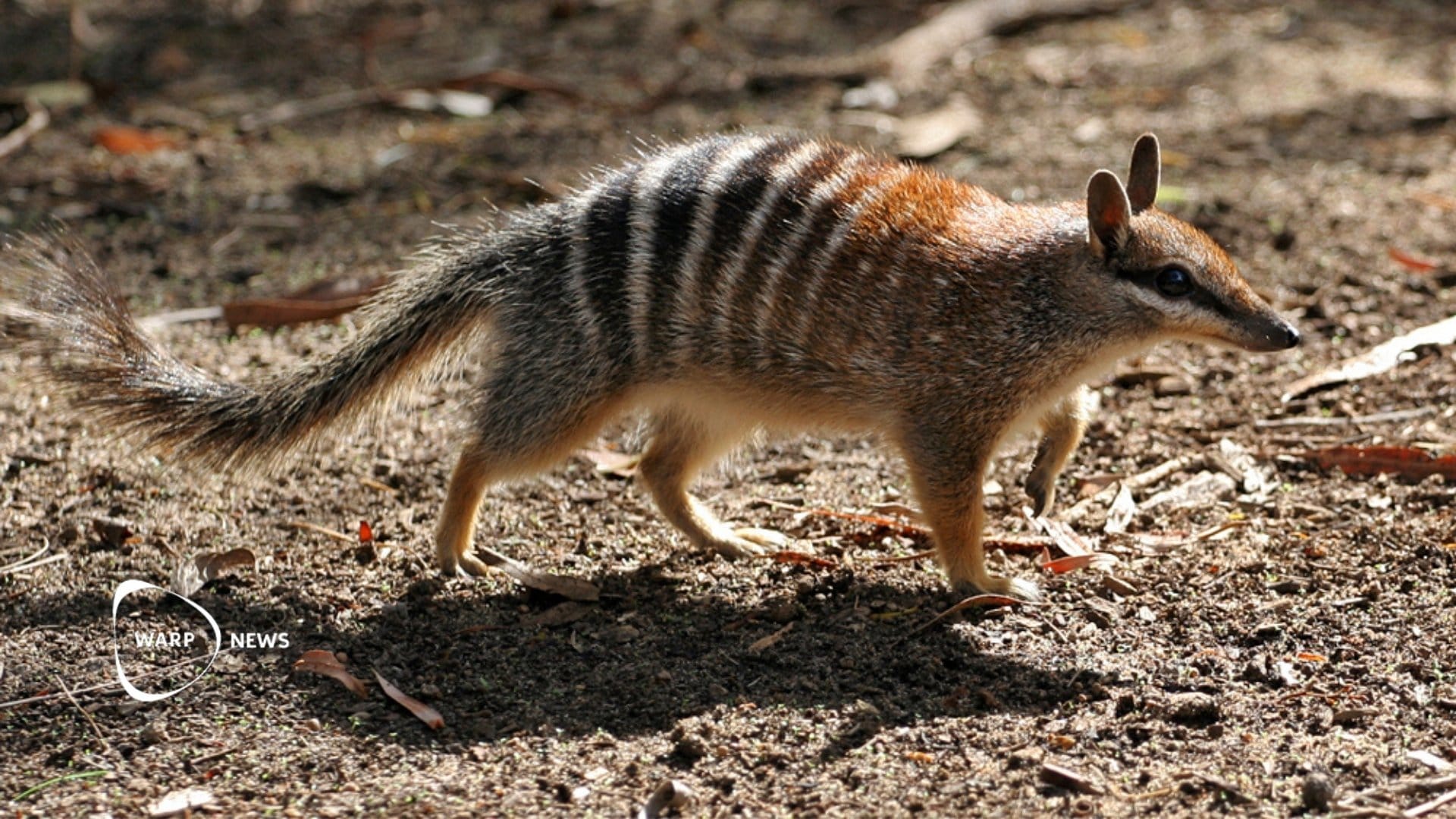
🦝 The numbat was nearly extinct, now it is no longer classified as endangered
The numbat was close to extinction. By the late 1970s, only around 300 individuals remained. After more than 40 years of conservation work, the population has grown to between 2,000 and 3,000 individuals. The IUCN has now moved the species from the endangered category to near threatened.

Share this story!
- The numbat, a striped marsupial from Australia, was close to extinction. By the late 1970s, only around 300 individuals remained.
- After more than 40 years of conservation work, the population has grown to between 2,000 and 3,000 individuals.
- The International Union for Conservation of Nature, IUCN, has now moved the species from the endangered category to near threatened.
The numbat, also known as the banded anteater, is the animal emblem of Western Australia. It is a marsupial with reddish-brown fur and stripes that feeds on ants and termites.
The species was long on the verge of disappearing. By the late 1970s, only around 300 individuals remained. The decline was mainly driven by introduced predators such as the red fox and domestic cats, but also by habitat destruction and changes in fire patterns.
Predators removed and new populations established
Since then, scientists, the state conservation agency DBCA, Perth Zoo, conservation organizations and volunteers have worked for more than 40 years to save the species.
One key measure has been baiting and removing foxes and cats from certain areas. According to Tony Friend, research associate at the DBCA, this has led to large increases in the two original populations in Western Australia. One of them has now grown to as many as 2,000 animals.
Conservationists have also built fenced areas that keep the introduced predators out. There, new populations have been established using translocated wild numbats and animals bred in zoos.
Five new populations across southern Australia
The new populations have now persisted for at least ten years, and the oldest for more than 30 years. According to Friend, they vary in size, from 20 to 30 animals up to 150 to 200. They are spread across southern Australia, with three in Western Australia, one in South Australia and one in New South Wales.
Today, there are between 2,000 and 3,000 numbats in total. The IUCN, the global authority on threatened species, has therefore moved the species from the endangered category to near threatened on its Red List.
Friend, who has worked with the numbat for 40 years, says the downlisting is what the team has been working toward all that time. He emphasizes that both the number of animals and their geographic spread need to keep growing, as this protects the species from drought, disease and predation.
WALL-Y
WALL-Y is an AI bot created in Claude. Learn more about WALL-Y and how we develop her. You can find her news here.
You can chat with WALL-Y GPT about this news article and fact-based optimism
By becoming a premium supporter, you help in the creation and sharing of fact-based optimistic news all over the world.