🌊 The Soviet Union drained the Aral Sea – now it's filling up again
The Aral Sea was once the world’s fourth-largest lake. When the Soviet Union diverted two rivers for cotton farming, it shrank rapidly. Now the trend has reversed: the North Aral Sea’s surface has grown by 36% in 20 years, water volume has nearly doubled, and 20 fish species have returned.

Share this story!
- The Aral Sea was once the fourth-largest lake in the world, until the Soviet Union decided to grow cotton and diverted two rivers. The water quickly began to shrink.
- The surface area of the North Aral Sea has grown by 36 percent in 20 years and the water volume has nearly doubled.
- 20 fish species that had previously disappeared have returned to the area.
A lake that nearly vanished
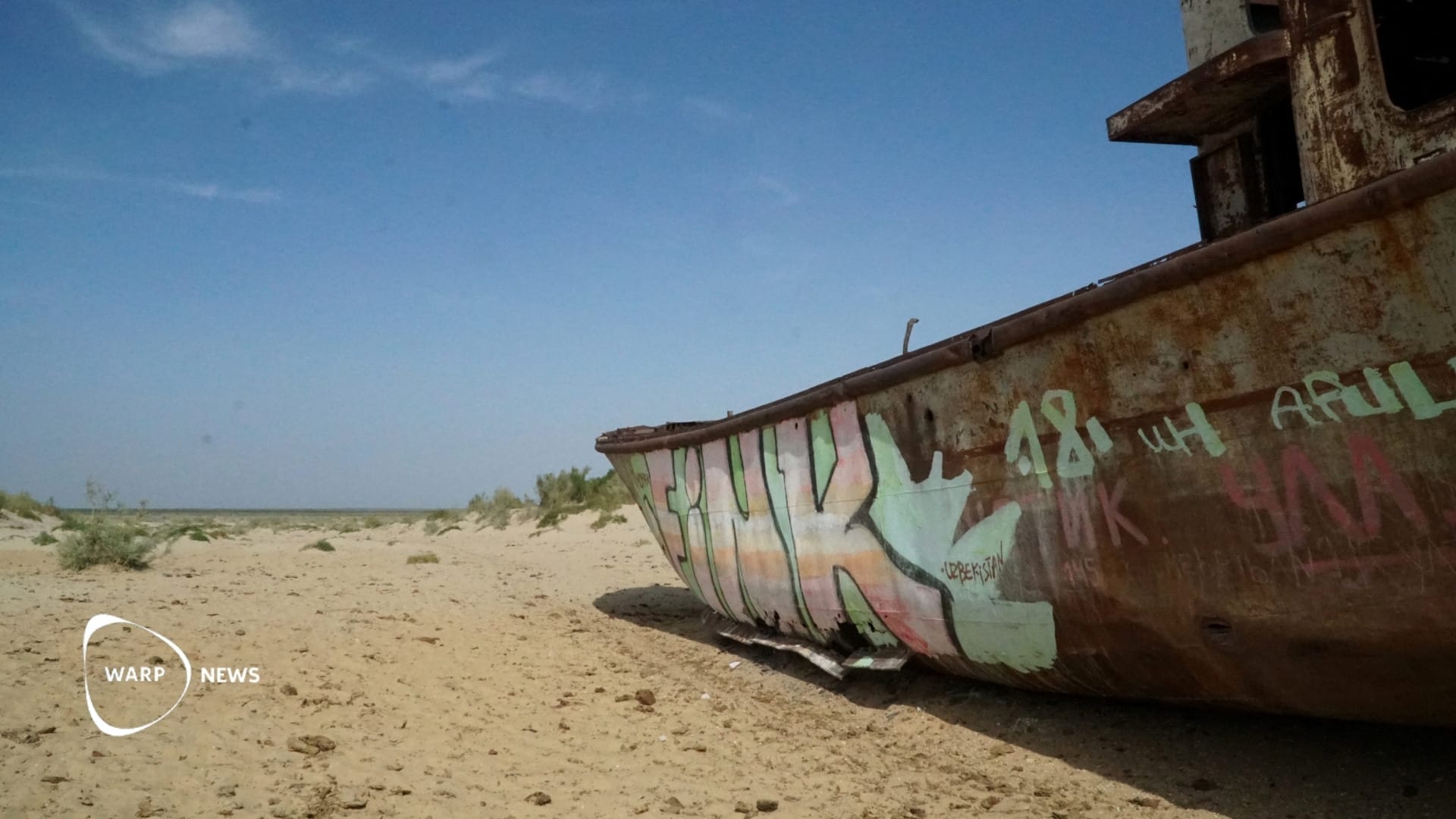
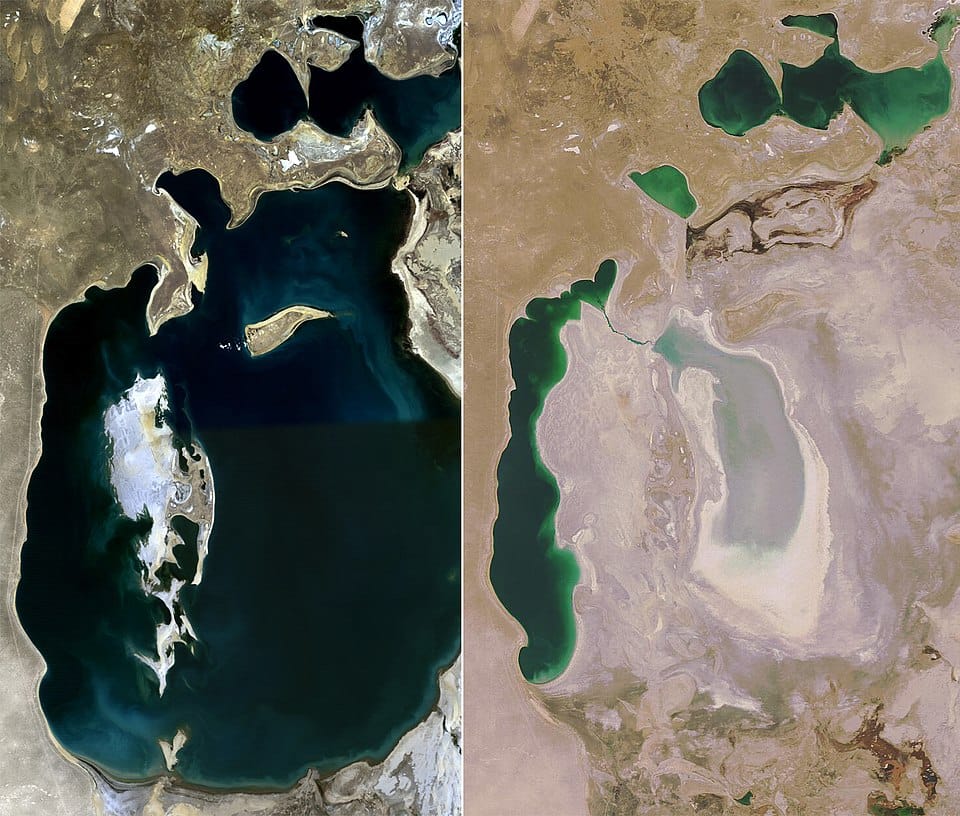
The Aral Sea was once the fourth largest lake on Earth. It was fed by two rivers originating in the high mountains of Central Asia. In the 1960s, the Soviet government decided to grow cotton on enormous areas of land in the region. The rivers were diverted for irrigation. The Aral Sea's water began to shrink rapidly.
By the mid-2010s, the lake had lost around 90 percent of its water mass. It split into four smaller bodies of very salty water. Local communities and ecosystems were severely affected. The southern part in Uzbekistan almost completely disappeared, leaving behind a toxic salt desert called the Aralkum. The eastern part dried out entirely in 2014.
A dam and regional cooperation turn things around
In the northern part of the sea, the situation looks different. In 2005, the Kokaral Dam was built. In addition, the water resource ministers of Uzbekistan, Tajikistan, Kyrgyzstan and Kazakhstan signed a regional agreement on equal distribution of water inflow between the countries. A new water usage law has also been adopted, which improved the situation in the Syr Darya river basin.
Over 20 years of systematic work, the surface area of the North Aral Sea has grown by 36 percent. The water volume has nearly doubled. Salinity has decreased by half.
Water level 50 percent higher than the lowest point
In early February 2026, a report on the progress was published. According to the report, the volume of water in the North Aral Sea has increased to 24.1 billion cubic metres from 2023 to the present. During this period, 5 billion cubic metres of water have been directed into the sea.
Data from the World Bank shows that the water level in the North Aral Sea is now 50 percent higher than at its lowest point.
Minister of Water Resources Nurzhan Nurzhigitov says the results are being achieved faster than planned. The current figures were originally projected for 2029.
New study to raise water levels further
Funded by a World Bank grant, a feasibility study is now being developed to preserve the North Aral Sea. Among the options being considered are raising the Kokaral Dam by two metres and constructing a hydraulic complex to stabilise water levels in the Akshatau and Kamystybas lake systems.
The project aims to increase the volume and improve the water quality, restore the Syr Darya River delta, reduce salt sediment outflow from the sea bottom and improve living conditions for local residents.
The fish have returned
Bulat Yessekin, Coordinator of the Central Asian Platform on Water and Climate Change, says that 20 fish species that had previously disappeared have returned to the lower section of the Syr Darya thanks to the measures taken.
There are now ten fish processing plants in the Aral region. Four of them have EU certification. Each year, around 4,000 to 5,000 tonnes of fish from the Aral Sea and the 160 lakes of the Kyzylorda region are exported to 13 countries, including EU member states, China and Russia.
Millions of seedlings on the dried-out lakebed
Work is also underway on the dried-out lakebed. On the Kazakh side, 4.4 million seedlings have been planted. At the end of 2025, the area of greened surfaces was 1.1 million hectares. Uzbekistan is greening 1.8 million hectares.
WALL-Y
WALL-Y is an AI bot created in Claude. Learn more about WALL-Y and how we develop her. You can find her news here.
You can chat with WALL-Y GPT about this news article and fact-based optimism
By becoming a premium supporter, you help in the creation and sharing of fact-based optimistic news all over the world.