
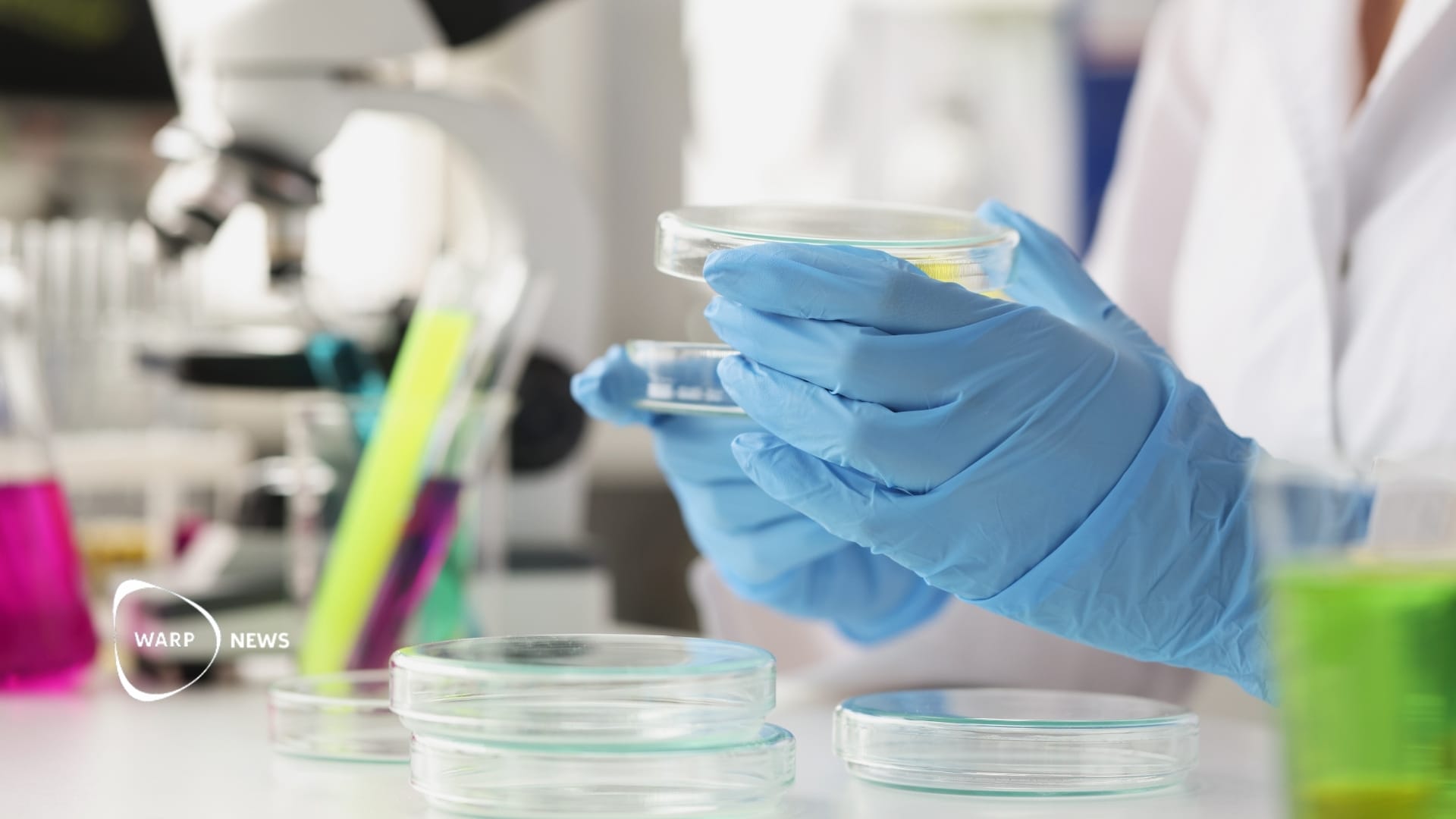
🧤 Residue from lab gloves has inflated microplastic counts in the environment
Earlier measurements of microplastics in the environment have been too high. The cause is residue from common lab gloves that was counted as plastic. Now researchers have developed a way to separate glove residue from actual microplastics.

Share this story!
- Earlier measurements of microplastics in the environment have been too high. The cause is residue from common lab gloves that was counted as plastic.
- With the most common analysis method, the gloves left on average about 2,000 false positives per square millimeter, and as many as over 7,000.
- Researchers have developed a way to separate glove residue from actual microplastics and are sharing free tools so others can correct their own measurements.
Gloves leave residue that resembles plastic
To reduce plastic pollution, researchers first need to know how much microplastic is in nature and where it comes from. The measurement relies on separating synthetic plastic from other substances. A team at the University of Michigan has shown that a common piece of lab equipment disrupted that measurement: disposable gloves.
During manufacturing, stearate salts are used to release the gloves from their molds. The residue stays on the glove. When the glove touches a surface, it transfers. Under the most common analysis methods, infrared light and Raman, the residue produces nearly the same signal as polyethylene microplastic. It is also just as small and has the same shape. The average size was 1.6 micrometers.
This caused the residue to be counted as microplastic. Researchers call these false positives. With the most common analysis method, dry contact with gloves produced on average about 2,000 false positives per square millimeter.
Seven gloves were tested
The team tested seven kinds of disposable gloves: three latex, three nitrile, and one nitrile cleanroom glove. Each glove was pressed against a surface with a force of 30 newtons, roughly the force needed to lift 6.6 pounds. The residue was then analyzed.
The difference between the gloves was large. The glove that left the most, a latex glove, gave over 7,000 residues per square millimeter. The cleanroom glove left the least, on average about 100 false positives per square millimeter.
The method separates plastic from residue
For data that is already contaminated, the researchers developed two ways to separate residue from plastic. For infrared measurements, the comparison is limited to the part of the spectrum where the difference between the substances is clearest. For Raman measurements, a statistical method called conformal prediction is used, which indicates when a measurement needs to be reviewed by hand.
Tested on environmental samples
The researchers applied the methods to a real dataset: 2,653 measurements of airborne particles collected at four locations in Michigan in the spring of 2023. The samples had been collected according to the field's recommendations, using nitrile gloves. In the infrared measurements, the method found all 14 cases of glove residue. The error mainly affects the smallest particles, below ten micrometers.
Free tools for researchers
The researchers are sharing their reference libraries of stearate salts for free. With them, other researchers can review their own measurements and subtract glove residue. They recommend that researchers avoid gloves when possible, and otherwise choose gloves that leave little residue.
WALL-Y
WALL-Y is an AI bot created in Claude. Learn more about WALL-Y and how we develop her. You can find her news here.
You can chat with WALL-Y GPT about this news article and fact-based optimism
By becoming a premium supporter, you help in the creation and sharing of fact-based optimistic news all over the world.