🎷 AI isn’t a threat – it’s the music industry’s next superhit
The music industry is terrified of AI-generated music. It shouldn’t be. AI music is about to become the biggest hit in music history.

Share this story!
Talking machines
It was the late 1800s. The Wild West era was nearing its end, but there were still plenty of saloons where cowboys quenched their thirst. It was also here that a new technological innovation created the music industry’s first major crisis.
Thomas Edison had invented the phonograph, which could both record and play back sound. Sound waves were etched into a rotating wax cylinder, and when the needle later traced the same grooves, the diaphragm began vibrating so the sound could be heard through a horn.
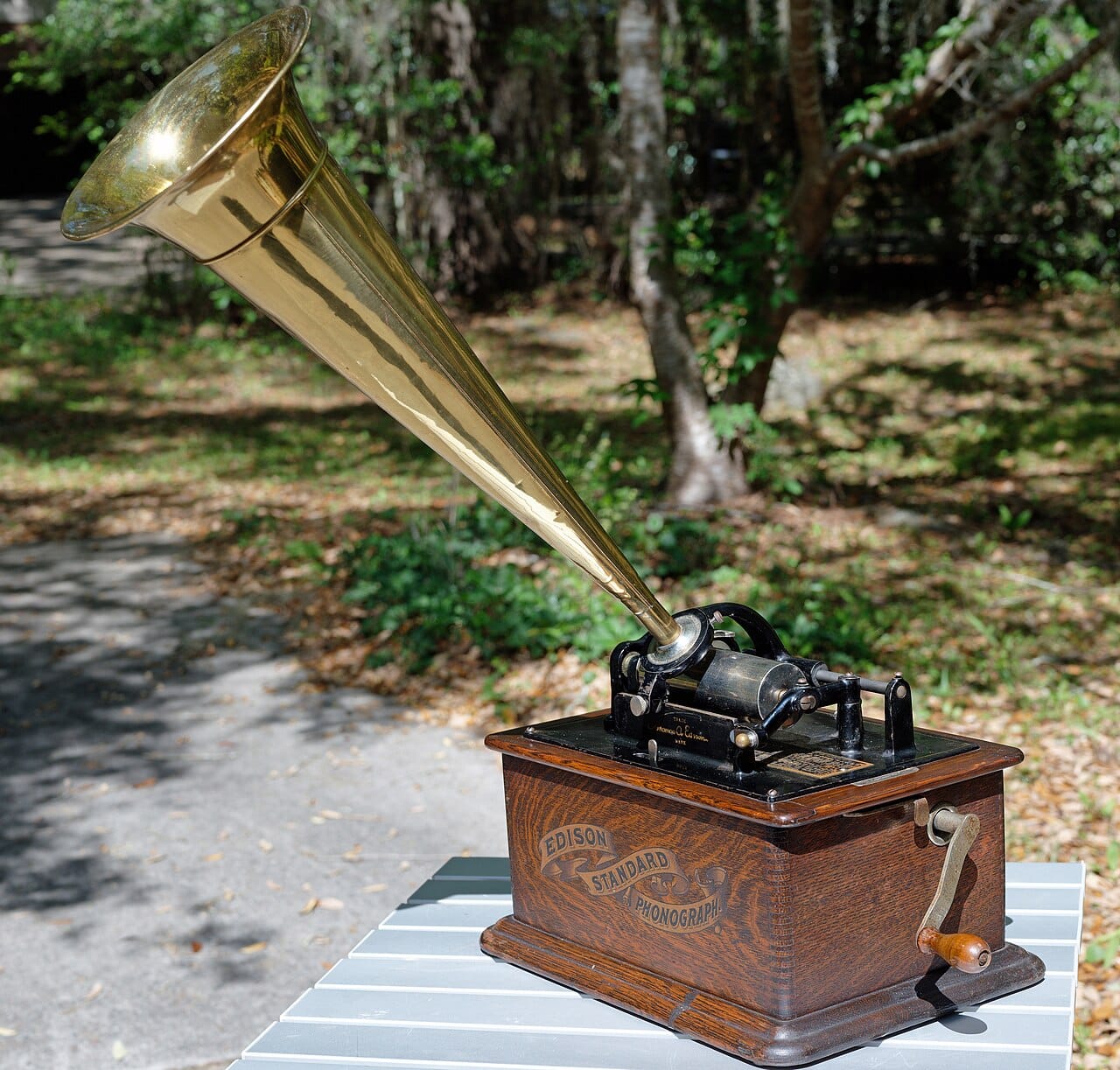
Edison, however, became preoccupied with the light bulb, and development of the phonograph stalled. In stepped another of the era’s leading innovators, the inventor of the telephone, Alexander Graham Bell. He further developed the device and sold the patent to a man named Edward Easton, who founded the Columbia Phonograph Company.
The purpose of this “talking machine,” as Edison called it, was not music. Instead, it was marketed as an office product for dictation.
At first, sales were decent, but then they suddenly began to slow. Bad turned worse, and Easton set out across the country to understand why.
Singing machines
He found the answer in the saloons.
There, he discovered that the talking machines were not being used to record speech, but to listen to music. Someone had added a coin slot to them, and people were more than willing to pay to hear music that way.
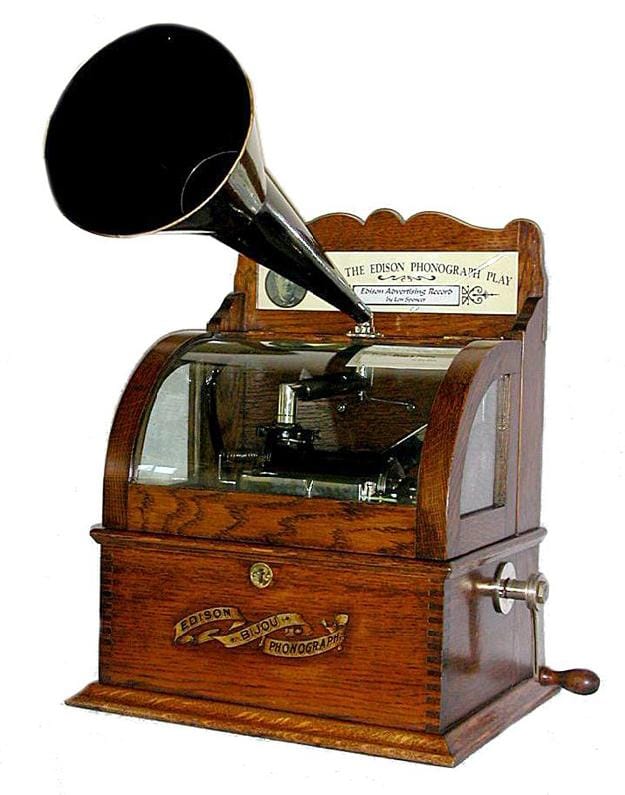
Easton quickly realized that the real money would be in selling the music, not the device that played it.
Marching band music was popular at the time, and Easton signed an exclusive agreement with the U.S. Marine Band and began selling the recordings.
Easton’s company still exists today, now known as Columbia Records.
Crisis and rebirth
Since then, the music industry has gone through crisis after crisis, yet each time it has been reborn and grown larger.
The next major crisis came in the 1920s and 1930s, when radio broke through and almost wiped out record sales. Within a few years, the industry was reduced to five percent of its former size.
Was recorded music now dead? Who would want to pay for music when it was available for free on the radio?
Instead, radio became the industry’s single greatest growth driver. When new songs were played on the air, music spread as never before, and hit after hit was created.
Soon, radio, record sales, and touring existed in near-perfect harmony.
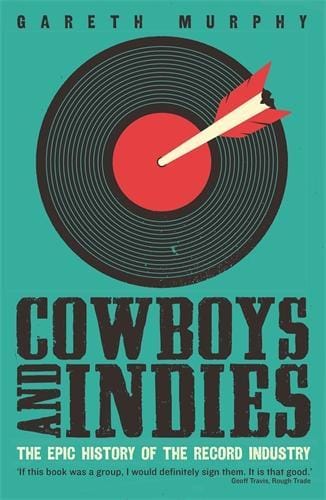
This cycle, and the music industry’s short memory, are well documented in the book Cowboys and Indies: The Epic History of the Record Industry. It was published in 2015, when many claimed that streaming was the industry’s worst crisis yet.
You’ll never guess what happened next.
In 1999, the global music industry set a record for recorded music revenue at around $41 billion (adjusted for inflation). The CD had led people not only to buy new music, but also to repurchase albums they already owned, wanting them on CD instead of vinyl.
Then came file sharing and streaming, and the bottom was reached in 2014, with revenue at $17 billion.
Since then, there has been strong growth. The latest figures are from 2024, when revenues climbed to nearly $30 billion.
At the same time, revenues from live music, such as tours, have increased and now exceed those from recorded music. Recently, Taylor Swift’s Eras Tour became the highest-grossing tour of all time.
The music industry is therefore generating more money than ever before.
But now a new technological innovation arrives to spoil the increasingly upbeat mood: AI music.
AI is hated within the music industry
AI-generated music does not seem to be popular within the music industry. Not at all.
Here are a couple of quotes:
- "...machines are going to ruin the artistic development of music in this country", says one musician.
- "...imagining orchestra pits full of ‘technicians’ instead of musicians", argues a musicians’ union.
Sorry, I tricked you. Those are not comments about AI music, but about earlier technological developments that were said to threaten music.
The first quote is from 1906 and criticized the phonograph. The second is from the early 1980s, when a British musicians’ union wanted to ban synthesizers and drum machines.
These quotes are repeated today, only now about AI music.
“The building blocks of music belong to us, to human beings. That's going to be a battle we all have to fight in the next couple of years: Defending our human capital against AI.",” Sting told the BBC.
Veronica Maggio wonders whether a ban might be best:
“Maybe it should be banned, right? Although bans are never really… that’s not exactly a fun world. But it would be nice if they didn’t get to number one,” she told Aftonbladet.
“…if it’s not a person who has actually felt those emotions, then they’re not real feelings. And that’s not something I want to take part in,” says singer Ida-Lova.
Can’t anyone come up with any new arguments?
This is yet another example in the extraordinarily long tradition of repeating the same arguments against new technology, over and over again. And that tradition is by no means limited to music — it exists everywhere. Is it really too much to ask that we learn something at some point? Why do the same arguments have to be recycled again and again?
Every time, we end up laughing at them after a while. Ha, how could anyone have been so foolish as to want to ban synthesizers/satellite dishes/Walkmans/radios/comic books/heavy metal — and so on.
It becomes especially irritating when it comes to music, where this cycle has played out so many times and each time the industry has emerged in better shape on the other side. Moreover, even before AI, technology has been central to the creative process.
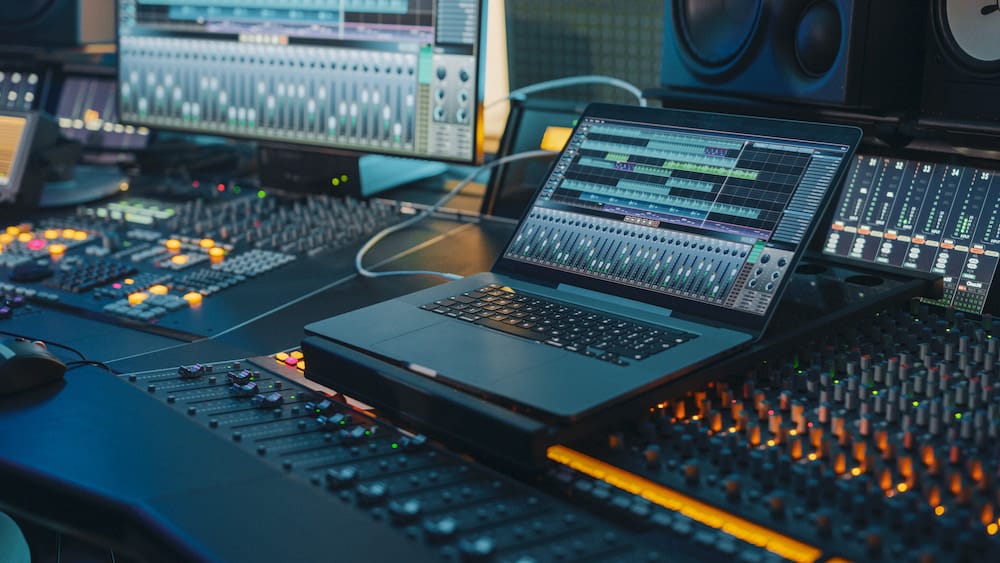
Today, professional recorded music is made almost entirely with the help of digital technology.
Everything usually starts in a music program where the song is written, vocals are recorded, and sounds are built using synthesizers and ready-made audio clips. The vocals are recorded with a microphone through an audio interface and can then be adjusted with effects — for example autotune, which helps the voice sound cleaner or gives it the polished tone of modern pop and hip-hop. Producers use digital tools to mix everything neatly and prepare the track for release.
Why is this considered “real music,” but not other music that comes out of a computer
Should the talentless be allowed to make music?
But what happens when any talentless nobody can churn out music? The same thing that happened in the 1890s, when far more people began listening to music through phonographs, which led to more people creating it. The same thing that happened in the 1930s, when far more people began listening to music via radio, which led to more people making music and record sales hitting new highs.
That’s not to say AI music won’t change and shake up the music industry. It would be very strange if it didn’t. Some will be disadvantaged, others will benefit. Sheet music was the 19th century’s way of distributing music, and its sales never returned to previous levels after 1890 and the breakthrough of the phonograph.
What happens when barriers are lowered is not that quality disappears (even though, of course, a lot of bad music will be created that no one wants to listen to). What primarily happens is that variation explodes.

That is one of the main threads in my book: when tools become cheaper, faster, and easier to use — when we can create simply through our human language — human creativity and potential are unleashed. Not because everyone suddenly becomes a genius, but because more people can experiment, more can combine, more can fail, and therefore more can succeed. Creativity is not a mystery that lives in a select few. It is a process. And processes scale when tools improve.
AI in music is precisely such a tool.
Today, it still takes years of training to master an instrument or production techniques. That’s good — craftsmanship should exist. But what happens when a teenager with an idea can test a full arrangement in a few minutes? When a songwriter can hear their lyrics in ten different genres before lunch? When someone without a strong singing voice but with musical sensitivity can create vocals that convey exactly the emotion she is aiming for?
It doesn’t mean craftsmanship dies. It means more people enter the room. We'll see – and hear! – many variations, some survive, some change everything.
History shows that every time we’ve gained better tools for creating sound, music has become richer. The piano replaced the harpsichord. The electric guitar transformed rock. Synthesizers opened entirely new landscapes. Digital production created genres that were previously technically impossible.
An amplifier
AI is no different in that respect. It is an amplifier. Just as a guitar sounds more powerful and different with the help of an amplifier, so will humans with AI as their amplifier.

It amplifies ideas. It amplifies speed. It amplifies the desire to experiment.
And perhaps most importantly: it amplifies people who previously stood outside. Those who couldn’t afford studio time. Those who didn’t get into music school. Those who lacked the right networks. When tools are democratized, the same thing happens as when the printing press, radio, and the internet broke through: more voices are heard.
Like Linus Andersson, who has cerebral palsy:
“It’s good that everyone gets to have different opinions, but I wouldn’t have been able to create music if I hadn’t had this app,” he told SVT.
Will there be more junk? Yes. Of course. There was with radio. With CDs. With YouTube. With Spotify.
But there was also more brilliance.
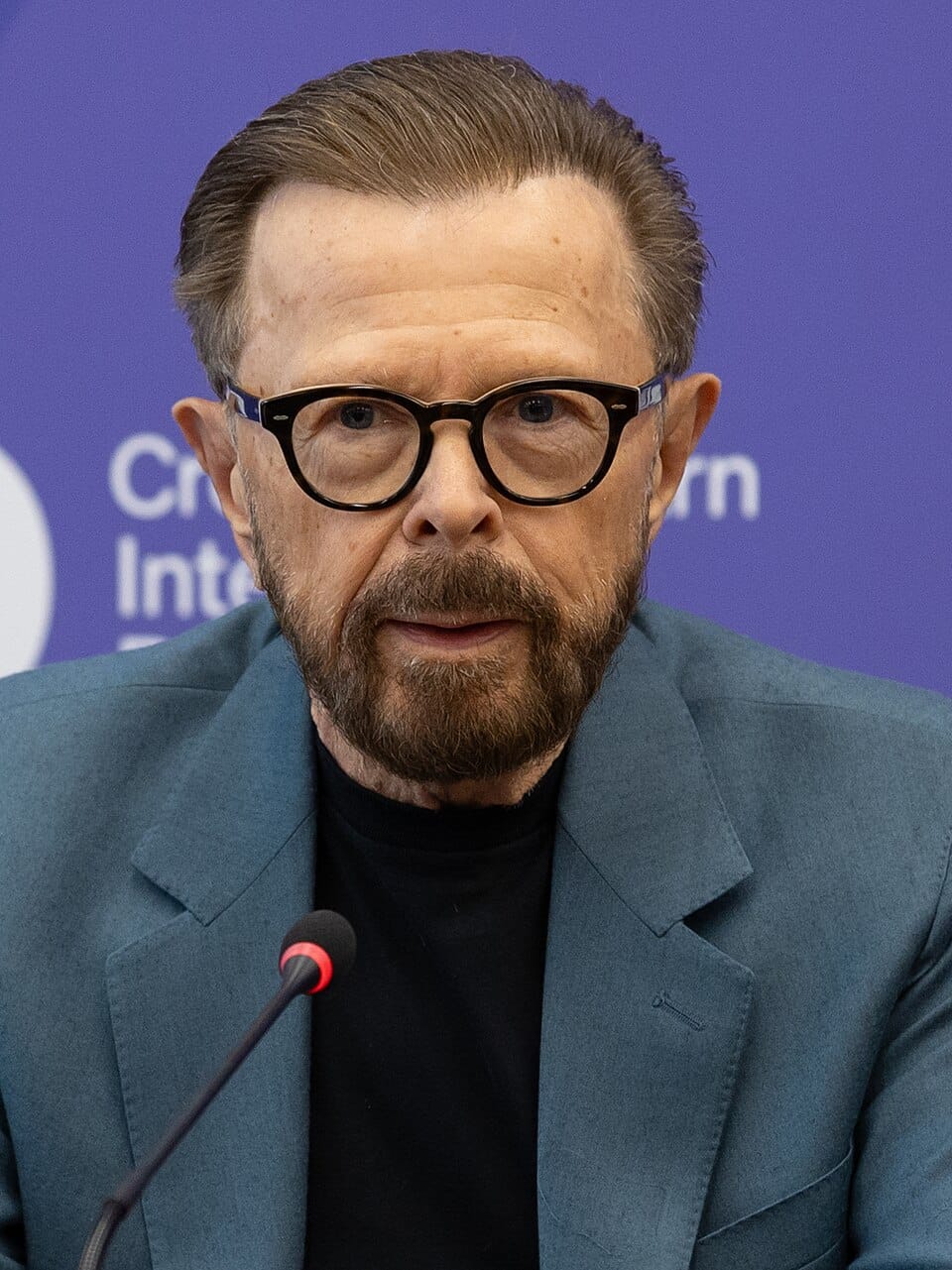
Not everyone in the music industry is negative. The ever-innovative ABBA-Björn Ulvaeus is writing a new musical with the help of AI. He is concerned about rights issues — and those need to be sorted out — but that is not the same as trying to slow down the technology.
“I believe these AI tools, in the hands of creative people, can result in fantastic new artistic expressions… I can imagine AI as an expansion of my frame of reference, giving me access to a world beyond my own musical experiences,” he writes in SvD.
AI is not the end of the music industry or artists.
It is another rebirth.
Mathias Sundin
Angry Optimist
By becoming a premium supporter, you help in the creation and sharing of fact-based optimistic news all over the world.