💙 Don’t repeat my mistake – you really have to try Lovable
The fact that I was wrong proves that I was right.

Share this story!
You don’t need to read this article if you instead go straight ahead and try Lovable.
If you’re thinking: Why should I try Lovable? Then read on.
Because you really have to try Lovable. You don’t need to know how to program or be the slightest bit technical (I’m not).
Below, I explain why and show how you get started.
Don’t repeat my mistake
I do almost nothing but go on and on about how AI frees human creativity. AI gives us abilities that would otherwise have required thousands of hours of training. I’ve written an entire book about that.
Despite this, I seriously underestimated how much Lovable does exactly that: unleashes creativity.
First, briefly, what Lovable is:
In Lovable, you can build web apps and websites just by using human language. You write to Lovable what you want it to do, and then it does it.
This is what has made Lovable the fastest-growing software startup ever. They went from zero dollars to one hundred million dollars in annual recurring revenue in eight months. Then from one hundred million to two hundred million dollars in four months.
The valuation has followed the same trajectory. Last summer they raised two hundred million dollars at a valuation just under $2 billion. Half a year later they raised another three hundred million dollars at a valuation of over $6 billion.
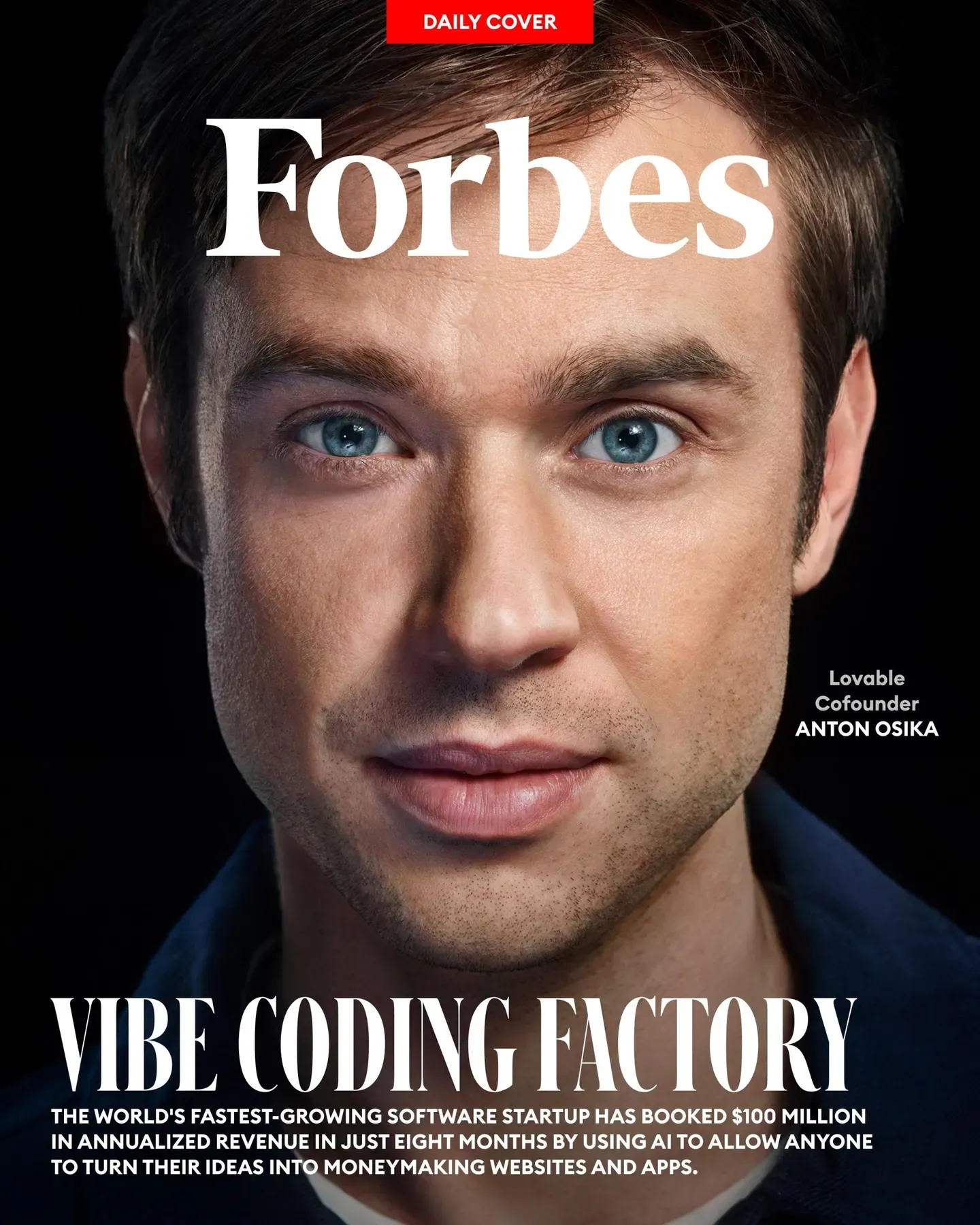
When I first heard about them, I immediately understood the idea of building apps with plain language. Even though ChatGPT could write code and guide you through the process, in practice it was still complicated to build your own app. You would probably need to hire someone, which of course costs money.
So apps, sure. But websites? We’ve been doing that for thirty years, and there are plenty of tools that make it easy for non-technical people to throw together a website. It costs almost nothing.
For websites, there can’t be any great need, I thought.
That was my mistake.
Because when I actually tried making a website (a Christmas campaign for my book), I was completely blown away by how incredibly easy it was and how insanely good the result was. Below, I describe how I did it.
Suddenly, loads of website ideas popped into my head!
Despite the website tools that existed before Lovable, it turned out that the small threshold they still represented was enough to stop me from even thinking about how I could use websites for all sorts of things.
That it’s enough to just use language makes all the difference. As I said, I’ve written an entire book about this – and still I underestimated the magnitude of the difference it makes.
Now, for example, I’m putting together websites for pitching my book to foreign publishers. Before, I would only have just sent an email, but now I can make he pitch both nicer and more user-friendly.
As soon as I get a bit of time, I’m going to update both my own and Warp Institute’s websites.
It suddenly doesn’t feel like a chore or even really a task. It’s so easy and turns out so well that it’s fun.
Apparently, millions of others feel the same way.
How I built my first Lovable page (and how you can too)
My first page was, as mentioned, a Christmas campaign for my book The Fifth Acceleration. Here’s how I made it and how you can get started.
Go to lovable.dev and create an account. You can try it for free and make a first draft of a website or web app. If you then want to add and change things, you’ll need to pay (it’s not expensive, like $20 a month).
I uploaded an image of my book cover and wrote that I wanted a website with the same design feel as that. It should be a Christmas campaign, and it should be able to pull information from the publisher’s website as well as my own website, and I gave it links to both.

This is the top part of the website. Unfortunately, the image doesn’t quite capture the feel of the page. The book sort of floats lightly, and everything is very fast and slick.
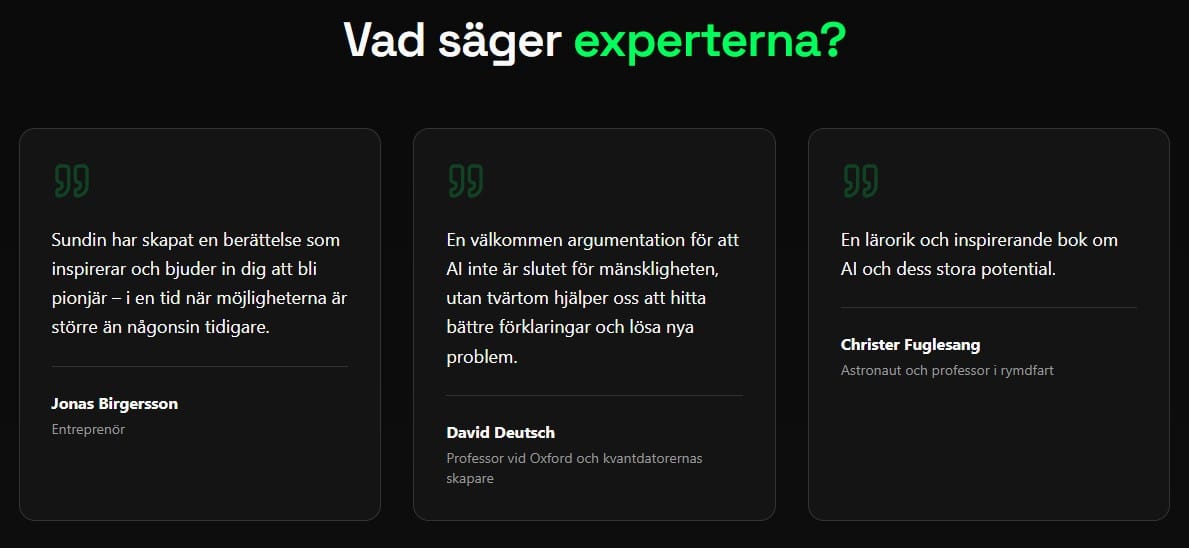
Further down, it had added a short description and reviews (blurbs) that it found via the links I shared.
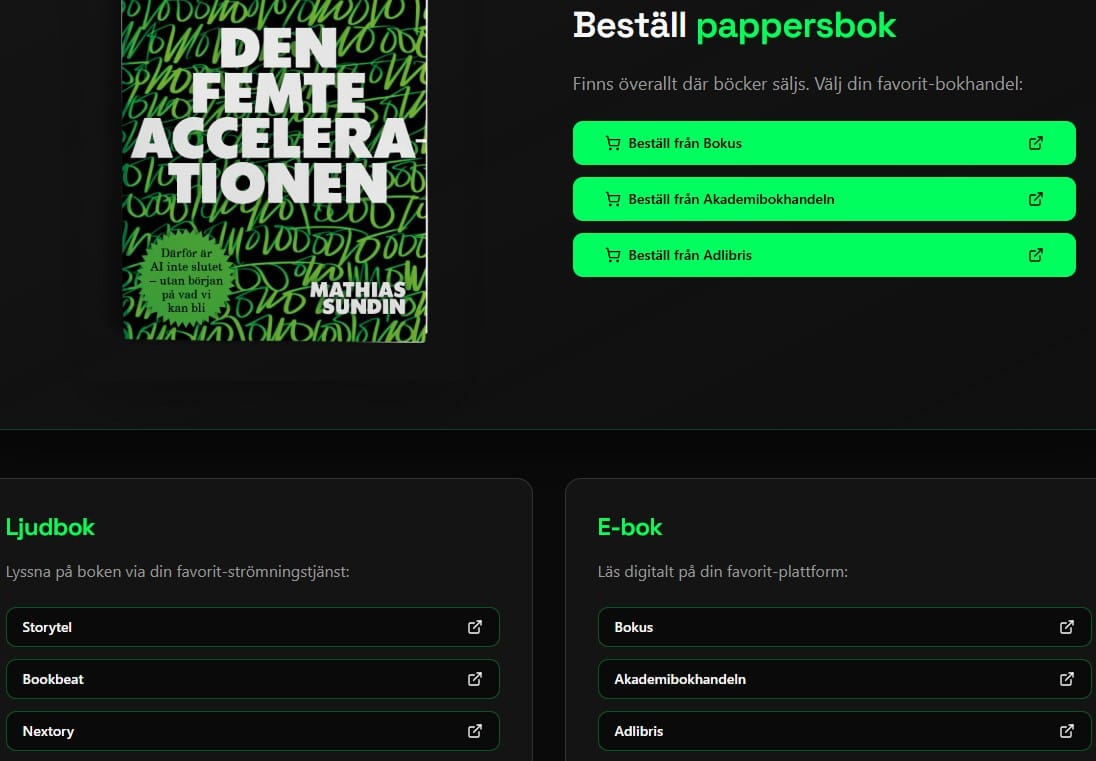
It also added links to several places where you can buy the book, both as a physical book and an audiobook.
I changed a few minor things and also told it to add a section with a Christmas offer.
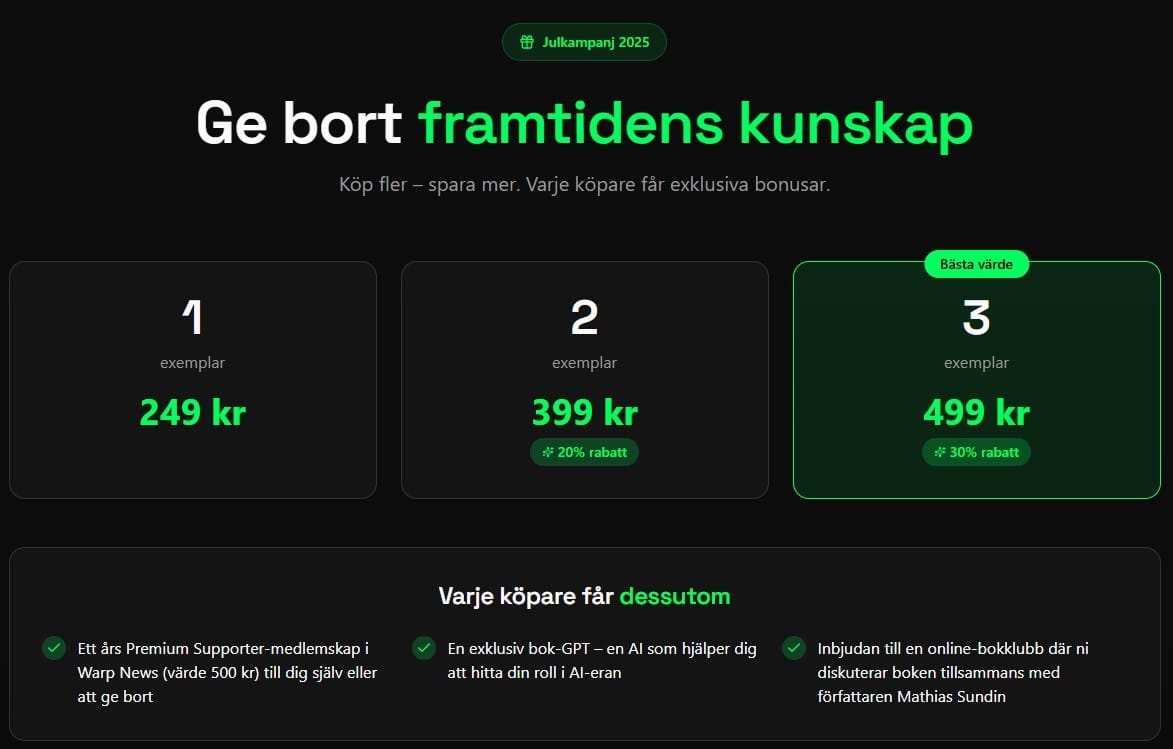
I never told it how to present the offer, only what it contained. Nor did I “drag around” boxes or otherwise go in and mess with the design directly. I just wrote what it should do.
You can, however, edit directly in the text if you want.
After the campaign launched, I realized I wanted to know what people were clicking on on the page. So I asked if it could add such a function. Sure enough, it gave me three options, I chose one of them, and voilà – I had the stats.
Build your own custom tools
The other day, when I was thinking about how to spread Warp News articles on social media, I stumbled upon carousels. That is, a series of images you swipe through, with a bit of content on each image.
I started looking for AI tools that did this. There were plenty, but then you had to buy access to several other tools I didn’t need, and the carousel tool didn’t work exactly the way I wanted.
Hmm, I thought, can you build this in Lovable?
Absolutely.
Now I have my own custom-built “carousel maker” where I paste in a text and out pops a bunch of images. I can choose how many images, add a logo, a footer, choose colors, upload images, edit directly or with AI, change the order of images, remove or add images – and so on.
Just by writing in my normal language, I’ve gotten a tool that is precisely tailored to my needs.
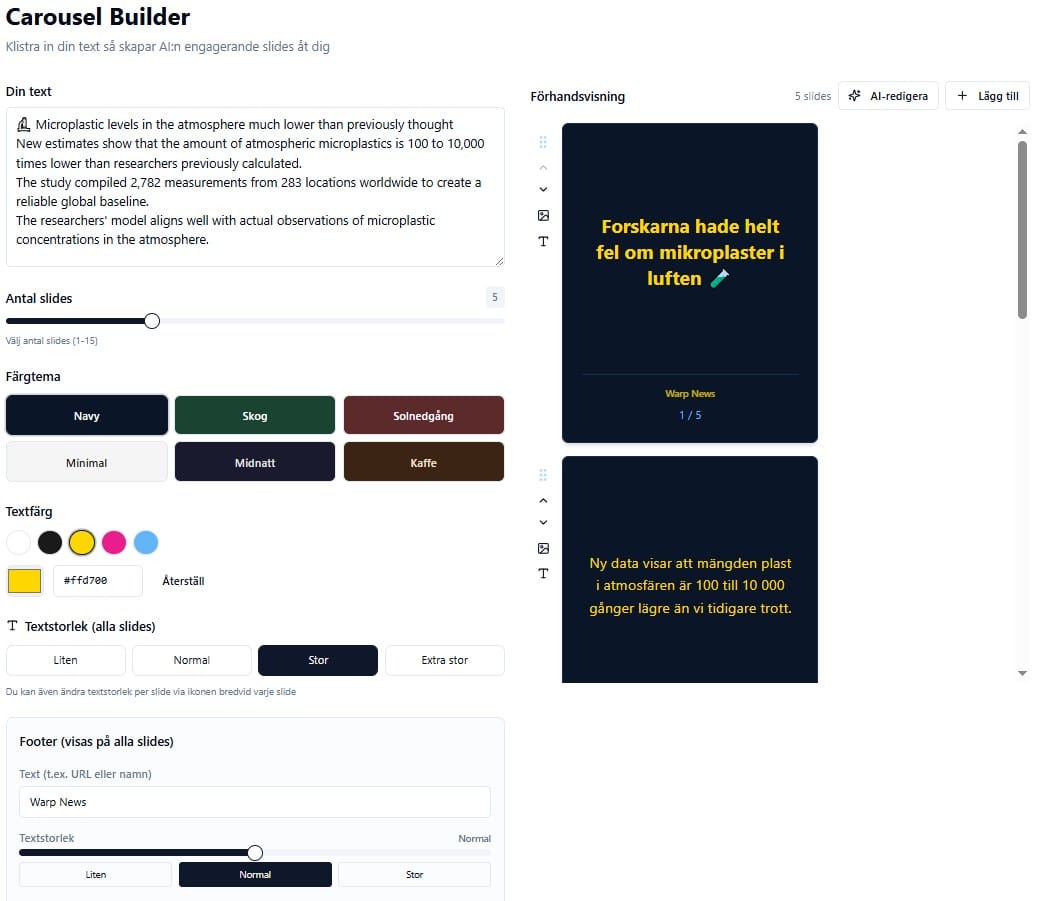
If there’s something in the tool I want to work differently, or if I discover that I’m missing a feature, I can insanely easily change or add it.
It is – when you think about it – an absolutely incredible thing.
Previously, we’ve been stuck with the tools others built for us. At best, the developers are very good at understanding what we want and quick to change and add features. But not even the best developers in the world can make a tool exactly the way I want it – and definitely not change it as fast as I can myself.
Over the coming years, we’ll get Lovable for everything. Language will be the interface and will give us abilities and unleash creativity like never before.
But enough about that. Try Lovable now, please!
Mathias Sundin
Angry Optimist
By becoming a premium supporter, you help in the creation and sharing of fact-based optimistic news all over the world.