
👨🔬 The world’s greatest lifesavers
Here are the people who have the most human lives on their conscience.

Share this story!
Max Roser, on the wonderful site Our World in Data, recently shared this infographic. It lists the innovations that have saved the most human lives. The list is not comprehensive, but it includes several of the most life-saving discoveries in history.
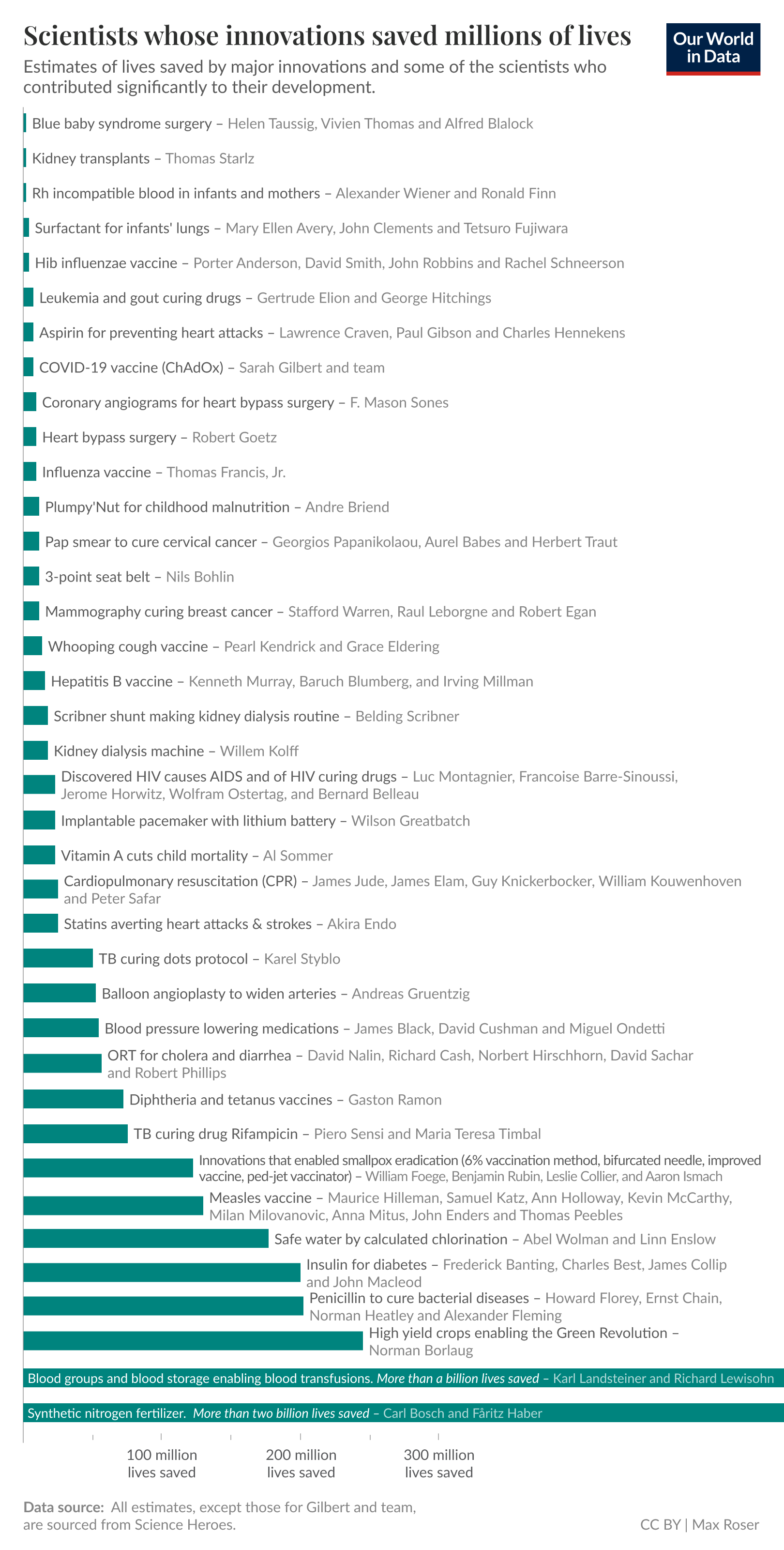
Besides the fact that it can be hard to see, I thought it would be interesting to know a little more about each bar. So, in good collaboration with ChatGPT and Gemini, I have researched, produced and fact-checked the short descriptions below (but as usual, please let me know if you find any errors).
The figures for how many lives have been saved are sometimes hard to determine and are estimates and judgments.
Blue baby syndrome (heart surgery): Blue baby syndrome is a congenital heart defect that makes infants bluish due to lack of oxygen. A groundbreaking operation was developed that rerouted blood flow so that more blood could reach the child’s lungs, which gave the child normal oxygenation. The first successful operation was performed in 1944 by the surgeon Alfred Blalock together with, and at the initiative of, the pediatric cardiologist Helen Taussig and the lab technician Vivien Thomas. This made a condition that had previously been almost always fatal treatable, and since then it has saved about 1 million children’s lives.
Kidney transplants: Kidney transplantation means that a diseased kidney is replaced with a healthy donor kidney through surgery. The treatment gives patients with severe kidney failure a new chance at life, since they otherwise risk dying from organ failure despite dialysis. The first kidney transplant between humans was performed in 1954 by Joseph Murray, and the surgeon Thomas Starzl later developed methods and immunosuppressive drugs that made transplantation routine. Altogether, kidney transplants are estimated to have saved about 1 million lives.
Rh incompatibility (preventive injection): Rh incompatibility between a pregnant woman and her fetus can cause severe jaundice and fatal anemia in newborns. The problem was solved with a preventive injection (sometimes called a “vaccine”) that is given to the mother shortly after delivery and prevents her immune system from attacking the next fetus. This method was developed in the 1960s and has eliminated almost all mortality from so-called Rh disease. Altogether, this innovation has saved about 1.5 million infants’ lives.
Polio vaccine: The polio vaccine prevents polio, a viral disease that previously paralyzed or killed many children. Virologist Jonas Salk developed the first polio vaccine for injection in 1955, and a few years later Albert Sabin introduced an oral vaccine. Mass vaccination of children practically eradicated polio in large parts of the world. By protecting children from this dreaded disease, the polio vaccine has saved about 1.6 million lives.
Yellow fever vaccine: Yellow fever is an often fatal viral disease spread by mosquitoes in tropical areas. An effective vaccine was developed in 1937 by the virologist Max Theiler, which drastically reduced the number of yellow fever outbreaks. The vaccine (known as 17D) is still used today and protects millions of people from infection. By preventing deadly epidemics, the yellow fever vaccine has saved about 1.6 million lives.
Surfactant for infants’ lungs: Premature babies often suffer from respiratory distress because their immature lungs lack surfactant, a substance that keeps the alveoli open. In the 1980s, a treatment was developed in which artificial surfactant was introduced into the baby’s lungs, helping them to breathe until they could produce the substance themselves. The discovery was based on earlier research by the physician Mary Ellen Avery, who showed the role of surfactant, and thanks to this treatment many premature babies now survive. Surfactant treatment of newborns is estimated to have saved about 4 million lives.
Hib vaccine: The Hib vaccine protects against Haemophilus influenzae type b, a bacterium that previously caused deadly meningitis and pneumonia in small children. Before the vaccine was introduced in the 1990s, Hib was one of the most common causes of death among infants, but mass vaccination has almost eliminated these infections. The vaccine was developed by a research group in the United States (including Porter Anderson and Rachel Schneerson) and has saved about 5 million children’s lives.
COVID-19 vaccine (Oxford/AstraZeneca): The COVID-19 vaccine from Oxford/AstraZeneca (ChAdOx1) was developed at record speed during 2020 to combat the coronavirus pandemic. The vaccine trains the immune system to recognize the coronavirus and prevents severe disease, which eases the burden on healthcare and reduces mortality. Researcher Sarah Gilbert and her team developed the vaccine in less than a year, and it was approved at the end of 2020. In its first year alone, this vaccine is estimated to have saved over 6 million lives.
Aspirin for preventing heart attacks: A daily low dose of acetylsalicylic acid (aspirin) can prevent heart attacks by preventing blood clots in the coronary arteries. This idea was suggested already in the 1940s by physician Lawrence Craven, and large studies during the 1970s and 1980s (including those led by physician Charles Hennekens) confirmed the benefits. Today, low-dose aspirin is recommended for many heart and stroke patients, and it has contributed to reducing mortality from cardiovascular disease. In total, this preventive use has saved about 7 million lives.
Drugs for leukemia and gout: A research team led by Gertrude Elion and George Hitchings developed new drugs in the 1950s that revolutionized the treatment of previously fatal diseases. Among their discoveries were 6-mercaptopurine – the first effective medicine against leukemia in children – as well as allopurinol, which treats severe gout and prevents life-threatening complications. These drugs transformed fatal conditions into treatable ones and have together saved about 7 million lives.
Influenza vaccine: The influenza vaccine protects against seasonal influenza, a viral disease that can be deadly, especially for older people and risk groups. The first effective influenza vaccines were developed during the 1940s under the leadership of virologist Thomas Francis Jr., and annual vaccination has since become routine in many countries. By reducing the number of severe influenza cases and epidemics, the vaccine is estimated to have saved about 10 million lives.
Coronary angiography (heart X-ray): Coronary angiography is an X-ray examination of the coronary arteries that is used to find narrowings in the blood vessels. The technique was discovered by cardiologist Mason Sones in 1958, and it made it possible for heart surgeons to plan bypass surgeries at the correct sites. By mapping the heart’s blood flow and guiding life-saving interventions, coronary angiography has contributed to saving about 10 million lives.
Coronary bypass surgery: Coronary bypass surgery is a surgical method in which blood is rerouted past narrowed coronary arteries with the help of a new blood vessel, so that the heart muscle receives sufficient blood. The first successful coronary bypass surgery was performed around 1960 by surgeon Robert Goetz, and during the 1970s the method became common for treating severe cardiovascular disease. Bypass operations prevent heart attacks in high-risk patients and have saved about 10 million lives.
Mammography (early detection of breast cancer): Mammography is an X-ray examination of the breasts to detect breast cancer at an early stage. Already in the 1950s, doctors such as Stafford Warren and Raul Leborgne began developing mammography methods, and in the 1960s improved techniques were developed for sharper images. When tumors can be detected and treated early, mortality from breast cancer decreases significantly. This early detection with mammography screening is estimated to have saved about 12 million lives.
Pap test for cervical cancer: The Papanicolaou test, better known as the Pap test for cervical cancer, is a method for detecting early cellular changes that can lead to cancer of the cervix. The method was developed in the 1940s by physician Georgios Papanicolaou, and through regular gynecological Pap smears the incidence of cervical cancer was significantly reduced. Thanks to early detection and treatment of precancerous lesions, the Pap test has saved about 12 million lives.
Three-point seat belt: The three-point seat belt is the modern car seat belt design that fastens across both chest and hips, providing much better crash protection than older lap belts. The invention was made in 1959 by engineer Nils Bohlin at Volvo, which chose to share the patent freely with the entire car industry. The belt prevents passengers from being thrown forward in collisions and has drastically reduced traffic fatalities. According to estimates, the three-point seat belt has saved about 12 million lives.
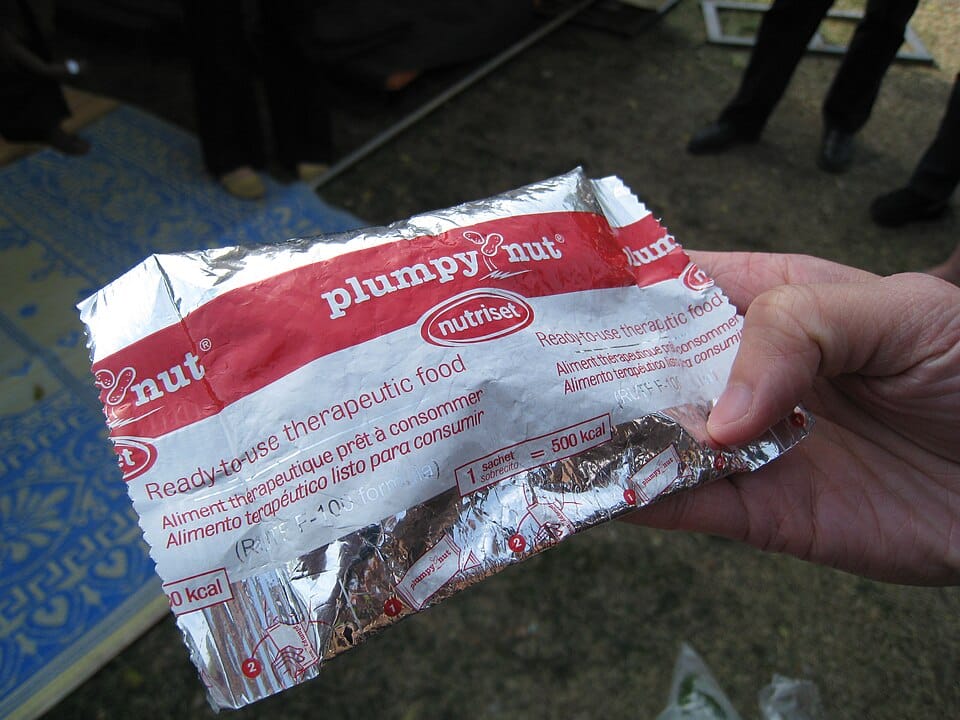
Plumpy’Nut (treatment of malnutrition): Plumpy’Nut is a nutrient-rich peanut paste used to save malnourished children. Unlike older methods that required hospital care, severely malnourished children can receive Plumpy’Nut treatment at home, which has made it cheaper and more accessible in poor areas. The product was developed in 1996 by the French pediatrician André Briend and has revolutionized the treatment of acute malnutrition. To date, Plumpy’Nut has contributed to saving about 12 million children’s lives.
Pertussis vaccine: The pertussis vaccine protects against whooping cough, a contagious bacterial disease that was once life-threatening for infants. The vaccine was developed during the 1930s by researchers Pearl Kendrick and Grace Eldering, who successfully tested it on children in Michigan. When pertussis vaccination became widespread after World War II, infant mortality dropped dramatically. Altogether, the pertussis vaccine has saved about 13 million lives.
Hepatitis B vaccine: The hepatitis B vaccine prevents infection with the hepatitis B virus, which can cause fatal liver damage and liver cancer. The virus’s surface antigen was discovered by Baruch Blumberg in the 1960s, and based on that, the first vaccine was derived from blood plasma. In the 1980s, researcher Kenneth Murray created a recombinant DNA version of the vaccine that could be mass-produced safely. Thanks to this vaccine, millions of people have avoided life-threatening liver disease—an estimated 15 million lives have been saved.
Dialysis (artificial kidney and Scribner shunt): An artificial kidney is a machine that cleanses the blood of waste products when the patient’s own kidneys have stopped functioning. The first working dialysis machine was built in the 1940s by Dutch physician Willem Kolff, who showed that patients with acute kidney failure could be saved by filtering their blood outside the body. In the 1960s, physician Belding Scribner developed the so-called Scribner shunt, a U-shaped tube between an artery and a vein, which made it possible to repeat dialysis treatments over long periods without new surgery each time. Together, these innovations laid the foundation for modern dialysis treatment and have saved about 17.5 million lives.
Discovery of HIV and antiretroviral drugs for AIDS: HIV, the virus that causes AIDS, was identified in 1983 by researchers Luc Montagnier and Françoise Barré-Sinoussi. This discovery was crucial for developing blood tests and medicines against HIV. In the mid-1980s, the first antiviral drug, AZT (synthesized by chemist Jerome Horwitz), became available, and in the 1990s more effective drugs followed, such as 3TC (developed by Bernard Belleau). Thanks to these discoveries and combination therapies, people with HIV can now live long lives. Efforts against HIV/AIDS have saved about 22 million lives.
Pacemaker: The pacemaker is a small electronic device implanted in the body that sends electrical impulses to keep the heart beating at the right rhythm. The first pacemaker was implanted in 1958 by surgeon Åke Senning and engineer Rune Elmqvist in Sweden. Later, Wilson Greatbatch introduced long-lasting lithium batteries to improve performance. The pacemaker helps patients with dangerously low heart rates or heart block and prevents the heart from stopping. This technology has saved about 22.5 million lives.
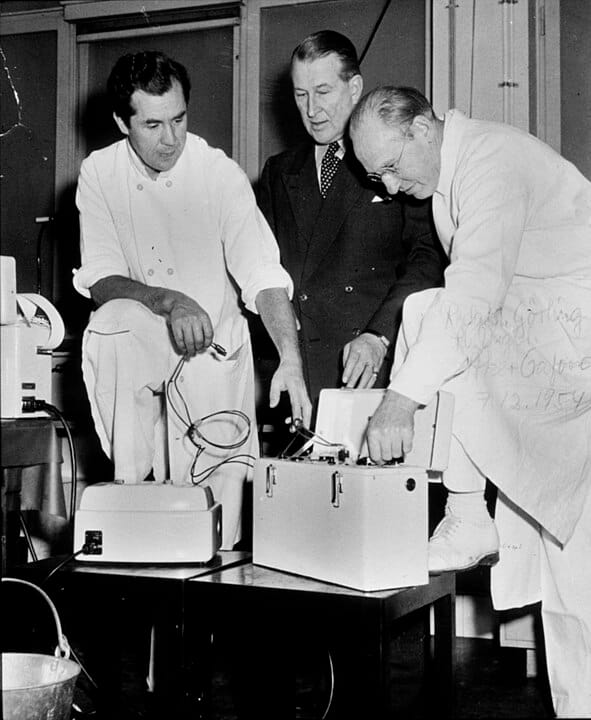
Vitamin A supplementation (child mortality): Vitamin A deficiency in small children leads to weakened immune systems and can cause blindness, which increases the risk of dying from common infections. In the 1980s, physician Alfred Sommer showed in studies that regular vitamin A supplements dramatically reduced child mortality in developing countries. Programs to distribute vitamin A capsules to children were therefore introduced in many countries, and this simple intervention has saved about 23 million lives.
CPR (cardiopulmonary resuscitation): CPR means combining chest compressions with artificial respiration to keep blood circulation going during cardiac arrest. The method was developed around 1960 by physicians Peter Safar and James Elam (breathing) together with James Jude and William Kouwenhoven (chest compressions), and it was soon taught to the general public. By enabling ordinary people to intervene immediately in cases of sudden cardiac arrest, crucial time is gained until paramedics take over. CPR is estimated to have saved about 25 million lives worldwide.
Cholesterol and heart disease (diet and statins): In the 1950s, researcher Ancel Keys demonstrated the connection between high cholesterol in the blood and the risk of heart attack. His research laid the foundation for dietary advice and public health campaigns that led many to change their eating habits for the sake of their hearts. In the 1970s, Japanese biochemist Akira Endo discovered the first statins, drugs that lower cholesterol levels and reduce the risk of heart attack and stroke. The combination of better diets and effective drug treatments has together saved about 26 million lives.
DDT (malaria control): The insecticide DDT proved to be extremely effective at killing malaria mosquitoes. Swiss chemist Paul Müller discovered DDT’s insecticidal effect in 1939, and after World War II the substance was used in large-scale malaria eradication campaigns. In many regions, malaria cases were cut in half, saving countless lives, particularly before mosquitoes developed resistance and environmental concerns stopped its use. Altogether, the use of DDT against malaria has saved about 37 million lives.
DOTS treatment for tuberculosis: DOTS (Directly Observed Therapy, Short-course) is a strategy for curing tuberculosis by monitoring that the patient takes their full course of antibiotics. The strategy was developed by physician Karel Styblo during the 1970s and 1980s, after realizing that irregular medication led to relapses and resistant bacteria. With DOTS, healthcare could ensure that TB patients completed their treatment, which dramatically increased cure rates in poor countries. Since its global implementation, DOTS has saved about 79 million lives (a higher, more recent figure than in the infographic).
Angioplasty (balloon dilation): Angioplasty is a method where a small balloon is inserted into a narrowed blood vessel and inflated to restore blood flow. The technique was developed by physician Andreas Grüntzig, who in 1977 performed the first successful angioplasty of a coronary artery in a heart patient. The procedure gave doctors a less invasive alternative to open-heart surgery for treating heart attacks and angina. The method has saved about 52 million lives.
Blood pressure–lowering medicines: Drugs such as beta-blockers and ACE inhibitors made it possible to treat high blood pressure and prevent strokes and heart attacks. Pharmacologist James Black developed the first beta-blocker in the 1960s, and in the 1970s David Cushman and Miguel Ondetti developed the ACE inhibitor captopril. Before these medicines existed, uncontrolled high blood pressure was a common cause of premature death. The widespread use of antihypertensive medicines has greatly reduced mortality from cardiovascular disease—an estimated 55 million lives have been saved.
Oral rehydration solution (ORS) for diarrhea: Oral Rehydration Solution (ORS) is a simple sugar-salt solution that is drunk to restore fluid balance in cases of severe diarrhea, such as cholera. The discovery that the intestine can absorb water with salt and sugar despite diarrhea was made in the 1960s by physicians such as Robert Phillips and David Nalin. With a cheap mixture of clean water, salt, and glucose, life-threatening dehydration can be treated at home instead of with IV fluids in hospitals. The spread of ORS is called one of the greatest advances in medical history and is estimated to have saved about 57.5 million lives.
Diphtheria and tetanus vaccines: Vaccines against diphtheria and tetanus eliminated two previously dreaded infectious diseases in children. In the 1920s, French veterinarian Gaston Ramon developed methods to inactivate the bacteria’s toxins (toxoids), which laid the foundation for effective vaccines against diphtheria and tetanus. During the 20th century, infant vaccination against diphtheria and tetanus became routine, eradicating diphtheria in many countries and drastically reducing cases of neonatal tetanus. Altogether, these vaccines have saved about 72 million lives.
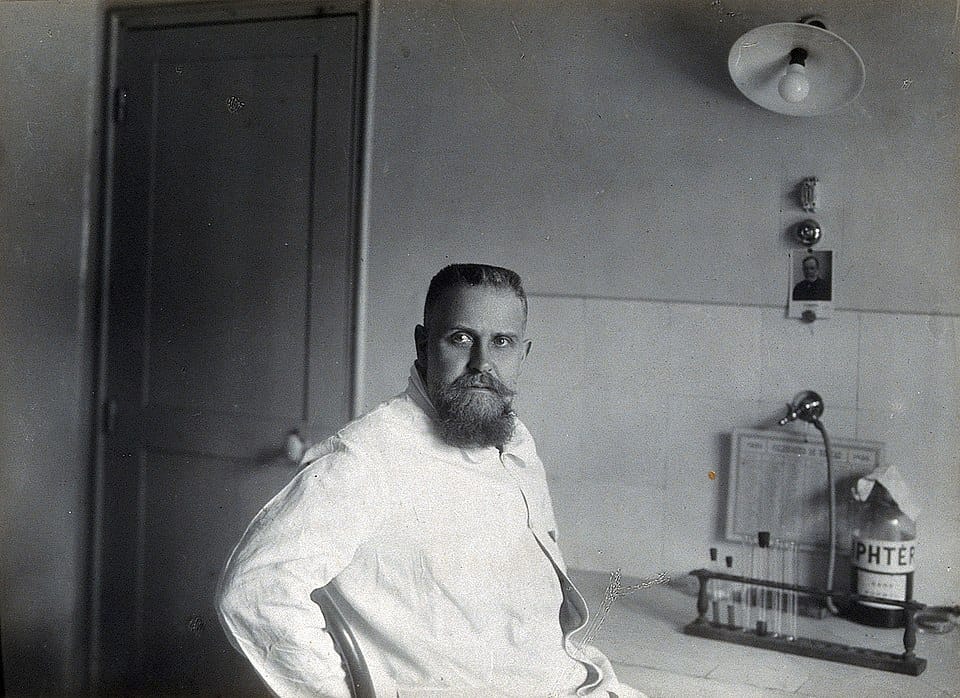
Rifampicin against tuberculosis: Rifampicin is a powerful antibiotic that marked a breakthrough in the treatment of tuberculosis. The drug was discovered in 1965 by an Italian research team led by Piero Sensi and was shown to kill TB bacteria more effectively than previous medicines. When rifampicin was introduced in the 1970s, TB could be treated in 6–9 months instead of several years, meaning patients could be cured before they died. Rifampicin and subsequent combination treatments for TB have saved about 75 million lives.
Smallpox eradication (vaccine innovations): A global program succeeded in eradicating smallpox in 1980—one of the deadliest diseases in history—thanks to several key innovations. Physician William Foege developed a “ring vaccination” strategy to quickly stop local outbreaks, Leslie Collier created a more durable freeze-dried vaccine, and Benjamin Rubin invented a simple bifurcated needle that made vaccination fast and cheap. Millions of health workers systematically vaccinated populations all over the world, sometimes with the help of automatic syringes designed by engineer Aaron Ismach. These improvements made the eradication of smallpox possible—an effort that is estimated to have saved about 122 million lives.
Measles vaccine: The measles vaccine prevents measles, a highly contagious viral disease that once caused deadly epidemics among children. The first measles virus strain was isolated in 1954 by virologist John Enders, and an effective vaccine became available in 1963 (further developed by Maurice Hilleman in 1968). By introducing the measles shot into childhood vaccination programs worldwide, measles mortality dropped dramatically. Measles vaccination has saved over 130 million lives.
Clean water through chlorination: Disinfected drinking water with chlorine eliminated waterborne diseases such as cholera and typhoid that previously claimed many lives. In 1919, engineers Abel Wolman and Linn Enslow developed a method for adding just the right dose of chlorine to city water—enough to kill bacteria, but harmless to humans. Cities around the world then introduced chlorination of water, which almost eradicated epidemic diseases linked to contaminated water. Access to chlorinated water is estimated to have saved about 177 million lives.
Insulin for diabetes: Insulin treatment for diabetes transformed a previously fatal disease into a manageable chronic condition. In 1921, Frederick Banting and Charles Best succeeded in extracting insulin from pancreases (under the leadership of John Macleod), and chemist James Collip purified the extract into an injectable medicine. Before insulin, most young people with type 1 diabetes died within a year, but with regular insulin injections they could survive. The discovery of insulin as a drug has saved about 200 million lives.
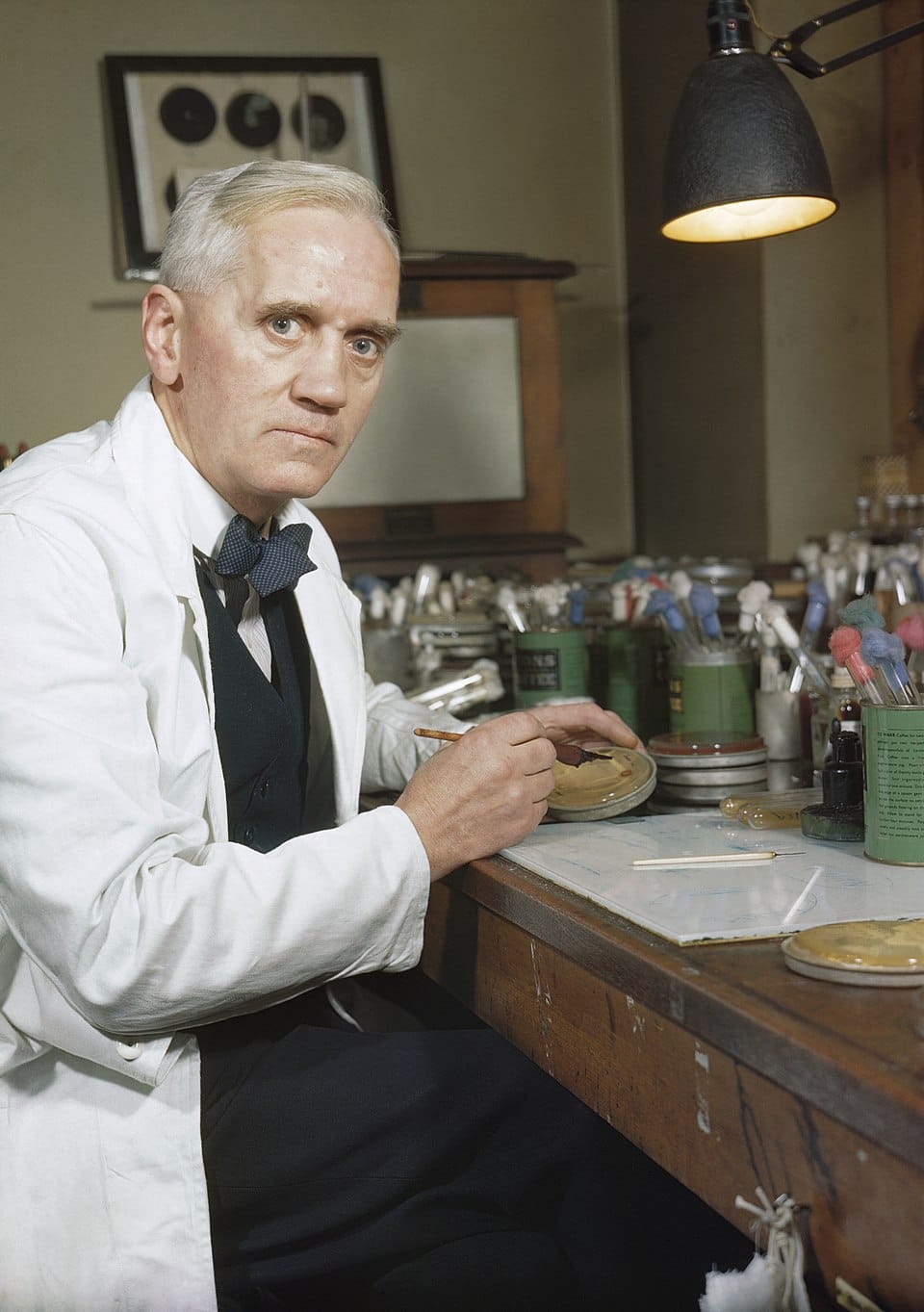
Penicillin (antibiotics): Penicillin was the first antibiotic that could effectively cure severe bacterial infections. Alexander Fleming discovered by chance the bacteria-killing effect of penicillin in 1928, but it was not until around 1941 that Howard Florey, Ernst Chain, and Norman Heatley succeeded in producing penicillin in usable amounts as a medicine. During World War II and afterward, penicillin cured previously deadly infections such as pneumonia, sepsis, and wound infections. The antibiotic era that penicillin began has saved about 203 million lives.
The Green Revolution (high-yield crops): The Green Revolution refers to the development of high-yield cereal varieties and modern farming methods that averted mass famine in the mid-20th century. Agronomist Norman Borlaug developed new wheat varieties in the 1960s that produced much higher yields and resisted plant diseases, provided there was irrigation and fertilizer. Countries such as Mexico, India, and Pakistan were able to multiply their food production and feed hundreds of millions more people thanks to these innovations. It is estimated that the Green Revolution and Borlaug’s work have saved about 245 million lives.
Blood transfusions: Blood transfusion—the transfer of blood from a donor to a patient—became possible thanks to the discovery of blood groups and methods for blood storage. In 1901, Karl Landsteiner identified the most important blood group systems (AB0), which allowed doctors to match blood and avoid deadly reactions. Shortly thereafter, Richard Lewisohn showed how citrate could prevent blood from clotting outside the body, so it could be stored and used when needed. Transfusions became routine in surgery, childbirth, and emergency medicine and have saved over 1.1 billion lives.
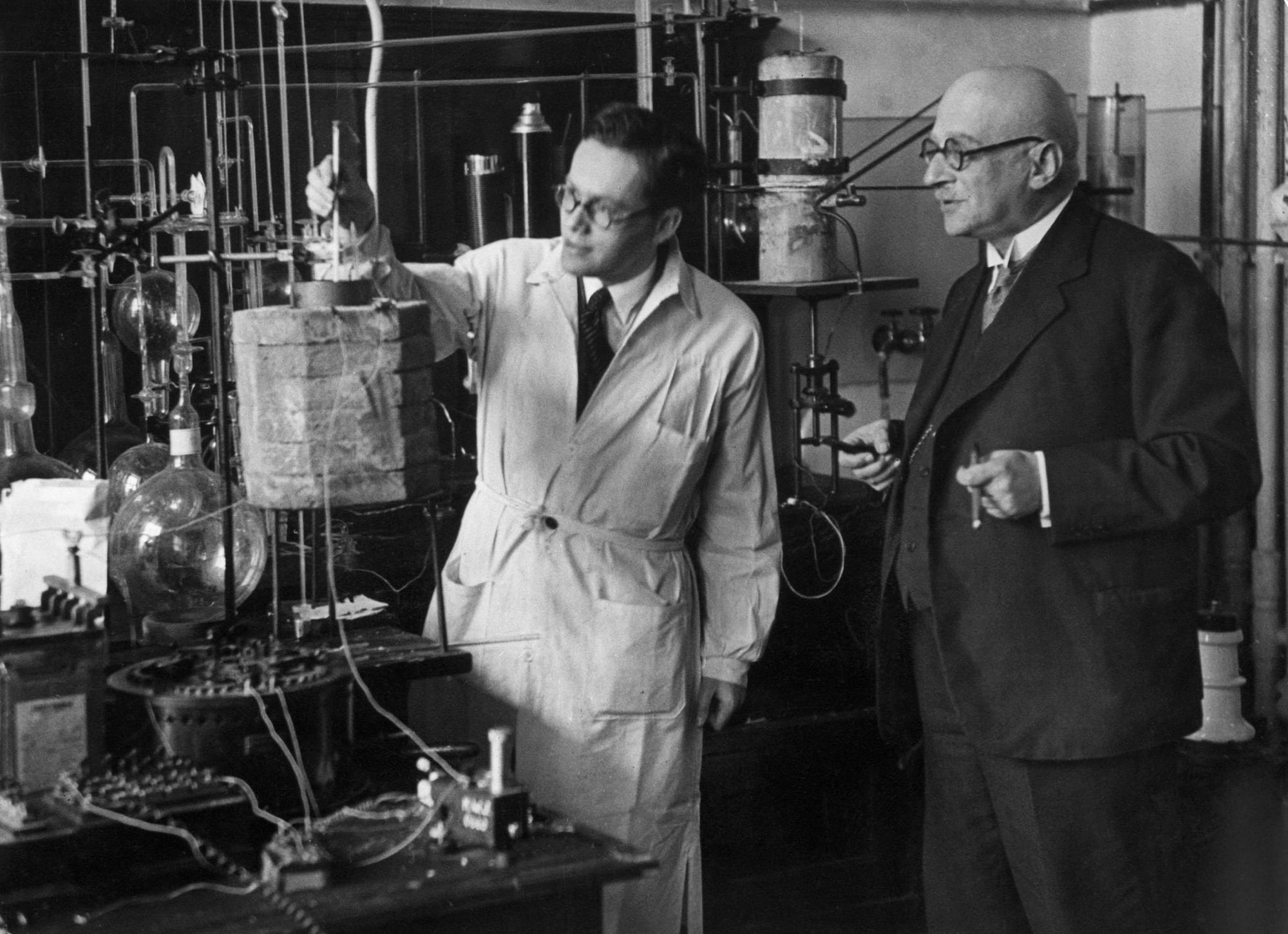
Fertilizer (industrial nitrogen fixation): The synthetic production of nitrogen fertilizer made possible an explosive increase in agricultural yields during the 20th century. German chemist Fritz Haber invented a method in 1909 to produce ammonia from nitrogen in the air, and engineer Carl Bosch industrialized the process on a large scale a few years later. Cheap nitrogen fertilizer allowed much more food to be grown, preventing large-scale famine as the world’s population grew. It is estimated that synthetic nitrogen fertilizer has saved over 2.3 billion lives.
Mathias Sundin
Angry Optimist
By becoming a premium supporter, you help in the creation and sharing of fact-based optimistic news all over the world.