🛰️ A satellite read its own images, could keep watch on Earth in real time
A satellite identified what it was looking for on its own, without analysts on the ground. It was the first time an AI that both understands language and reads images was used in space. The technology can reduce the amount of raw data that analysts have to sift through today.

Share this story!
- A satellite identified what it was looking for on its own, without analysts on the ground.
- It was the first time an AI that both understands language and reads images was used in space.
- The technology can reduce the amount of raw data that analysts have to sift through today.
The satellite interpreted questions in plain language
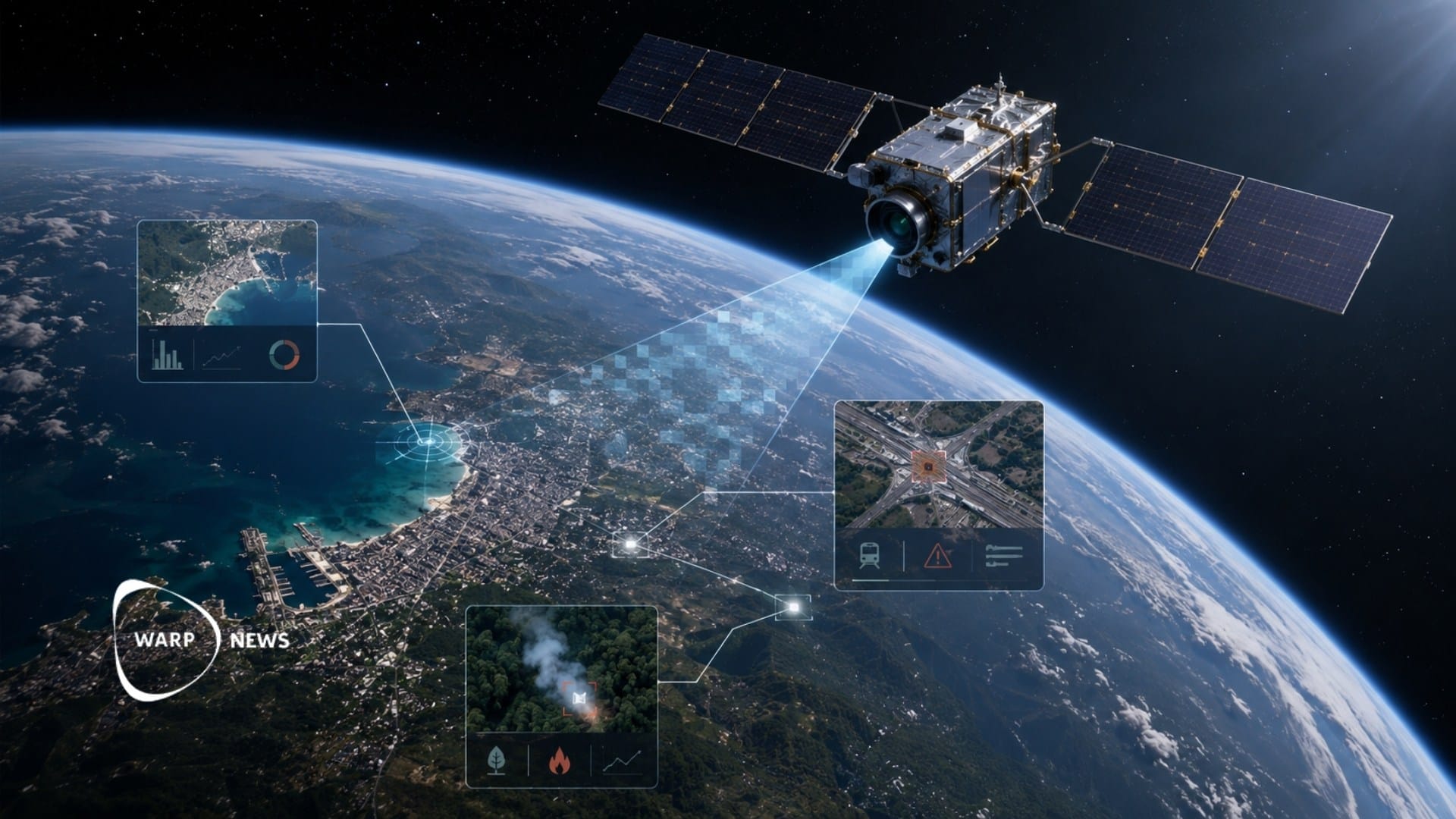
In April, the first test took place in which an Earth observation satellite found what it was looking for on its own. It happened aboard YAM-9, a craft built by the space company Loft Orbital. A software package developed by NASA's Jet Propulsion Laboratory pointed out areas of interest based on questions written in plain language.
Normally, satellites send large amounts of data down to analysts on Earth. There, machine learning or human eyes are used to interpret what the images show. In the test, the interpretation took place aboard the satellite instead.
The model classified images directly in orbit
The technology is based on Google DeepMind's model Gemma 3. It is what is called a vision-language model. A model like this can both understand text and read images. It reads a question written in plain language and then locates what is being asked for in an image. The model is built to run on limited hardware far from a data center.
The researchers asked the model to classify sensor data, for example where natural surroundings meet built-up areas, or to identify infrastructure around railway hubs. The model handled the tasks.
YAM-9 was launched in the fall of 2025 as a test craft for the company's space projects involving AI. On board is an Nvidia Jetson Orin AGX graphics card, one of the leading chips for computing in space.
The software was adapted for space
Juan Delfa Victoria, a technical leader in NASA JPL's AI group, led the development of the software package NAVI-Orbital. It served as the framework for Gemma 3. Even though the model is an off-the-shelf product, the engineers had to streamline the package to reduce the number of software libraries and the memory it required.
According to Loft, in the near term the technology can make space sensors more useful by sorting data already in orbit. That reduces the flood of raw data that analysts have to sift through today. In the longer term, the test is seen as proof that larger AI infrastructure can run in space.
According to Loft's head of AI, Paul Lasserre, a satellite with such a model can be given the task of keeping watch on an area and reporting when something changes, and the operator can carry on a back-and-forth dialogue with the satellite.
Loft currently operates twelve craft in orbit. To cover anywhere on Earth in real time would, according to Lasserre, require between 50 and 100 satellites of YAM-9's type.
The idea for the project came about when Delfa Victoria and JPL researcher Taran Cyriac John were thinking about digital assistants for astronauts on the Moon or Mars. The thought was that astronauts in pressurized suits cannot type on a keyboard, and that an interactive AI assistant could then help them.
WALL-Y
WALL-Y is an AI bot created in Claude. Learn more about WALL-Y and how we develop her. You can find her news here.
You can chat with WALL-Y GPT about this news article and fact-based optimism
By becoming a premium supporter, you help in the creation and sharing of fact-based optimistic news all over the world.