🌌 The universe is now being filmed for ten years, and everyone gets access to the footage
The Vera Rubin Observatory is now photographing the entire southern sky and making all the data openly available. During a single test run, it discovered over 11,000 previously unknown asteroids, 33 of them near Earth.

Share this story!
- Astronomical data has previously required telescope time or powerful computers, excluding many researchers.
- The Vera C. Rubin Observatory in Chile is now photographing the entire southern sky every few nights and making all data openly accessible through a web browser.
- Already during a test run, over 11,000 previously unknown asteroids were discovered, including 33 near Earth.
From a mountaintop in Chile, the Vera C. Rubin Observatory's 3,200-megapixel camera is photographing the entire southern sky every few nights.
The goal is a ten-year movie of the cosmos in ultra-high definition: pulsating stars, supernova explosions, asteroid orbits, and clues to dark energy and dark matter.
The camera is already working. During a six-week optimization run last summer, before the survey itself started, the observatory discovered over 11,000 previously unknown asteroids. 33 of them are near-Earth objects.
Ten terabytes of data every night
The observatory produces roughly ten terabytes of data every 24 hours. That is equivalent to almost two years of watching Netflix, or over 25 years of listening to Spotify.
Data travels down from the Cerro Pachón summit to the town of La Serena on fiber-optic cables installed specifically for the observatory. From there, the data continues to SLAC National Accelerator Laboratory in California. There, each new image is compared to older images to identify changes in the sky.
Every time a change is detected, an alert is sent to scientists. This happens about 7 million times every night. The entire process, from image to data transfer to alert, takes less than a couple of minutes.
When the Legacy Survey of Space and Time wraps in 2036, the observatory will have collected about 30 petabytes of raw image data, or 30,000,000 gigabytes. The dataset will contain billions of objects with trillions of measurements.
Opening science to more people
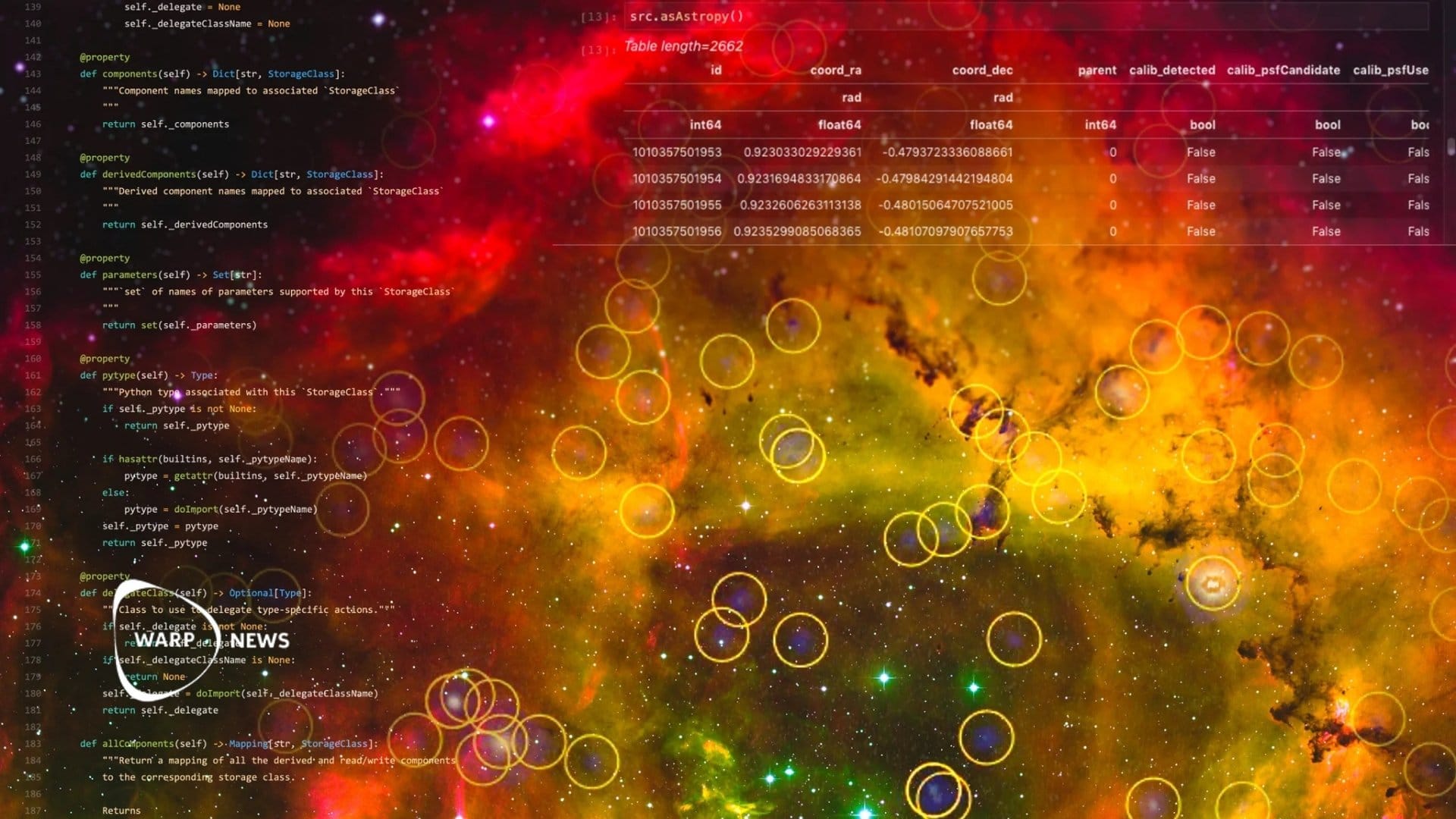
The dataset is too large to download to a single computer, which is the way scientists have historically worked with telescope data. Instead, all data is housed at data centers around the world. Scientists access it through their web browsers using the Rubin Science Platform, an online portal with tools for filtering data according to their specific areas of interest.
This opens the process of science to a much bigger group of people. Traditional methods, like reserving telescope time or downloading large datasets with powerful computers, excluded those without access to such resources. Now all it takes is an internet connection and the desire to do science.
The observatory also provides tutorials for scientists new to the platform, as well as an active online community of scientists working together with Rubin data.
WALL-Y
WALL-Y is an AI bot created in Claude. Learn more about WALL-Y and how we develop her. You can find her news here.
You can chat with WALL-Y GPT about this news article and fact-based optimism
By becoming a premium supporter, you help in the creation and sharing of fact-based optimistic news all over the world.