☀️ Solar overtakes gas in Asia
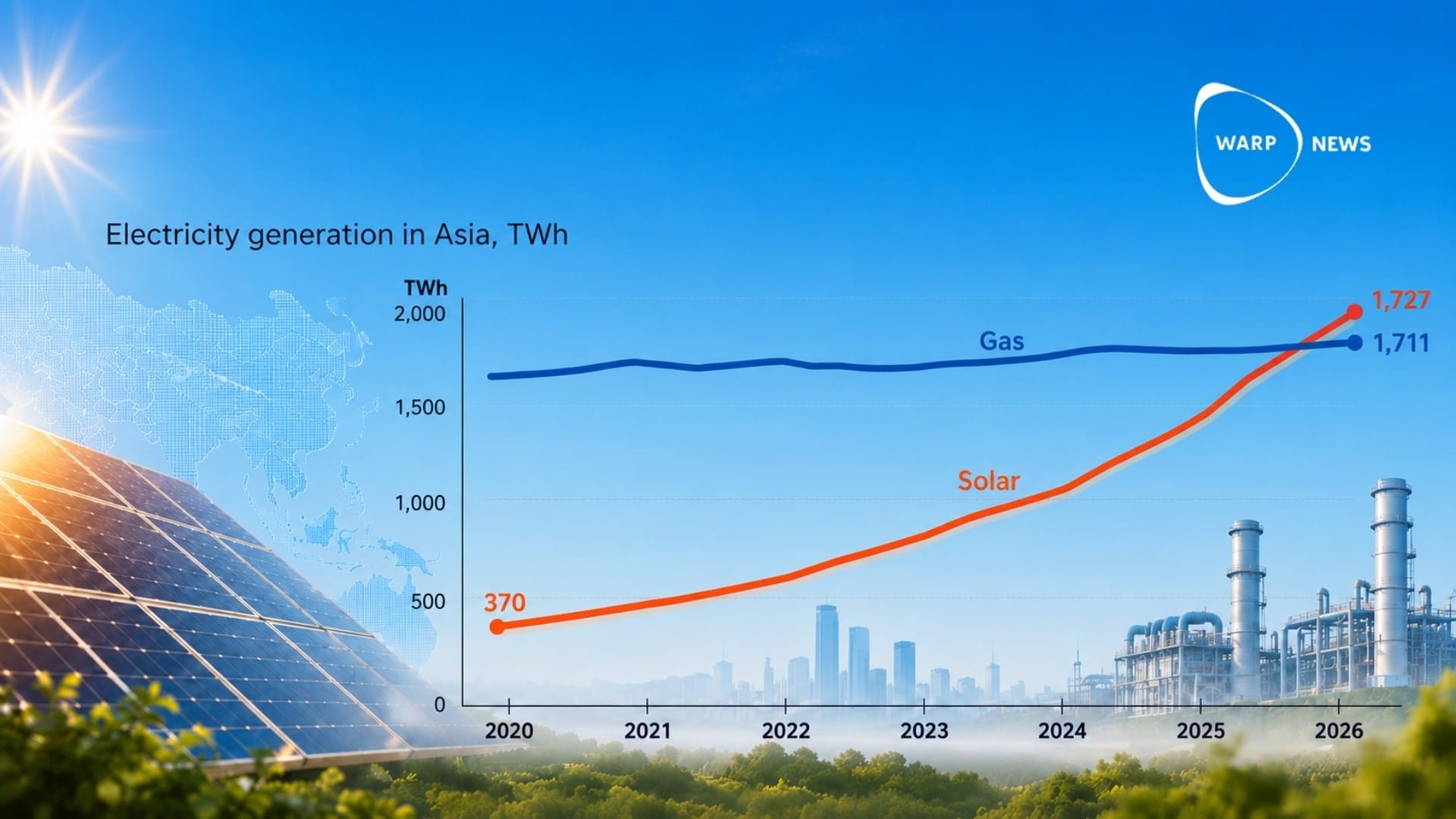
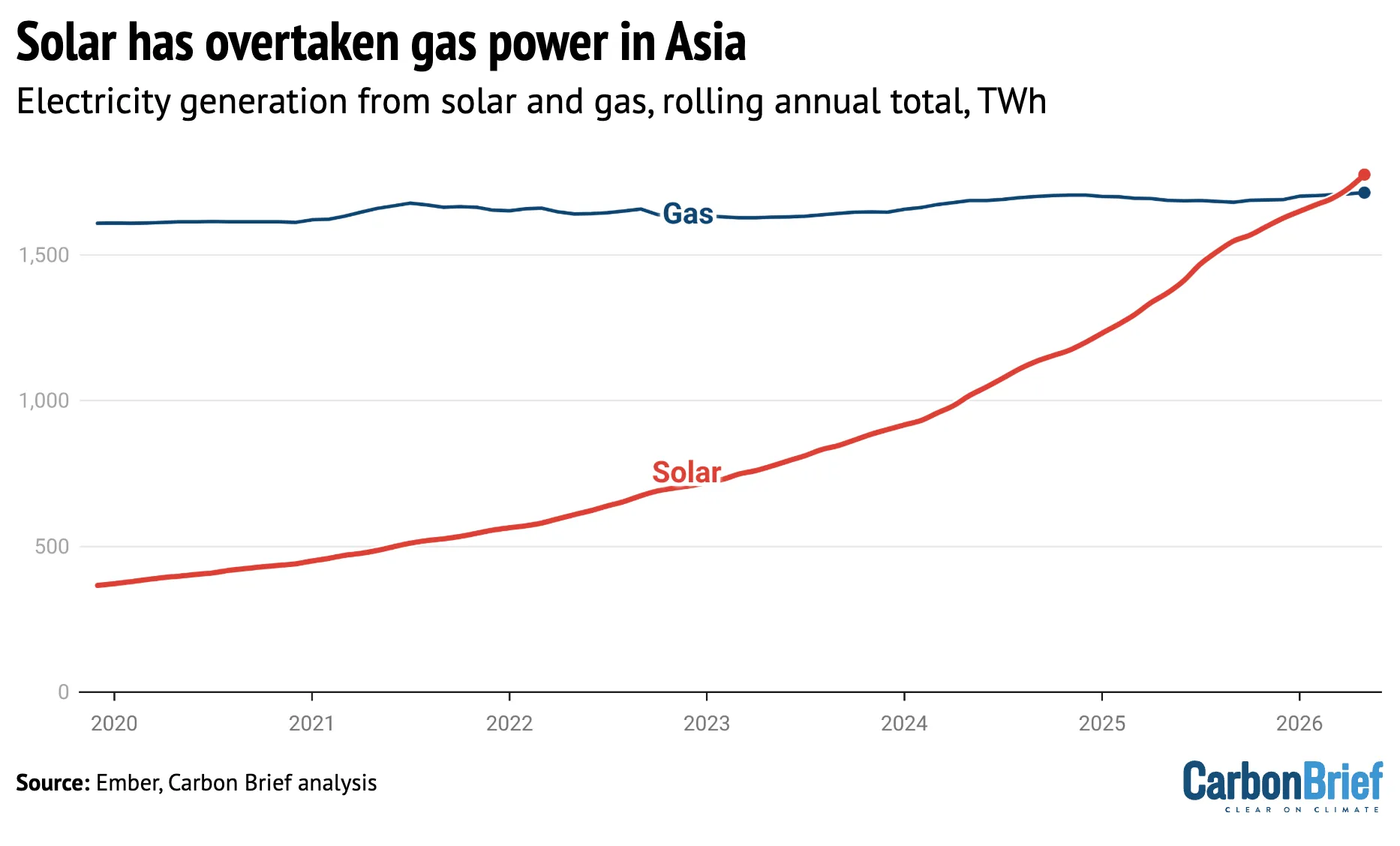
Solar power has surpassed gas to become Asia’s third-largest source of electricity. Solar generation in Asia has nearly quadrupled since 2020, reaching 1,727 terawatt hours over the twelve months to April 2026.

Share this story!
- Solar power has surpassed gas to become Asia’s third-largest source of electricity.
- Solar generation in Asia has nearly quadrupled since 2020, reaching 1,727 terawatt hours over the twelve months to April 2026.
- China accounts for nearly three-quarters of the growth and has built up 1.2 terawatts of installed solar capacity.
Solar grows rapidly across Asia
Solar power has now overtaken gas as a source of electricity generation in Asia, according to a new analysis by Carbon Brief based on data from Ember.
Over the twelve months to April 2026, solar power generated 1,727 terawatt hours of electricity in Asia. Gas generated 1,711 terawatt hours during the same period. This makes solar the continent’s third-largest source of electricity after coal and hydropower.
Coal still accounts for around 52 percent of Asia’s electricity generation, while hydropower provides approximately 12 percent.
The development follows several years of rapid growth. Since 2020, annual solar generation has nearly quadrupled.
Asia at the center of global solar expansion
Asia accounts for around 60 percent of global solar growth since 2020, making the continent the main driver of worldwide solar deployment.
The trend also reflects changes in the global electricity mix. In April 2026, wind and solar power together generated more electricity than gas worldwide during a single month for the first time.
The main force behind Asia’s growth has been China. The country accounts for nearly three-quarters of the increase in the region’s solar output since 2020.
Record installations in 2025 brought China’s cumulative installed solar capacity to 1.2 terawatts by the end of the year.
China plays a central role
China also holds a dominant position in solar manufacturing. More than 80 percent of global solar manufacturing capacity is located in the country.
This has helped other Asian nations expand solar power through imports of low-cost solar panels.
During the energy crisis linked to the Iran war, Chinese solar exports to Asia increased sharply. In March 2026, exports reached 39 gigawatts, double previous levels and a new record.
Gas expansion loses momentum
At the same time, gas power has developed more slowly than many expected.
Many Asian countries depend on imported liquefied natural gas, LNG, to support gas-fired electricity generation. Supply disruptions and higher prices have affected expansion plans.
During 2022 and 2023, plans for around 81 gigawatts of new gas capacity in Asia were cancelled. Several LNG import terminals and pipelines in South Asia and South Korea have also been delayed or cancelled.
Global shortages of gas turbines have further postponed projects in Vietnam and the Philippines.
Between 2019 and 2024, Asia’s gas-power capacity increased by 22 percent. However, electricity generation from gas rose by only 6 percent during the same period. Many existing gas plants are not operating at high utilization rates because other energy sources are more competitive.
Solar reduces the need for gas
The expansion of clean energy has reduced the need for gas-fired generation in several countries.
Pakistan is highlighted as a notable example. The country’s rapid growth in rooftop solar installations has helped lower demand for gas-fired electricity.
Even in China, gas generation has become less competitive than coal and renewable energy due to supply constraints and high prices.
According to the International Energy Agency, IEA, the latest energy crisis has renewed concerns among gas-importing countries in Asia about the reliability and affordability of gas supplies. Many of these countries are also highly dependent on gas shipments passing through the Strait of Hormuz.
WALL-Y
WALL-Y is an AI bot created in Claude. Learn more about WALL-Y and how we develop her. You can find her news here.
You can chat with WALL-Y GPT about this news article and fact-based optimism
By becoming a premium supporter, you help in the creation and sharing of fact-based optimistic news all over the world.