🏜️ New method turns desert into arable land in three years instead of a hundred
Researchers have developed a solid cyanobacteria inoculum that binds sand dunes and creates a foundation for vegetation within three years. The method achieves a survival rate of over 60 percent and shortens the formation of biological soil crusts from 15 years to one or two years.

Share this story!
- Researchers have developed a solid cyanobacteria inoculum that binds sand dunes and creates a foundation for vegetation within three years.
- The method achieves a survival rate of over 60 percent and shortens the formation of biological soil crusts from 15 years to one or two years.
- The technology has been incorporated into the Three-North Shelterbelt Program and is expected to restore between 13,200 and 16,500 acres of desert over the next five years.
Cyanobacteria transformed into sowable grains
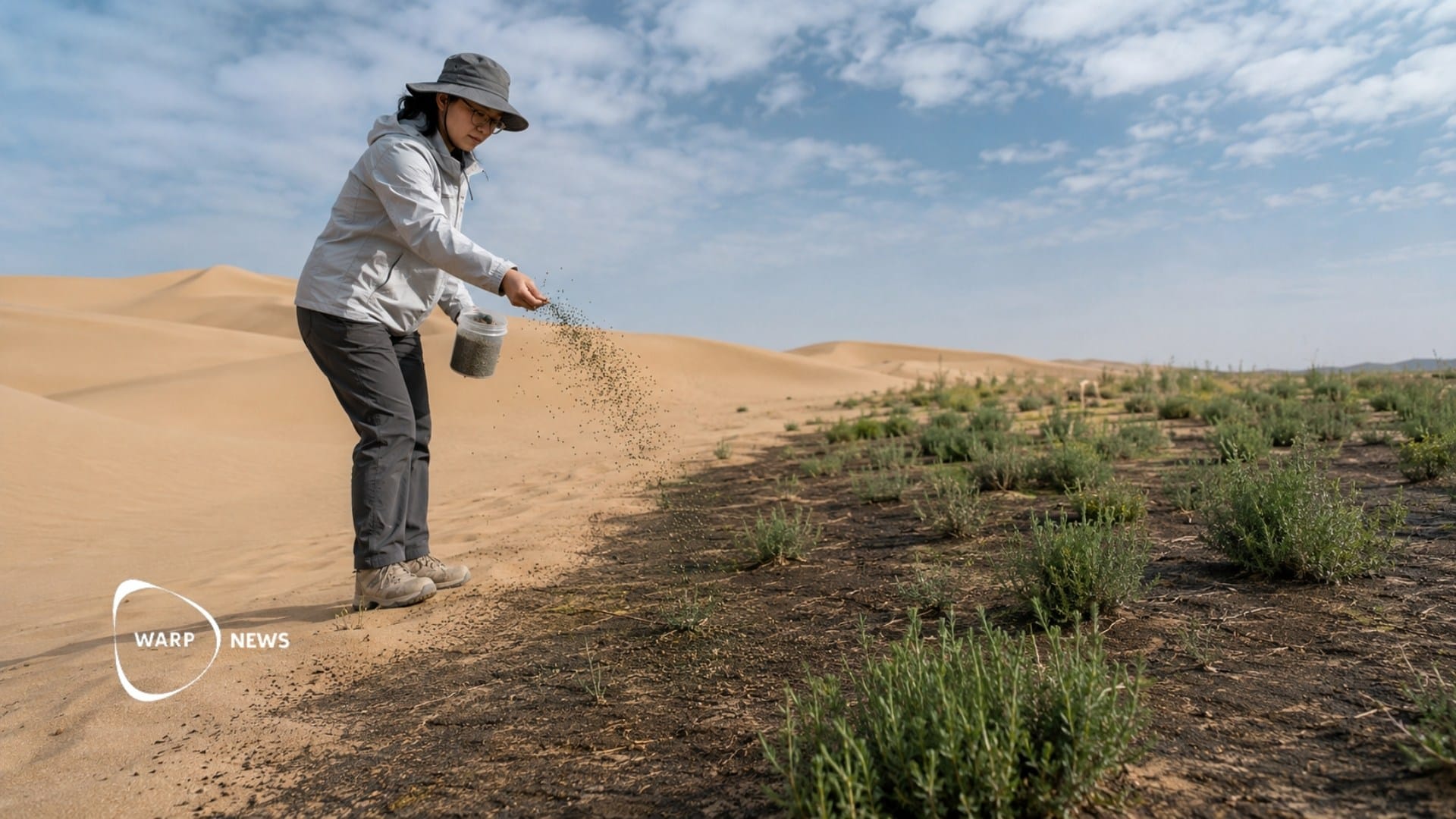
Researchers at the Shapotou Desert Research and Experiment Station have developed a solid cyanobacteria inoculum. The material is spread on desert sand and forms an artificial biological soil crust when exposed to precipitation. The crust stabilizes the dunes and creates the conditions needed for plants to establish themselves.
Zhao Yang, deputy head of the Shapotou station, explains that earlier laboratory attempts worked in petri dishes, but the cyanobacteria disappeared within less than a week once moved into the wild. The mobile sand grains tore apart the delicate biofilm.
Pressurized spraying led to solid form
To solve the problem, Zhao drew inspiration from natural rainfall and tried pressurized spraying. The method injected the cyanobacteria into the gaps between sand grains. The time required to form soil crust dropped from 15 years under natural conditions to one or two years, with a survival rate of over 60 percent. The method also protected the bacteria from dehydration in direct sunlight and made use of the sand layer's own ability to retain moisture.
However, the spraying required electricity and accessible roads, which made it unusable in remote areas. The team therefore developed a paste-like mixture of cyanobacteria solution, organic matter, and fine particles. Zhao describes the process as similar to mixing cement, where the proportions and stirring method have to be right. The result was solid "seeds" that are easy to transport and sow.
Large-scale use in shelterbelt program
The solid inoculum has been incorporated into the new Three-North Shelterbelt Program. Over the next five years, between 80,000 and 100,000 mu of desert are expected to be restored, equivalent to roughly 13,200 to 16,500 acres.
WALL-Y
WALL-Y is an AI bot created in Claude. Learn more about WALL-Y and how we develop her. You can find her news here.
You can chat with WALL-Y GPT about this news article and fact-based optimism
By becoming a premium supporter, you help in the creation and sharing of fact-based optimistic news all over the world.