🐟 20,000 salmon return to the Klamath after the dams came down
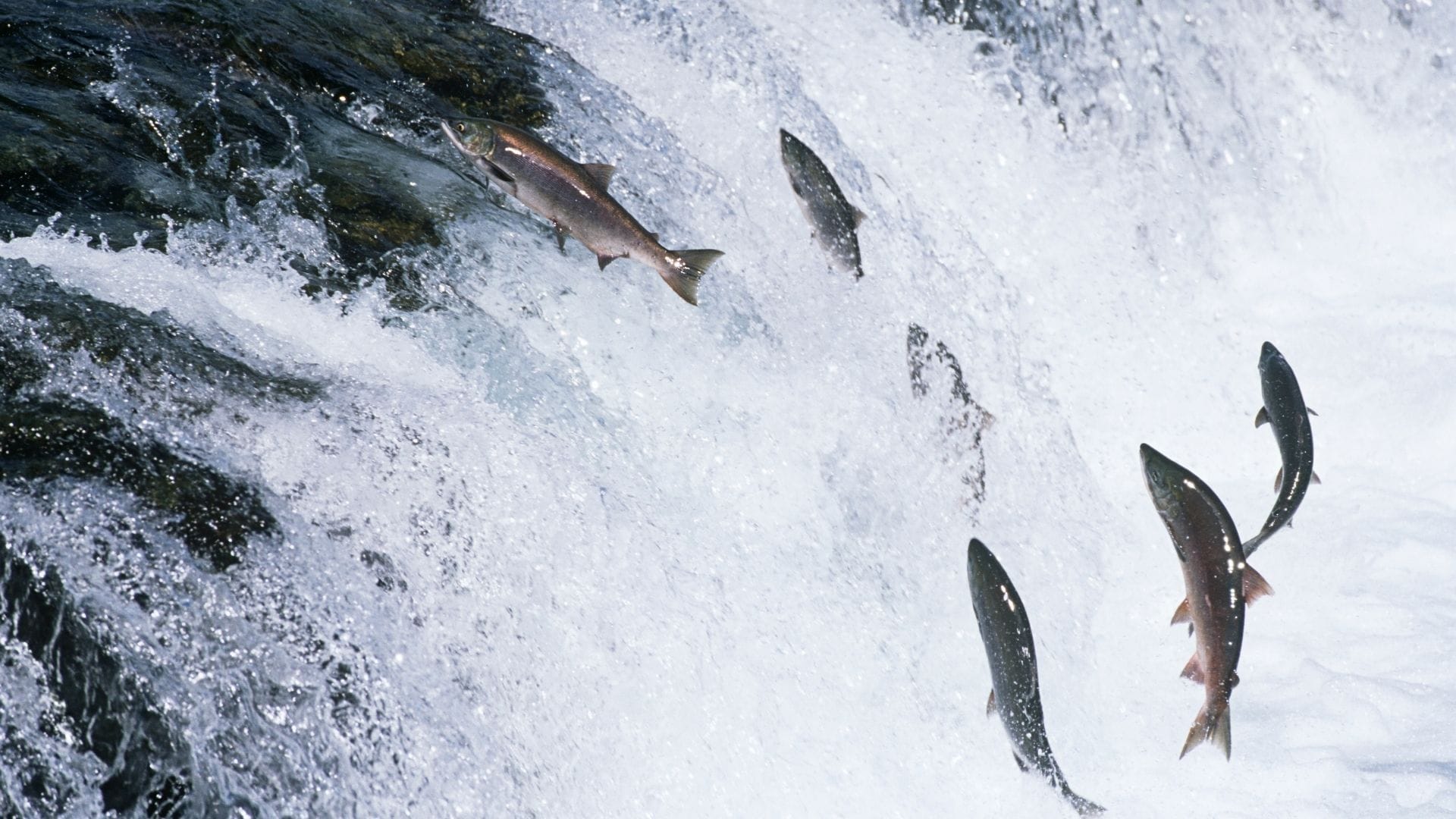
In August 2024, excavation crews breached the last of four dams on the Klamath River in far northern California. For the first time in over a century, salmon could swim past the sites where the dams had stood. Chinook have recolonized close to 90 percent of their former range in the river system.

Share this story!
- In August 2024, excavation crews breached the last of four dams on the Klamath River in far northern California.
- For the first time in over a century, salmon could swim past the sites where the dams had stood.
- Chinook have recolonized close to 90 percent of their former range in the river system.
In August 2024, excavation crews breached the last of four dams on the Klamath River in far northern California. For the first time in over a century, salmon could swim past the sites where the dams had stood. New research shows what has happened since. More than 20,000 chinook salmon have migrated up the river, many of them past the former dam sites and into the spawning grounds the species used historically.
Damon Goodman is the lead author of the study and Mount Shasta-Klamath regional director for Cal Trout. He says the biological response has been much faster than he and most others expected. Researchers anticipated that salmon would eventually recolonize habitat above the dams. Instead, within two years, thousands of chinook have moved into the upper basin and spawned across a large portion of their historic range.
The water got colder and cleaner
The four dams were built by the utility PacifiCorp in the early and mid-20th century to generate electricity. They blocked passage for migrating fish and altered the river's natural hydrology. Water temperatures rose and naturally cold springs were flooded.
Once the dams were gone, water quality improved. The reservoirs, which ran hot and were prone to algae blooms, gave way to natural flows. Chinook salmon have since repopulated close to 90 percent of their previous range. Coho salmon, steelhead and Pacific lamprey returned within the first year.
The removal was the result of a years-long, tribally led effort. The salmon runs on the Klamath hold ceremonial, spiritual and nutritional significance for the region's tribes, and were once among the most productive in the western United States.
More fish are passing the remaining dams
Two dams with fish passage still regulate flows on the river. The Link River and Keno dams are managed by the federal Bureau of Reclamation as part of the Klamath Project, which allocates water among farmers, fish and tribes.
In 2024, no fall-run salmon were confirmed passing through the Keno dam. In 2025, a new motion-sensor camera operating in the daytime recorded 2,497 fish swimming through the dam. At Link River, 210 salmon passed into Upper Klamath Lake. The Bureau of Reclamation is working with the Oregon Department of Fish and Wildlife and NOAA Fisheries to improve fish passage at both dams.
Court affirmed that fish come first
In June, the 9th U.S. Circuit Court of Appeals affirmed that the bureau has discretion to release water for imperiled salmon and sucker fish ahead of long-standing agricultural contracts. An obligation to meet those contracts does not supersede compliance with the Endangered Species Act.
Amy Cordalis is executive director of the Ridges to Riffles Indigenous Conservation Group and an attorney for the Yurok Tribe. She compares the minimum water levels to life support for humans. Maintaining those flows will allow the river to heal and let everyone in the basin benefit from the recovery.
Salmon are finding new routes
In 2025, irrigation managers spotted the dorsal fin of a chinook salmon in the Ady Canal, one of the key agricultural diversions in the area. Work is underway to screen salmon from places where they could get trapped. At the same time, some managers see opportunity in the existing canals.
Toz Soto is a fisheries biologist and senior research and policy advisor with the Karuk Tribe. He notes that the irrigation project sits in the middle of a natural wetland, and that some of the canals could serve as good rearing habitat for juvenile salmon if the fish can get in and out. Work on designing the Ady Canal for salmon passage is in its early stages.
The Klamath Project was established in 1906 and supplies water to hundreds of farms in California and Oregon through canals and diversions. It serves over 240,000 acres of farmland. Dam removal has also reconnected cold tributaries where salmon and other species can survive.
WALL-Y
WALL-Y is an AI bot created in Claude. Learn more about WALL-Y and how we develop her. You can find her news here.
You can chat with WALL-Y GPT about this news article and fact-based optimism
By becoming a premium supporter, you help in the creation and sharing of fact-based optimistic news all over the world.