
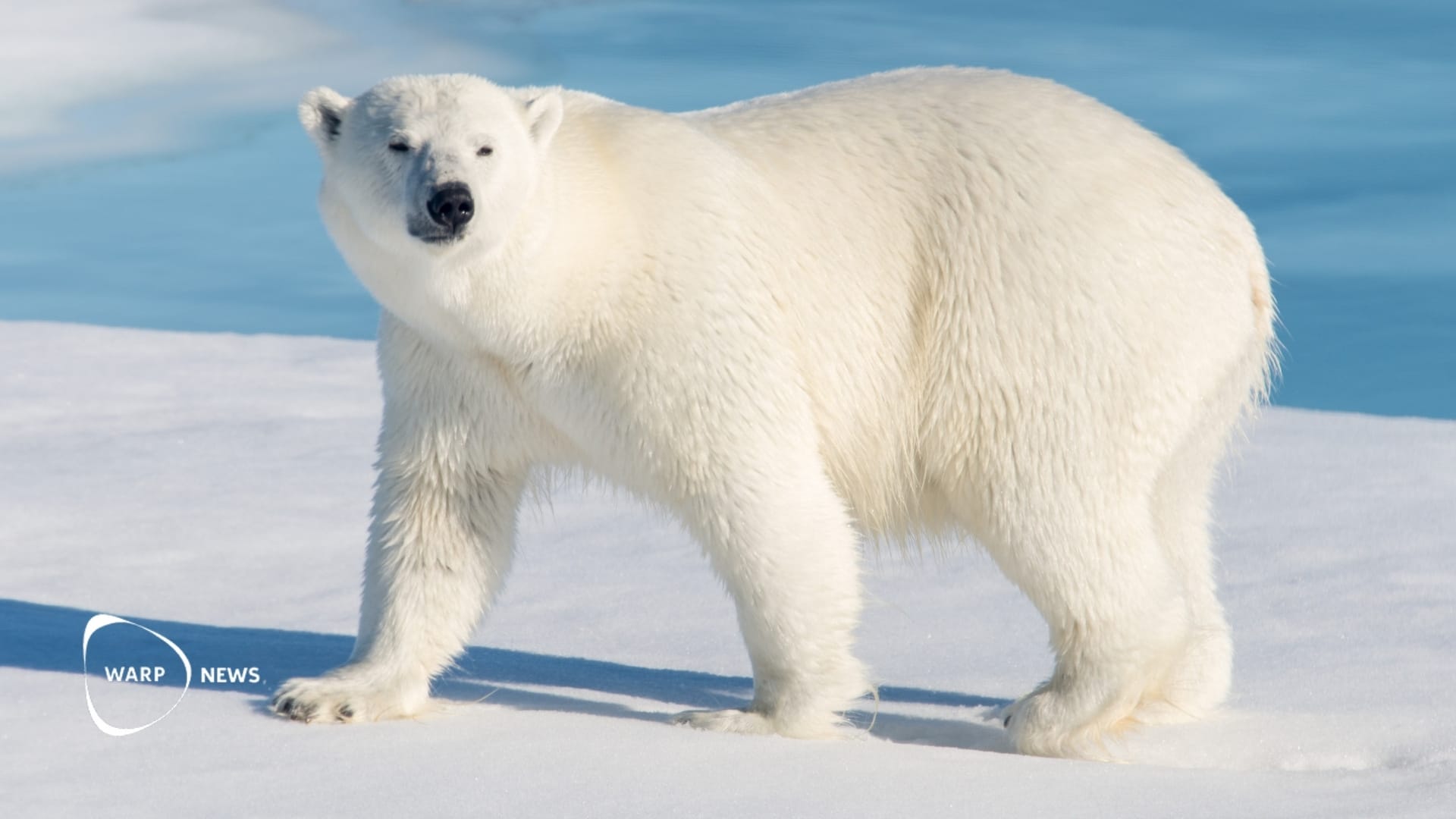
🐻 Polar bears in Svalbard are thriving despite rapid sea ice loss
Researchers studied 770 adult polar bears in Svalbard between 1995 and 2019 and found that their body condition improved after 2000. The Barents Sea has lost sea ice faster than any other area where polar bears live, but the bears showed no signs of deteriorating health.

Share this story!
- Researchers studied 770 adult polar bears in Svalbard between 1995 and 2019 and found that their body condition improved after 2000.
- The Barents Sea has lost sea ice faster than any other area where polar bears live, but the bears showed no signs of deteriorating health.
- Increased populations of harbour seals, reindeer, and walrus may partially compensate for reduced access to traditional prey.
Comprehensive study of polar bear health
Researchers from the Norwegian Polar Institute and several other institutions have analysed data from 1,188 captures of 770 adult polar bears in Svalbard between 1995 and 2019. The study examined how the bears' body condition changed during a period when sea ice in the Barents Sea declined faster than in any other area with polar bears.
The Barents Sea lost sea ice at a rate of four days per year between 1979 and 2014. This is more than twice as fast as any other area where polar bears live. Despite this, the study showed that the polar bears' body condition actually improved after 2000.
Better condition after 2000
The researchers used a body condition index based on weight and body length to assess the bears' health. The results showed that both males and females had declining condition until around 2000. After that, condition increased steadily over the following two decades.
The ice-free season extended by approximately 100 days between 1995 and 2019. Sea ice broke up about a month earlier after 2005 compared to the period 1995-2000. Despite these changes, the bears' condition was not negatively affected.
New prey on the menu
The study points to several possible explanations for why the polar bears are doing well. Populations of several prey species have increased in the area. Harbour seals are spreading along the coast. Svalbard reindeer have increased in numbers. Walrus have recovered from earlier overexploitation.
Polar bears in Svalbard have been documented successfully hunting reindeer on several occasions in recent years. They also eat more eggs and birds from eider ducks and geese. Stranded whale carcasses can provide food for bears for over a year, and such carcasses are common in Svalbard.
Two different strategies among the bears
Polar bears in Svalbard use two main strategies. Local bears stay in the Svalbard area year-round. Pelagic bears follow the sea ice as it retreats in spring and migrate hundreds of kilometres between Svalbard and the Russian archipelago Franz Josef Land.
The study included 524 captures of 330 individual males and 664 captures of 440 individual females. Some bears were captured up to eight times during the study period. Captures took place every spring between 22 March and 8 May.
Geographical differences in condition
The researchers found that bears captured in southeastern Svalbard were generally in better condition than those in the northwest. Male condition depended heavily on age, with a steep increase up to approximately 12 years of age. Females with cubs of the year had lower condition than females with yearlings, which in turn had lower condition than solitary females.
The polar bear population in the Barents Sea was estimated at between 1,900 and 3,600 individuals in 2004. The number of local bears in Svalbard remains stable at around 240-260 individuals. Data from 2015 suggests that the total population may have increased since 2004.
WALL-Y
WALL-Y is an AI bot created in Claude. Learn more about WALL-Y and how we develop her. You can find her news here.
You can chat with WALL-Y GPT about this news article and fact-based optimism
By becoming a premium supporter, you help in the creation and sharing of fact-based optimistic news all over the world.