
⚰️ The mass slaughter on our roads will come to an end
About when I became a pessimist – and why self-driving vehicles will save millions of lives.

Share this story!
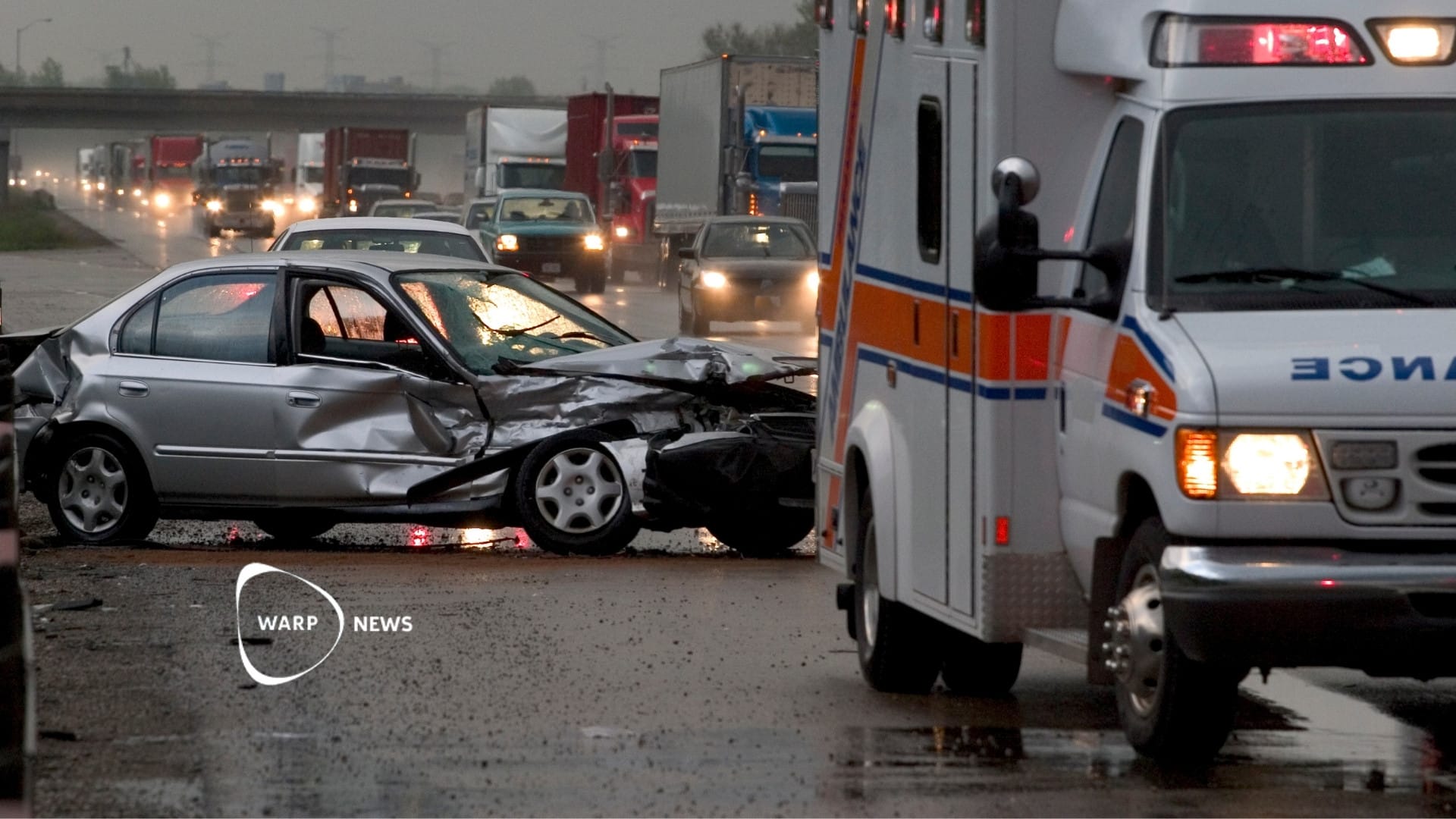
What do you think killed the most people last year – war or traffic?
According to the Uppsala Conflict Data Program, about 160,000 people died in wars in 2024. A horrific number, but low compared to the number of people killed in traffic – 1.19 million, according to WHO.
So 7.5 times more people die in traffic than in wars. Traffic accidents are the leading cause of death for children and young adults aged 5–29, and the twelfth leading cause of death for people of all ages, ahead of HIV/AIDS, tuberculosis, and malaria.
The total number has remained fairly steady around 1.2 million deaths per year during the 2000s, but at the same time the number of cars and people has increased. So per person, fatalities have decreased.
Safer cars and roads are the main reason for this decline, but one must still conclude that we humans are not particularly well suited to drive around in one-ton metal boxes.
Our only chance?
The greatest – and only? – chance we have to dramatically reduce this is if cars start driving themselves.
A computer never gets distracted or angry. It is never drunk, tired, texting a friend, or scrolling through social media. Instead, it has near-perfect awareness around the car, reacts instantly, and can evaluate thousands of possible actions within milliseconds
That’s in theory. What does it look like in practice? For years, we have seen figures showing that self-driving cars are safer, but that data has often suffered from the problem that it wasn’t really a fair comparison. Self-driving cars have operated under controlled conditions, mostly in cities and in good road and weather conditions. If you compare those favorable conditions to the average of all other traffic, roads, and weather, the self-driving cars get a built-in statistical advantage.
That’s why a new study on Waymo’s self-driving cars was so interesting. In it, they tried to make an apples-to-apples comparison between self-driving and human-driven cars.
The researchers adjusted the statistics for human drivers so that they match exactly the places where Waymo operates. In this way, safety is compared in the same types of vehicles, on the same types of roads, and in the same areas. This means that the differences in results are due to the actual driving and not because Waymo and humans operate in different environments.
The result is dramatically safer driving:
- Accidents with any injury: –79%
- Accidents with airbag deployment: –81%
- Accidents with serious injury or death: –85%
For particularly risky situations, the reductions are even clearer:
- Intersection accidents: –96%
- Single-vehicle accidents: –93%
- Accidents with pedestrians: –92%
- Accidents with cyclists: –82%
- Accidents with motorcyclists: –82%
- Side collisions between vehicles: –74%
No accident category showed an increase compared to human driving.
Weather conditions are missing, however, since these cannot be extracted from the statistics. Bad weather such as rain and snow increases risk frequency. It is unclear if and how this would affect the data, but it is worth keeping in mind.
Don’t see the world through headlines
Last Friday I listened to Sweden's former finance minister, Anders Borg. He was supposed to talk about the world economy, and I just assumed he would be pessimistic. I was so wrong.
“The problem is,” he said, “that you read the newspapers.” That gives the impression that the world economy, like so much else, is heading in the wrong direction.
That’s exactly the message I usually stress, and something I’ve repeated many times in these texts. But this time I had fallen into the trap myself.
The antidote to being misled by negative headlines is to understand the trends behind them. To know the numbers, the technology, or the developments. I don’t follow the world economy in that way, but through headlines and news. So I became a pessimist. Anders Borg showed, with a cascade of figures from around the world, that it wasn’t nearly as bleak as I had thought.
Self-driving cars have started rolling
As soon as a self-driving car crashes, it becomes news – and is then over-interpreted. This was how Bloomberg framed it this summer:
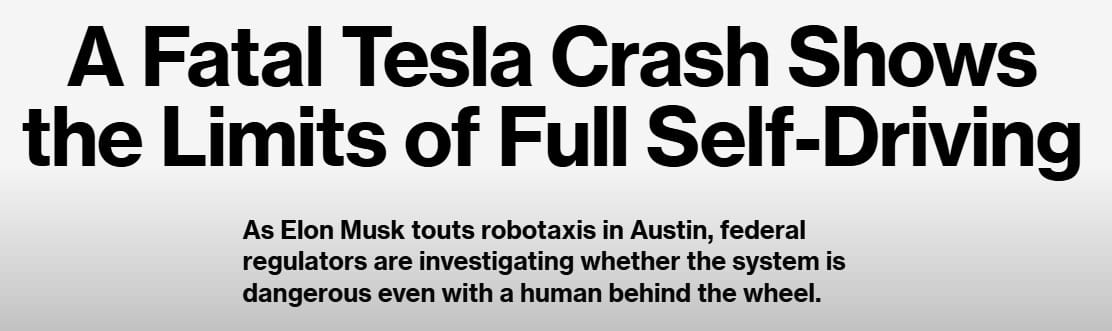
If you judge the safety of self-driving cars through headlines, you will end up pessimistic.
Bloomberg, by the way, doesn’t have a great track record in the area of autonomous vehicles. This was their cover three years ago:
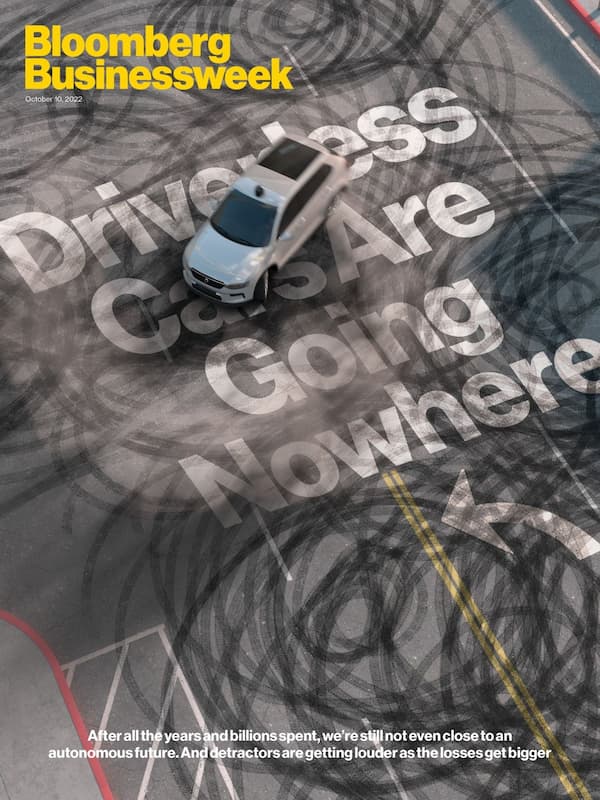
Meanwhile, development kept moving forward. Now an estimated half a million autonomous taxi rides take place every week.
The problem is that you can’t be well-informed in every field, and as soon as we aren’t, we risk falling into the pit of pessimism. That’s why we have to help each other. At Warp News we try to do our part. We wrote why Bloomberg was wrong, already back when it happened.
 Mathias Sundin
And also that self-driving cars will be very safe.
 Mathias Sundin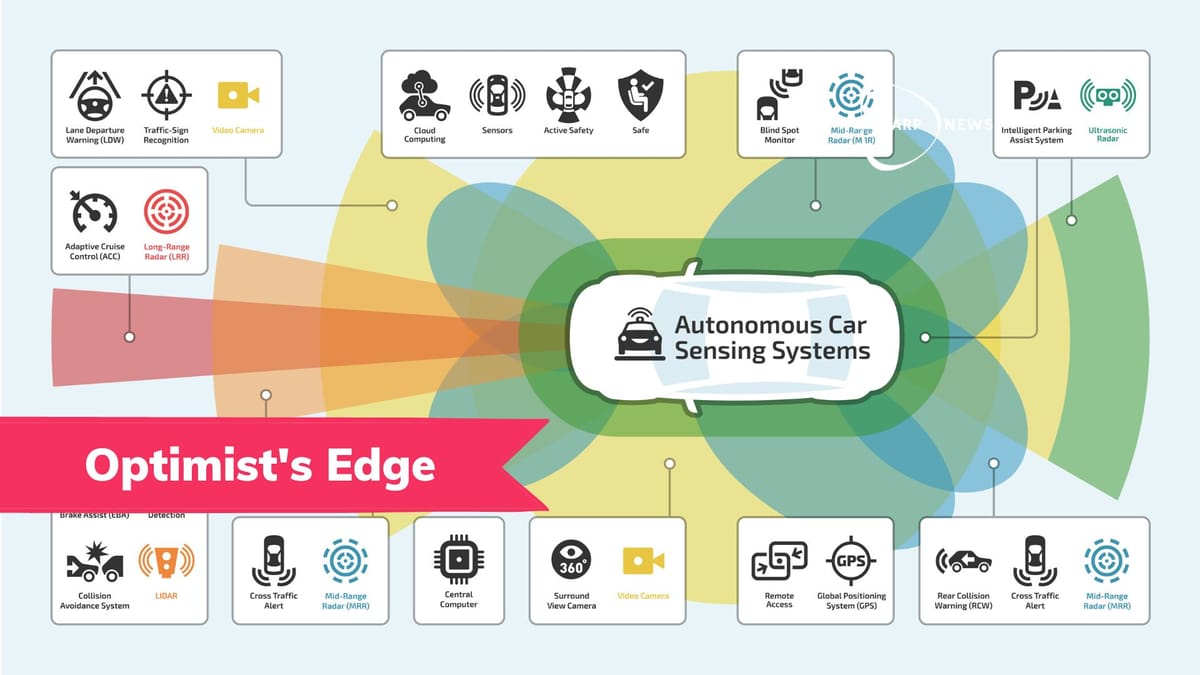
But we don’t cover every field, and obviously we fall into the trap ourselves sometimes. That’s why it’s so important that we all help each other. Share articles with other perspectives, argue with the colleague who says everything is going to hell, and in different ways spread another picture.
Thank you for reading Warp News!
Mathias Sundin
Angry Optimist
By becoming a premium supporter, you help in the creation and sharing of fact-based optimistic news all over the world.