
🦋 The lord of the pessimists is dead – this was his great mistake
Dr. Paul Ehrlich has passed away. He was a cheerful pessimist who viewed humans as insects.

Share this story!
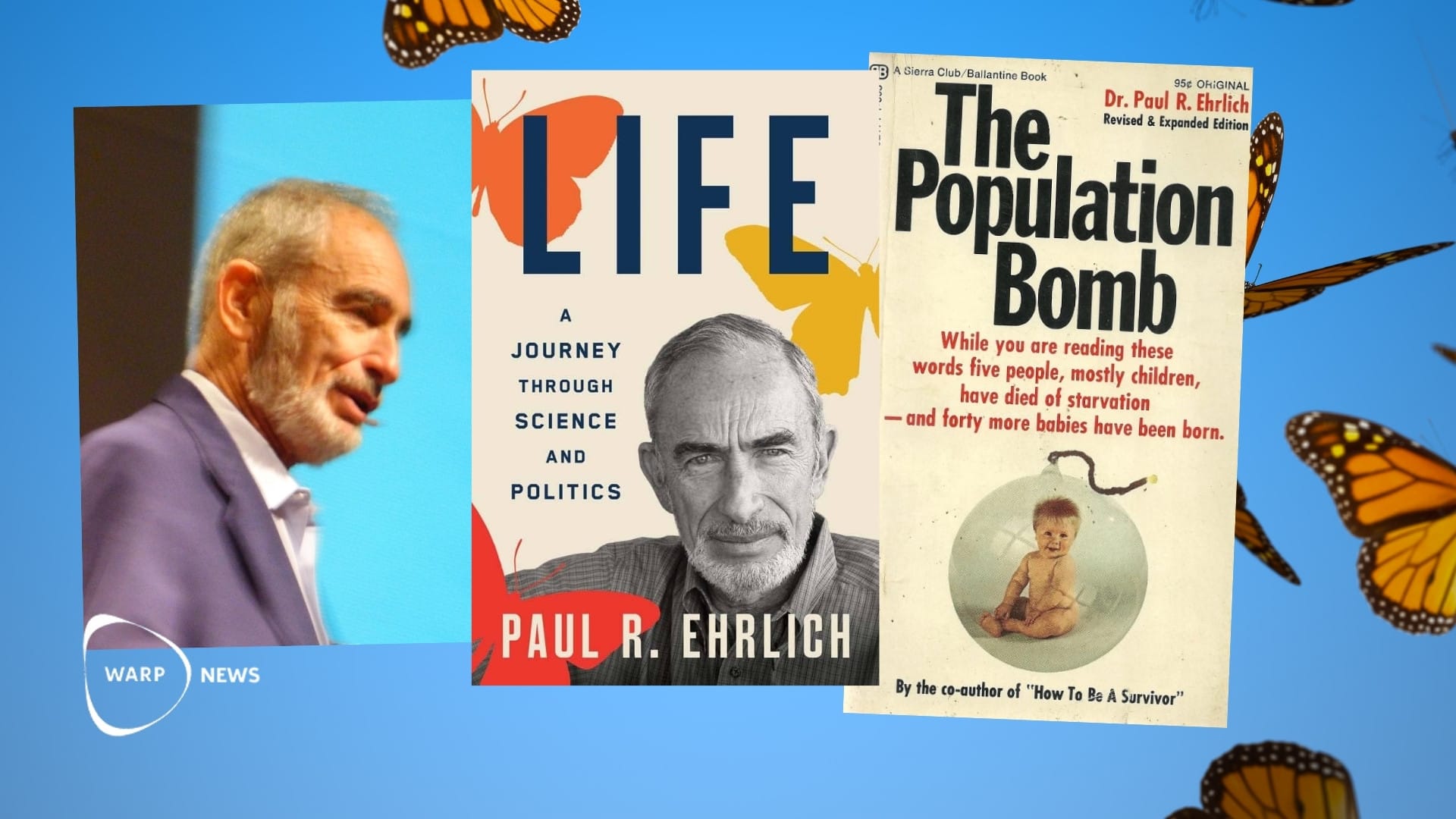
Dr. Paul Ehrlich has died at the age of 93. Despite being a pessimist’s pessimist, he was actually interviewed by us at Warp News. We examined whether the claims of a sixth mass extinction of species were accurate, and Anders Bolling gave Ehrlich the epithet “the world’s most cheerful pessimist”:
“It is a pleasure to meet this charming and sharp 90-year-old, who has just recently published his autobiography Life.
‘I am an old man now. These may very well be my last words, who knows,’ says Ehrlich with a characteristically mischievous smile.”
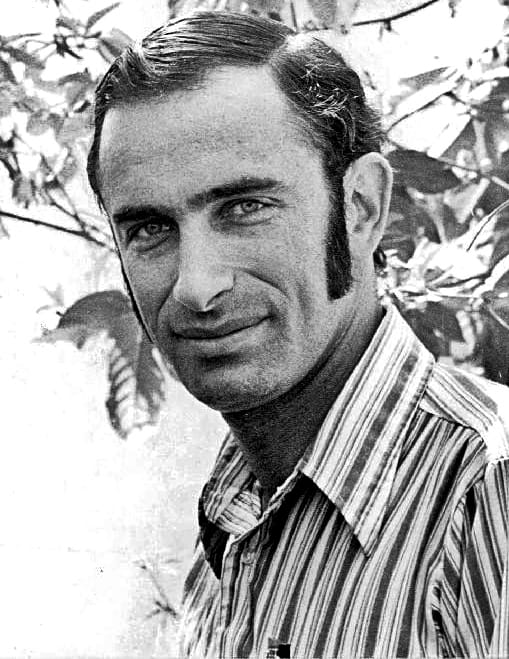
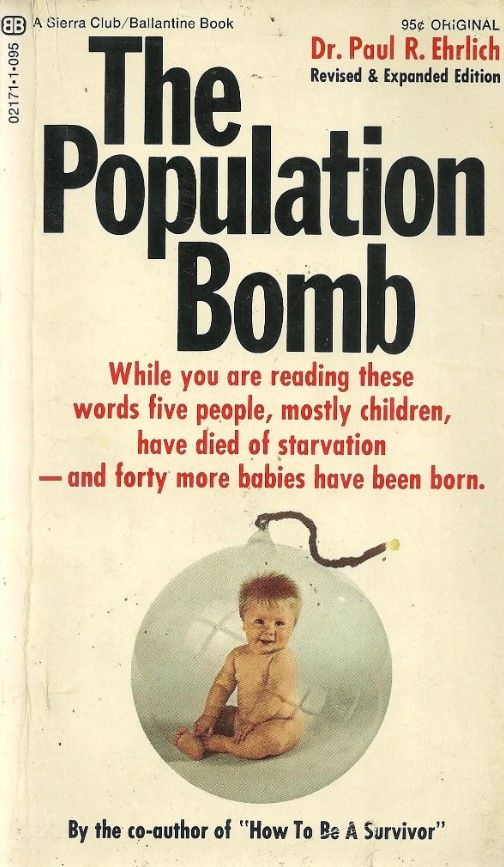
He was a sharp communicator and became one of the most influential people in the world in the 1960s and 1970s. The major breakthrough for him and his ideas was the book The Population Bomb, published in 1968.
It was filled with very clear predictions about all the misery that would befall humanity:
“In the 1970s, hundreds of millions of people will starve to death despite any crash programs launched now. At this late date, nothing can prevent a substantial increase in the world death rate...”
The ideas spread both widely and to the highest levels.
I wrote about this in my book The Fifth Acceleration, when I compared it to today’s AI doomerism:
Two American presidents, Johnson and Nixon, advocated population control. UN Secretary-General U Thant worked to address the “population explosion.” Indira Gandhi pushed through sterilization programs. World Bank president Robert McNamara considered it humanity’s greatest problem after nuclear war. Ecologist Garrett Hardin warned that “the freedom to breed will bring ruin to all.” Martin Luther King called overpopulation the plague of modern times.
Many politicians, experts, researchers, journalists, and organizations agreed: if the world’s population continued to grow, the world would face famines unlike anything seen before.
They were wrong.
Not just a little wrong. Completely, entirely, spectacularly wrong.
When they believed starvation deaths would accelerate, a new era for humanity instead began—one with dramatically improved living conditions.
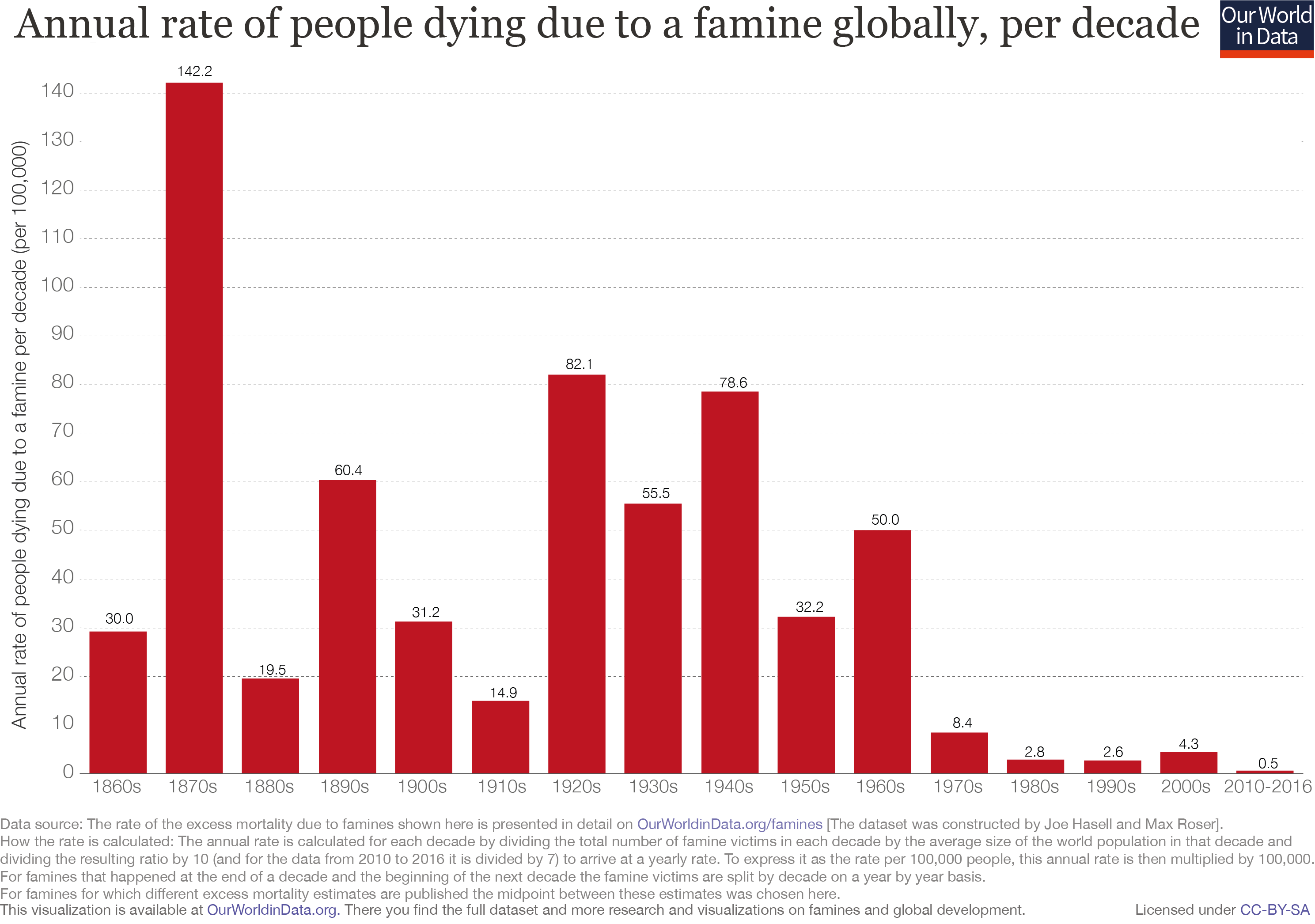
The number of people dying from starvation fell by 90 percent between the 1960s and 1970s.
Looking at a longer time perspective, the difference is even more striking. Between 1900 and 1969, an average of 635 people per 100,000 died from starvation per decade. From 1970 to the early 2020s, that figure declined by 95 percent.
In absolute terms, the decline is just as remarkable. Between 1900 and 1960, an average of 14.5 million people died from starvation per decade. From the 1970s to the 2020s, that number fell to 1.6 million per decade.
And this happened while the world’s population more than doubled, from 3.55 billion when Paul Ehrlich wrote his book to over 8 billion in the early 2020s.
Paul Ehrlich’s mistake
How could he have been so wrong? When I read Paul Ehrlich’s autobiography, I suddenly understood why.
Before he began being wrong about humanity’s future, Ehrlich was an entomologist, another word for an insect researcher. He specialized in butterflies.

Butterflies are beautiful, but not particularly creative. I think he saw humans the way he saw butterflies and other insects.
If there are too many insects in one place, they run out of food and die. He applied that reasoning to humans.
And in one sense, he was right. If food runs out, we die. But he drastically underestimated human creativity, drive, and our ability to solve such problems.
Ehrlich saw people as a burden rather than a resource. He saw a mouth to be fed, not a brain with the potential to come up with a world-changing idea, and the will to carry it out.
That is exactly what happened in the 1960s and 1970s. New, more resilient crops were developed, and food production increased dramatically.
Insects could never have done that, but humans could.
We have shown that many times throughout history.
If there is anything to learn from Paul Ehrlich, it is not to repeat his mistake.
Do not underestimate human potential.
Mathias Sundin
Angry Optimist
By becoming a premium supporter, you help in the creation and sharing of fact-based optimistic news all over the world.