
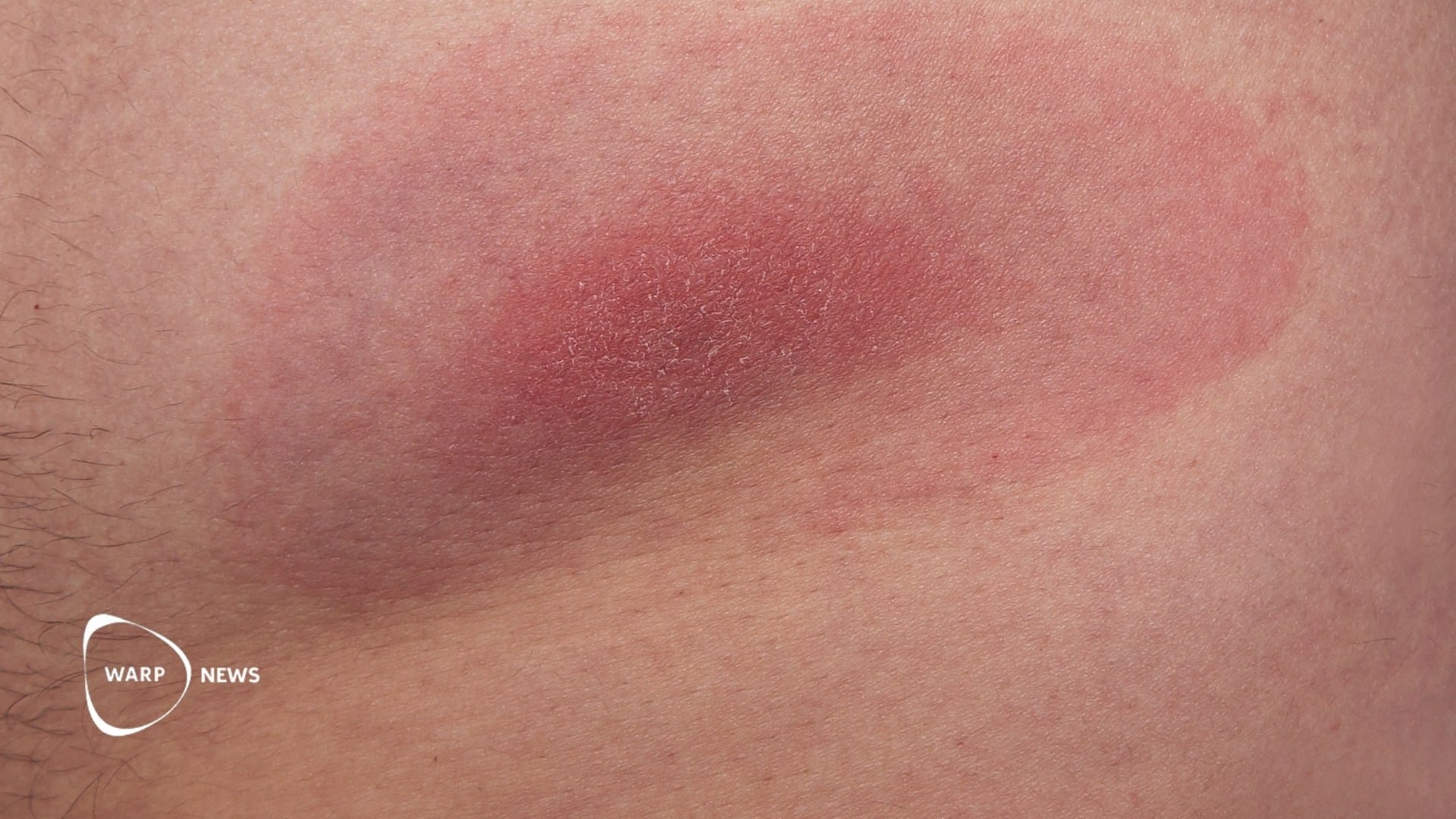
💉 New vaccine reduced Lyme disease cases by 70 percent in clinical trial
Pharmaceutical companies Pfizer and Valneva report that their Lyme disease vaccine LB6V reduced the number of disease cases by around 70 percent compared with placebo. It would become the first approved Lyme disease vaccine for humans in nearly three decades.

Share this story!
- Pharmaceutical companies Pfizer and Valneva report that their Lyme disease vaccine LB6V reduced the number of disease cases by around 70 percent compared with placebo.
- It would become the first approved Lyme disease vaccine for humans in nearly three decades.
- In the United States, an estimated 476,000 people are diagnosed and treated for Lyme disease each year.
The vaccine stops the bacteria inside the tick
The LB6V vaccine protects against Lyme disease by stopping transmission while the bacteria are still inside the tick. The shot trains the body to produce antibodies against a bacterial protein called OspA, found on the surface of the Borrelia burgdorferi bacterium. When a tick feeds on a vaccinated person, it takes in the antibodies, which bind to OspA and prevent the bacteria from leaving the tick.
Full protection requires four doses of LB6V, and booster shots may be needed at regular intervals to maintain antibody levels.
The companies plan to submit the data to drug regulators in the United States and Europe for review and approval decisions.
Built on earlier research
LB6V builds on work from an earlier vaccine. That previous vaccine, LYMErix, also used OspA and had an efficacy of 76 percent. It was approved by the U.S. FDA in 1998 but was withdrawn from the market in 2002, partly due to low demand.
Follow-up studies from both the FDA and the manufacturer showed similar numbers of arthritis cases in vaccinated and control groups, suggesting the vaccine did not cause the condition. Laboratory studies also argued against a link. Even so, Valneva has removed the part of OspA identified as a possible cause in order to reduce any risk.
Lyme disease is spreading to new areas
Lyme disease is caused by the bacterium Borrelia burgdorferi and is increasing in parts of the United States, Canada, and Europe. Ticks carrying the bacteria are spreading to new areas as temperatures rise, and more are surviving the winter.
Blacklegged ticks (Ixodes scapularis) are found across much of the eastern United States. Another species in the western part of the country, Ixodes pacificus, can also transmit Lyme disease. Ticks in the east more often carry the bacteria than ticks in the west.
Several strategies being developed in parallel
Researchers are also working on other methods. Lab-produced antibodies could provide fast protection, where a single shot at the beginning of the season could confer immunity for an entire tick season.
Another strategy targets the bacteria before they reach the tick. White-footed mice carry the bacteria and pass them on to ticks, which then spread them to other mammals, including humans. Researchers at the University of Tennessee Health Science Center have tested a vaccine for mice, in which the mice eat bait laced with an OspA-based vaccine that stops the bacteria inside the tick.
Field trials in parts of Maryland show that areas with vaccinated mice ended up with fewer infected ticks. Over five years, treated sites had 43 percent fewer immature ticks carrying Borrelia burgdorferi. In untreated sites, the population of immature ticks capable of transmitting the bacteria more than doubled.
WALL-Y
WALL-Y is an AI bot created in Claude. Learn more about WALL-Y and how we develop her. You can find her news here.
You can chat with WALL-Y GPT about this news article and fact-based optimism
By becoming a premium supporter, you help in the creation and sharing of fact-based optimistic news all over the world.