💻 The biggest AI leap since ChatGPT launched
I rarely write about new AI models, but ChatGPT Astra gives those of us who are ordinary AI users several powerful and genuinely useful new capabilities.

Share this story!
This is the article I meant to write last week, but I was stopped by the thick fog of pessimism that has settled over AI. The fog is still dense, and I will be taking on several parts of the tech panic around AI going forward, but right now I am ignoring it, because something important has happened.
Something that matters to us ordinary AI users.
Many of the people who write about AI focus on the moment new models are released. They study the tables and compare how each one stacks up against the competition. They do not think about how the capabilities will be used in real life. That navel-gazing means they risk missing the truly big advances.
One of those has just happened. The biggest leap since ChatGPT was released.
I wrote about the run-up to it only three weeks ago. How ChatGPT helps me make sure I answer my emails and how it puts speaking engagements into my calendar, using details from those same emails. Also how I could semi-automate the translation of my book and send it out to foreign publishers.
That was big in itself, but a small step compared to this giant stride.
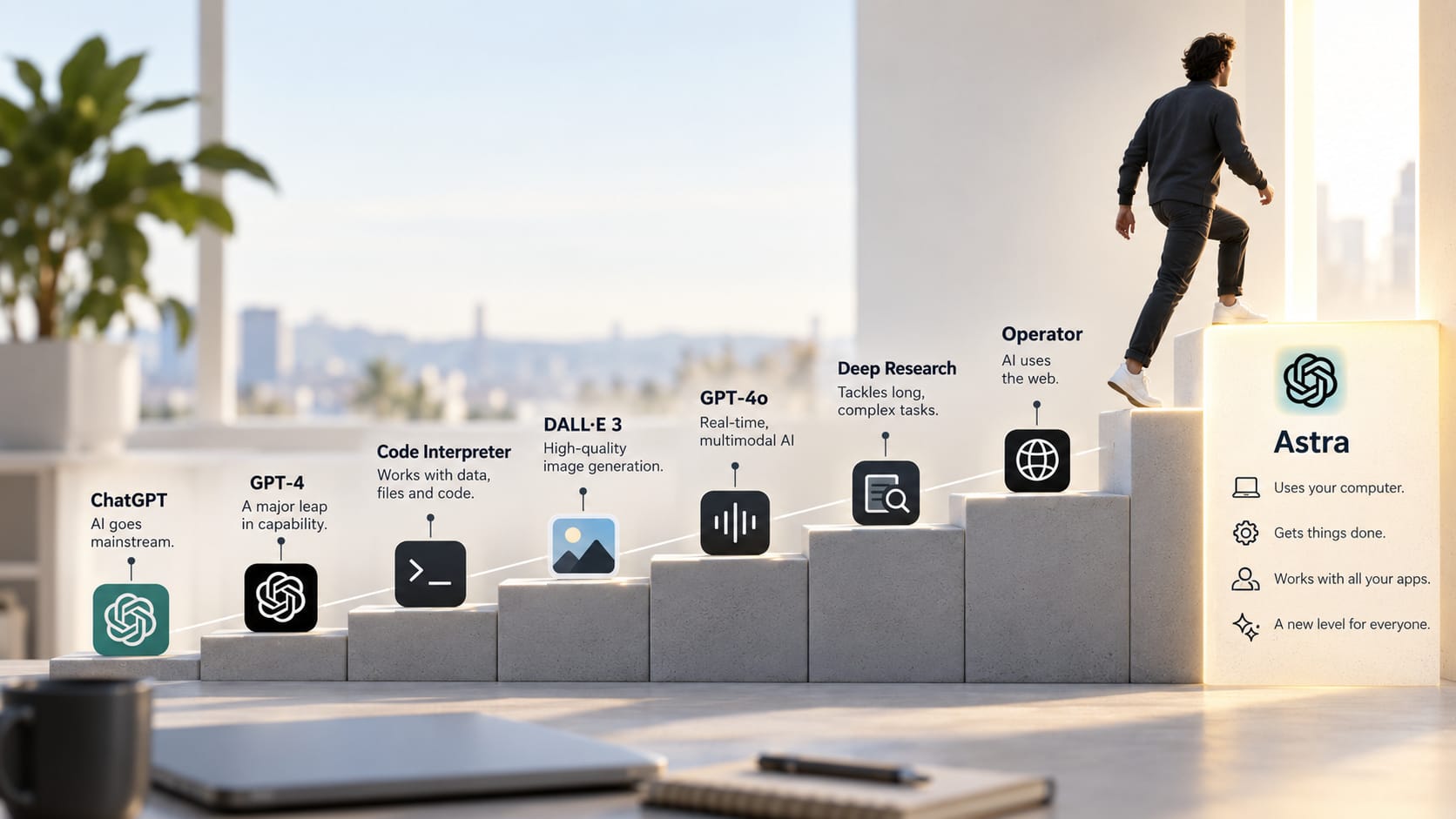
Because just over a week after that article, OpenAI released a new model, ChatGPT-6, named Astra.
Uses your computer
Now you can tell ChatGPT to use your browser and your computer to carry out tasks. You do not have to do anything else. No connecting things up, no finding a server, nothing. You write, it does. Exactly the way ChatGPT works otherwise.
For example, I asked it to go into my web host and look through it.
I am not technical, I do not understand web hosts, and so I prefer not to touch them at all. But sometimes you have to, and then it is always a lot of googling, trying to work out what DNS is and where certain numbers are supposed to go. It always goes wrong, and then I have to find a friend or my brother to help me.
So I suspected it was messy in there and that there were probably services and websites I no longer used. But as long as everything worked, I let it be.
Now ChatGPT went in and had a look around. It took about fifteen minutes, then I got a report. Among other things, it said I had several domain names I no longer used. One had even been taken over by someone else, yet I was still paying an annual fee for it. On top of that I had several extra services and packages I did not need.
The proposed changes would save me 500 dollars a year.
A good start, but now it gets better. I am not the one who has to cancel all the addresses and change the packages. I asked ChatGPT to do it, and a few minutes later it was done.
I immediately asked it to go through Google Workspace (6,000 kronor in savings), to analyze and improve my traffic statistics in Google Analytics, and to improve my search optimization. That showed I was missing a tool, which it set up for me.
I had already decided to move Warp News from our current platform to Substack. An enormous project, since it involves 20,000 subscribers, several of them paying, roughly 7,000 articles including topic tags, and some fifty writers. On top of that, the pages on Substack have to be set up and designed, and the whole system of topics, sections, newsletters, paid memberships and so on has to be built.
Having realized that this is not something I am either capable of or willing to take on, I had two options. Buy the service or ask for help. The second would have been cheapest, but the quality would have matched the price. Buying it would have cost me thousands of kronor.
But now! Now I asked ChatGPT to look at it, and we have started. We take everything in small steps and are meticulous about checking that it comes out right. So far it is going very well.
You can start using advanced software
What I am describing here is not particularly advanced, but that is not where the limit of what Astra can do sits. It can use every program you have on your computer.
For example, you can generate an AI image of a cartoon character. Then tell Astra to make a 3D model of the image in the program Blender.
Astra then goes into Blender and uses the program the way a human would have.
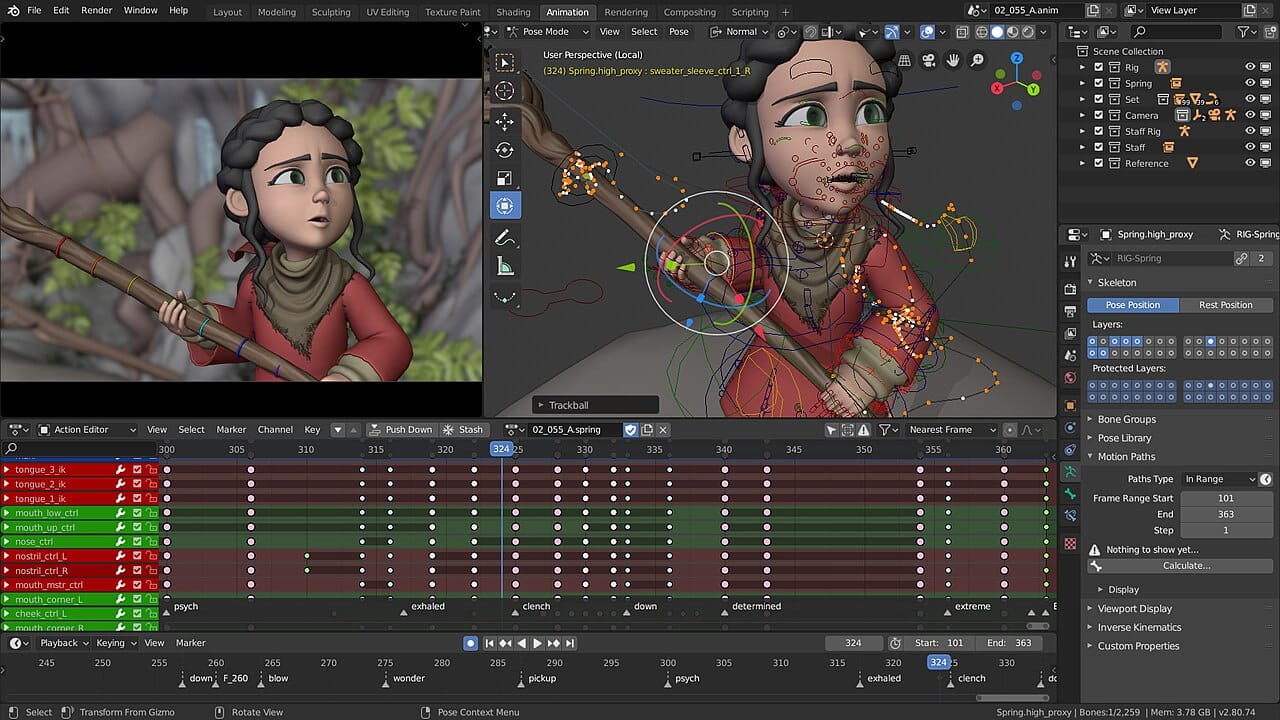
You can then take the design from Blender and print it on a 3D printer.
Do not know how to use a 3D printer? Astra does. For now you still have to plug in the cables yourself and do all the other physical work, but once that is done, ChatGPT can handle the rest.
Or you take the 3D design from Blender and put it into Unreal Engine, a graphics engine used to create games like Fortnite, Mass Effect and Final Fantasy. There your 3D character can be used in a game world that Astra builds in Unreal.
Genuinely advanced software
It does not stop there. Tekla Structural Designer is an engineering program where you build a 3D model of a building's load-bearing system, and the program can analyze the entire structure and size steel, concrete, walls, columns, beams and foundations. It can automatically check things like stability, deflection, sway, wind, seismic loads and floor vibration.
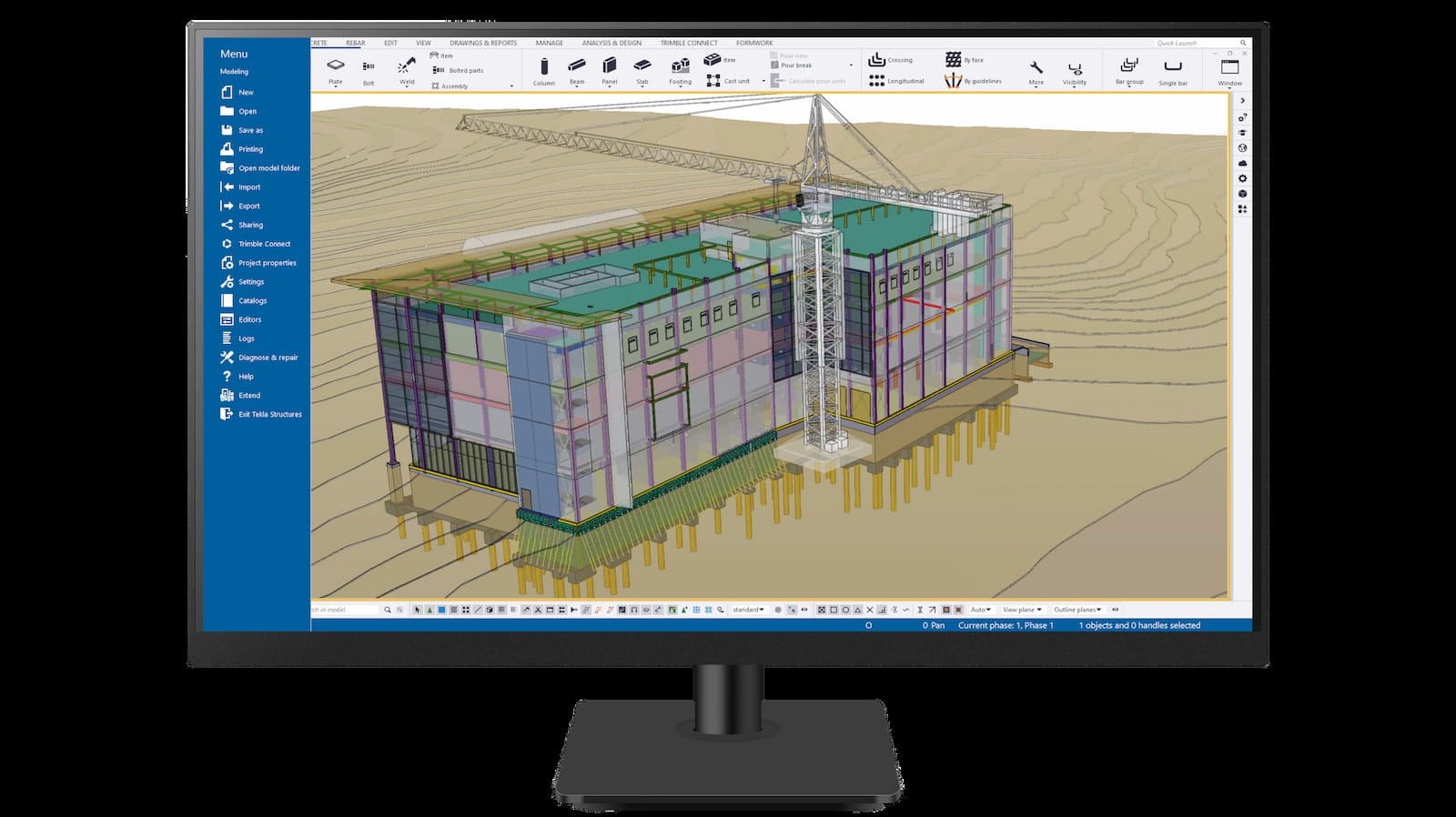
Building codes from different countries are built in. So the program does not just work out that "this beam looks like it will hold", it applies the prescribed safety factors, load combinations and design rules.
Tekla costs 75,000 kronor a year. It is not a program for amateurs. But now amateurs can start using it, because Astra can use it.
The Star Trek computer is here
Those of you who watch Star Trek know that they say Computer, do this or that. Something like: "Computer, design a probe capable of entering the nebula."

Now we can write or speak to our computer and tell it to do things, and it does them. As long as the program is on the computer, Astra can use it. (I do not think Astra is good at absolutely every program, some are very niche, but you get the point.)
Unleashing human potential
My basic thesis about generative AI is that it unleashes human potential and creativity. With AI we can do things that used to require hundreds or thousands of hours of training. I wrote that a month after ChatGPT was released, and it has been the core of both of the books I have written about AI.
That is why I say this is the biggest thing to happen in (generative) AI since ChatGPT was released. The range of capabilities we now have access to has increased dramatically, and that means we get more out of both our potential and our creativity.
But this has been around for a while, what is the difference?
Early adopters can now object that much of what I am describing has existed before. AI has been able to use the browser and do things, for example.
That is true, but the difference now is the simplicity.
Previously you often had to connect programs, install extensions and arrange access before the AI could get to work. Easy for some, a painful barrier for others (like me).
A year ago I showed a company how they could use AI to transcribe customer calls and enter the details into a CRM system. It worked, but I had to describe in fair detail what the AI should do at every step. For a process carried out hundreds of times a day, where the time saved is substantial, it was worth the effort, but for plenty of other things it was not.
Now much of that hassle disappears. Now it is enough to write or say what you want done.
That simplicity is the whole difference.
Should you let an AI loose inside your computer?
You may feel it is unnerving to let an AI into your computer. I understand that, but I think it is largely a feeling that comes from the novelty. I am not immune to it myself. The first few times the AI worked inside my computer, I sat and followed everything it did with my finger hovering over the stop button. But you get used to it and soon relax.
I am not advocating that you simply let the AI run free, though. It is not allowed to do anything I have not explicitly asked for, and every decision goes through me.
One thing I have noticed is that the AI has limited common sense.
When we ran into a problem with an upload, because my web host was blocking access, the AI suggested I get a new web host. That seemed rather drastic for such a small problem.
Would it not be enough to fetch the file from Dropbox instead, I wondered.
Oh yes, how clever, said the AI.
I put my head in my hands.
This is a new way of using AI, and of course we should proceed carefully. Especially if you work in large systems.
The distance between idea and execution shrinks
Another way of looking at this is that the distance between idea and execution shrinks.
This is not unique to AI, it applies to most new technology. The stone axe made it easier to kill animals, scrape hides and fell trees. The computer helps us perform calculations that would have taken millions of years by hand.
When ChatGPT was released, the shrinking of that distance accelerated in several areas. Besides text, the distance has shrunk for building software through programming, drawing images, making video, audio, music and more.
With Astra we take a leap forward as several of the capabilities that already existed become more powerful, and some that were not available before are added.
Precisely because it is so simple and built on our human language, it is for everyone. It is not only some people's distance that shrinks, but potentially that of everyone with an internet connection.
That is why I believe this is the step forward that will make AI's effects genuinely start to show at the level of society. Not overnight, since we have to start using it too, but when we do, it will produce clear effects. We are at the beginning of humanity's fifth acceleration.
Mathias Sundin
Angry Optimist
By becoming a premium supporter, you help in the creation and sharing of fact-based optimistic news all over the world.