🚀 SpaceX and the new Silk Road of space
Have investors gone crazy, or what are they hoping to get out of buying SpaceX shares at an astronomical valuation?

Share this story!
This week's article is a cross-publication with Smedjan, where it appears in Swedish. With their permission, I have translated it into English and am publishing it here on Warp News.
Astronomical valuation
This isn't a stock analysis, but we have to start at that end. SpaceX's IPO is the largest ever. The company is being listed at a value of around 1,750 billion dollars.
However you turn it over, that's a very high valuation. A full 94 times revenue. Compare that with Apple, Google and Microsoft, which are valued at around 10 times revenue. The world's most highly valued company, Nvidia, clocks in at 24, and Tesla at 15 times. On top of that, SpaceX—unlike the others—is running at a loss.
What investors believe is that SpaceX is the start of a dramatic expansion of the space economy. They're hoping Elon Musk will be a kind of modern Marco Polo on the Silk Road of space.

The classic Silk Road, as we know, wasn't a single road but a network of routes traveled by caravans. The journeys were expensive and dangerous. When transport is expensive, only the most valuable goods travel. Spices, jade, gemstones, metals, fine crafts and, of course, silk. These were goods that could bear high transport costs, risks and long lead times because the value per kilo was so high. No one put together a caravan across Central Asia to transport gravel.
The space economy has worked in a similar way until now. Just 15–20 years ago it cost roughly $20,000 to launch one kilo into low Earth orbit. Back then every gram mattered. If you could shave 10 grams off the weight, you saved $200. Only the more important satellites, scientific instruments, defense systems and crewed space projects could justify the cost.
The expedition phase
That was the space economy's first phase: the expedition phase.
In the expedition phase there was still no real space trade. There were missions. Every launch was like a dangerous journey through the desert with precious cargo. If something failed, the cargo was lost. If the fuel ran out, the satellite was dead. If a component broke, there was no workshop nearby. Everything therefore had to be built as light, compact and reliable as possible. That made every kilo even more expensive.
Since then the cost has dropped sharply. SpaceX's customers now pay somewhere around 60–70 percent less per kilo. The main reason is the Falcon 9 rocket, which is largely reusable.
For SpaceX the cost is even lower. Probably around $1,000–1,500 per kilo, a reduction of over 90 percent.
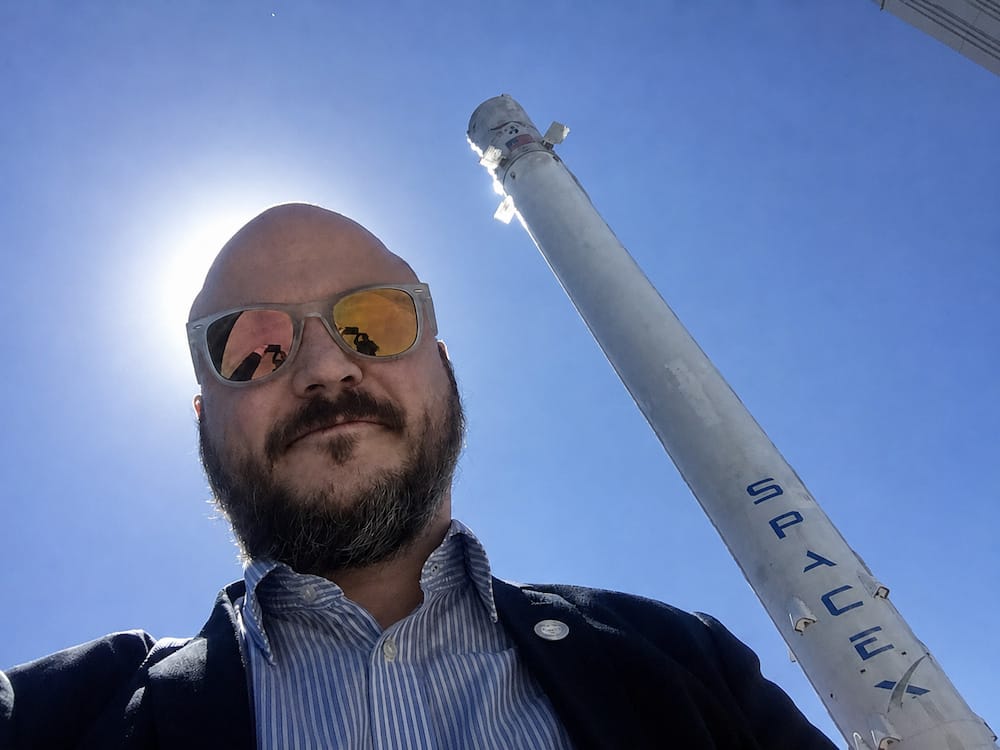
That's why the company has been able to launch over 12,000 of its own Starlink satellites in recent years, of which a good 10,000 are still up there. That's more satellites than the rest of the world combined.
Starlink is space-based internet connectivity and SpaceX's largest source of revenue, about twice the size of the launch business itself. Starlink means that anywhere in the world you have access to internet at broadband speed. Even on airplanes. I tried it myself recently on an SAS flight to Kiruna. The broadband was as fast as the internet at home, and I could easily have held a video meeting from 10,000 meters up at 800 kilometers an hour.
But Falcon 9 is only the beginning of the cost reductions. Even though it has become a real workhorse, with several of them used more than 30 times each, the whole rocket isn't reused. To fix that problem, the company is developing Starship.
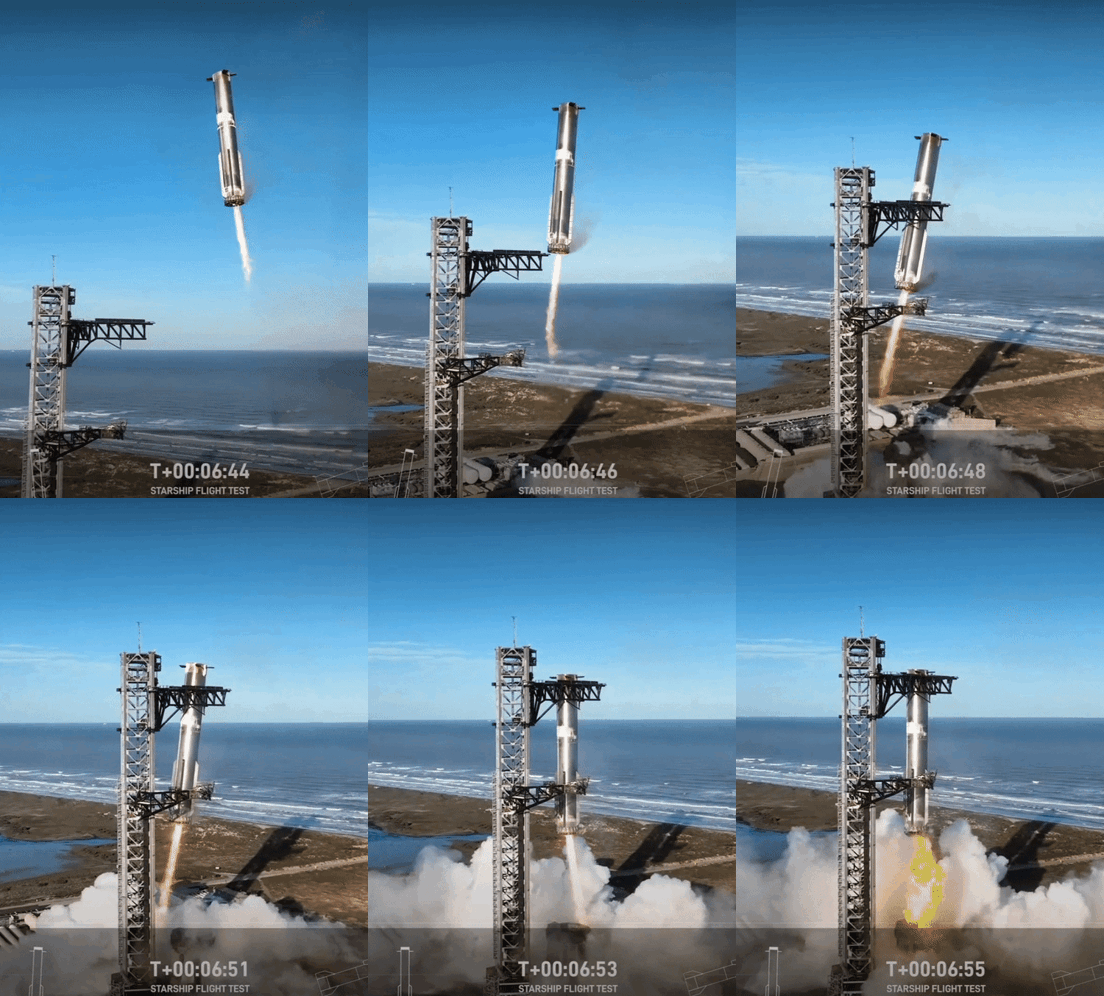
Like an airplane, the entire rocket will be reused, and they're doing everything they can to keep turnaround time as short as possible. That's why they came up with the wild idea of landing the booster part of the rocket in two mechanical arms on the very tower it had been launched from minutes earlier. Which, spectacularly enough, they managed to pull off a couple of years ago.
Starship is a giant rocket and will be able to carry at least 100 tons to orbit, compared with Falcon 9's roughly 20 tons.
If they succeed in reusing each Starship several times, the price per kilo will be pushed down toward around $100.
The caravan phase
With that we enter the space economy's second phase: the caravan phase.
In the caravan phase, space is still expensive, but no longer a place for one-off expeditions. The traffic becomes recurring.
Starlink is the first recurring caravan. Instead of a few large communication satellites in high orbits, thousands of satellites are launched into low Earth orbit. Each satellite is no longer a lone monument. It's part of a network. It can be replaced, upgraded and added to.
After that come more satellites. Many more. There are already satellites watching Earth, but nowhere near enough for us to have a constant picture of every single place. With future layers of satellites, we'll be able to know what's happening on Earth everywhere, every second.
Then new needs arise. Satellites, and everything else up there, need to be moved, serviced, refueled and removed. We'll get depots, service vehicles, tugs, refueling systems, inspection satellites and simple transfer points.
Slowly, a kind of space port begins to emerge.
The infrastructure phase
Then comes the next big cost threshold: $10 per kilo.
If Starship or successor systems push the cost down to there, the Silk Road of space changes fundamentally. This is the space economy's third phase: the infrastructure phase.
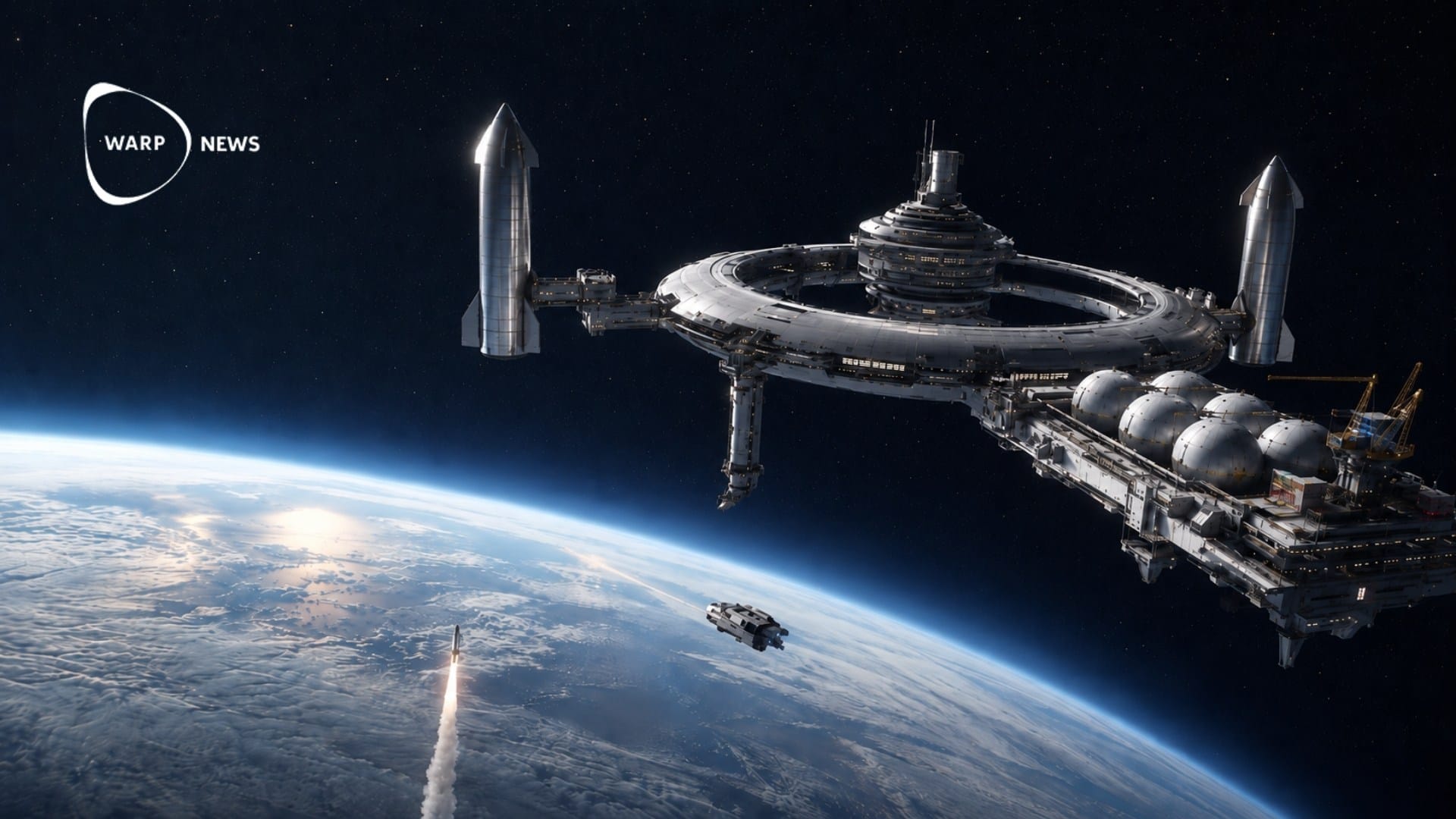
Rockets from Earth no longer need to deliver every cargo to exactly the right final orbit. They can deliver large amounts of mass to low Earth orbit. Like a harbor on Earth, space tugs take over and carry the cargo onward to geostationary orbit, lunar orbit, so-called Lagrange points or commercial stations.
The space port becomes a place where things don't just pass through, but are also built. Large antennas can be assembled there. Telescopes too big to launch in one piece can be put together in orbit. Communication platforms can get new modules. Data centers can be built up step by step. Space stations can grow as new parts are docked on. Solar power plants can be assembled from standardized panels.
As the cost of launching from Earth keeps falling, more and more things become profitable to have up there.
By now we're probably well into the future—we're talking several decades. But the main point is that as the cost of launching from Earth keeps falling, more and more things become profitable to have up there. That, in turn, drives further demand and the economy expands. When we reach a cost of $100, or even $10 per kilo to space, the space economy will become hundreds of times larger than it is today.
There will also be a great diversity of things that hold economic value in space, not just satellites.
Orbit or crash and burn?
Elon Musk has guided SpaceX through an almost unimaginably difficult journey so far. The company has transformed the space industry by routinely reusing rockets and has set off a steep drop in costs. Through Starlink, it has also shown a large and profitable space-based service. In doing so, it has demonstrated how a future space economy will emerge.
At the same time, Elon Musk himself has grown ever wilder, and more and more companies, conflicts and tweeting compete for his attention. He is the one who created SpaceX, and he is the one who can destroy it.
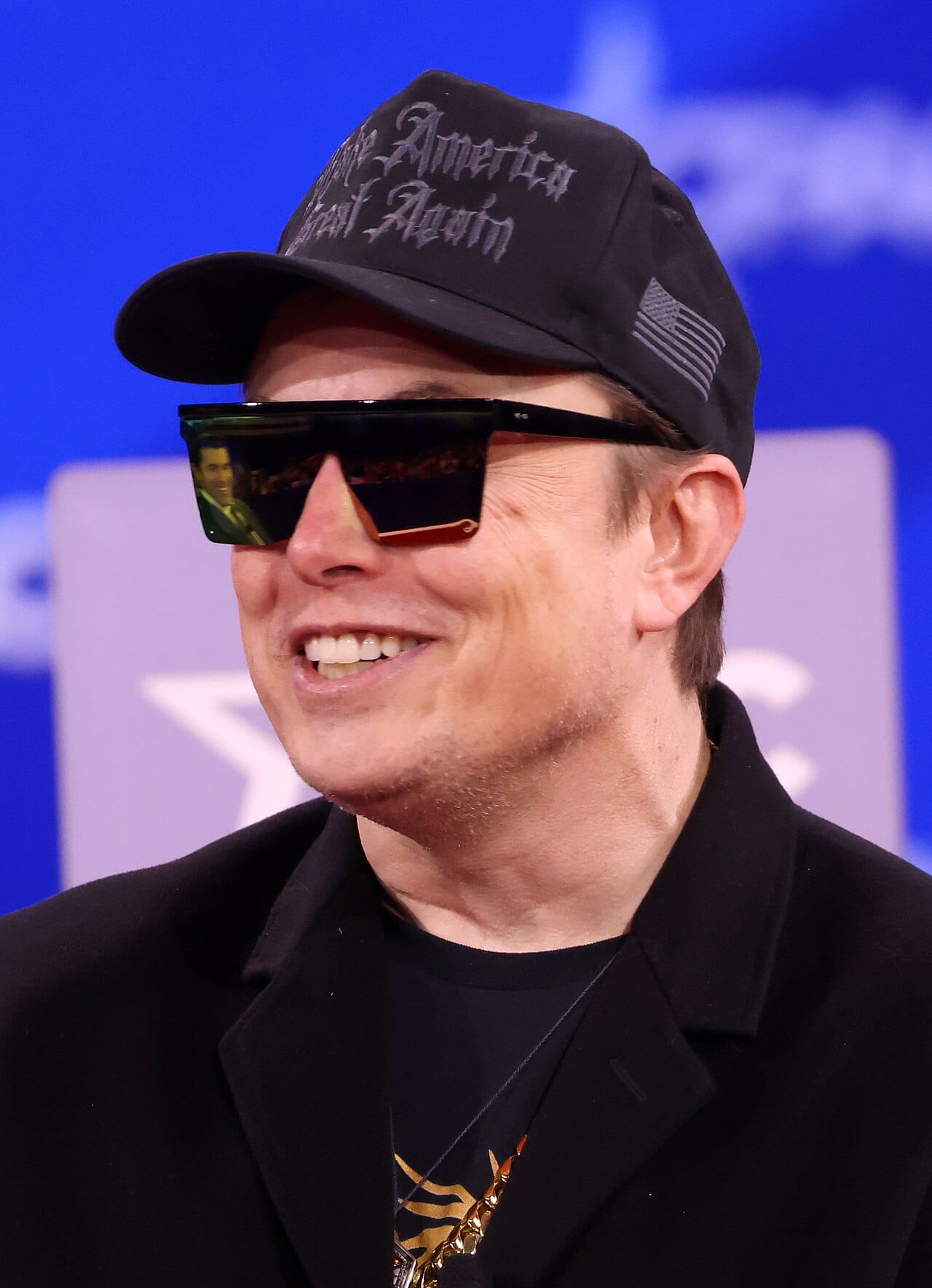
If that happens, the investors in the IPO will lose their money.
But the ball is rolling — or, to use a more fitting metaphor: the rocket has already reached the speed required to reach orbit. The space economy is underway, and it will become astronomically large.
And right now there is no other company even close to leading, and benefiting from, all of this as much as SpaceX.
Mathias Sundin
Angry Optimist
By becoming a premium supporter, you help in the creation and sharing of fact-based optimistic news all over the world.