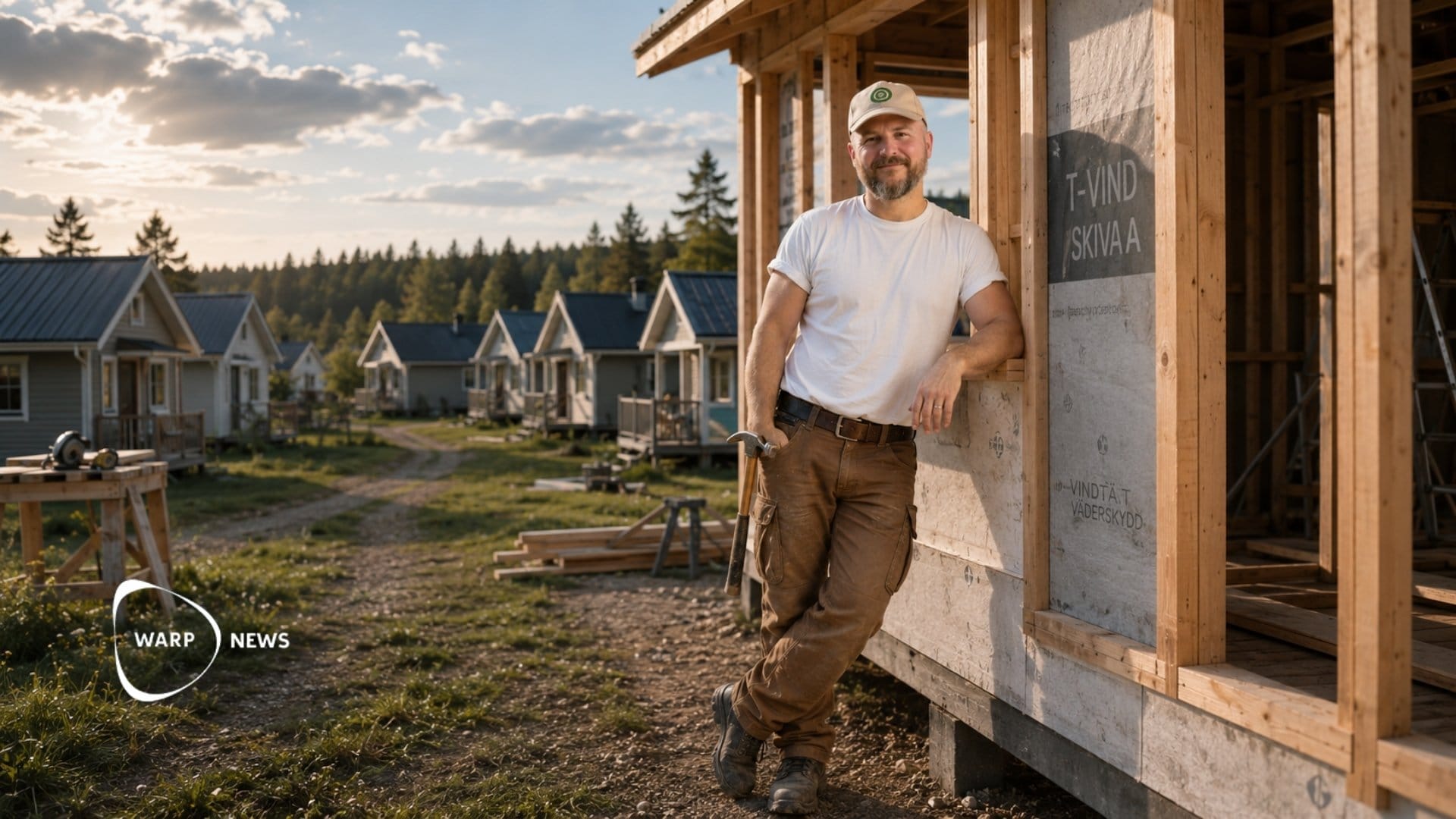
🔨 I can't do carpentry, but suddenly I can build houses
I've built an entire cottage village! And you can too.

Share this story!
I'm not particularly handy. When I see friends build patios, staircases, and sometimes entire houses, I'm very impressed. The idea that I would do anything similar feels unlikely.
Despite that, this summer I have built not just one, but several, small houses. Yes, it has turned into a small cottage village.

Actually, it's not houses I've built, but computer programs, games, and AI agents. For me, building those is as foreign as putting together a house. My knowledge of programming is, if possible, even smaller than my knowledge of how to hammer together a cottage.
It is, of course, AI that has made this possible — the fact that just by describing in text, or by speaking, what you want, you can get exactly what you wish for.
The first step was taken last fall when I built a website for my book using Lovable. In the spring came more advanced things, like my own AI-French teacher, also in Lovable.
I like business tycoon games and could now build exactly the game I wanted to play, I called it The Inheritance. Here I started to reach the limit of what turned out well in Lovable. So I took another look at Claude Code and OpenAI's Codex. I had done so before, but back then they had been too complicated to use for me as a non-programmer. You worked in a terminal window that looked like 1985. No thanks.
Now they had become considerably easier. Admittedly, a few things were required, like setting up folders on my computer and getting a GitHub account, but the AI could do part of it and guided me very pedagogically when I had to do it myself.
About a month after ChatGPT was released in November 2022, I wrote here on Warp News:
"Artificial intelligence will unleash massive untapped creativity from non-professionals, by giving them the tools to create things that were previously only available to professionals."
I – a non-professional – can suddenly use the most powerful programming tools in existence.
The only thing required to build what I want is to tell the computer, and a world-class coder gets to work.
A professional using the same tools will still build better programs. That person can read and assess the code, understands architecture, security, and performance, and troubleshoots systematically.
The professional can build a high-rise, while I, for now, have to settle for a cottage.
Besides a better version of The Inheritance, I have made an AI translator that automatically translates my book, reviews the translation, and creates a PDF that is nicely designed like a book. Then an agent takes over. It has mapped foreign publishers and the people I should contact, and puts together emails to them, which it sends directly from my Gmail. It notes all replies and sends reminders to those who haven't responded.
I monitor and review the entire process, and have to approve each step before it is allowed to move on to the next.
It took some time to build the tool, fix the problems, and streamline it the way I want it, but once it's done, everything flows nicely. This makes it possible for me to contact publishers in far more countries than I would otherwise have had the time or money for. And I can send them a complete manuscript translated into their language.
Five years ago, it would have cost hundreds of thousands of dollars to translate the entire book into 25 languages.
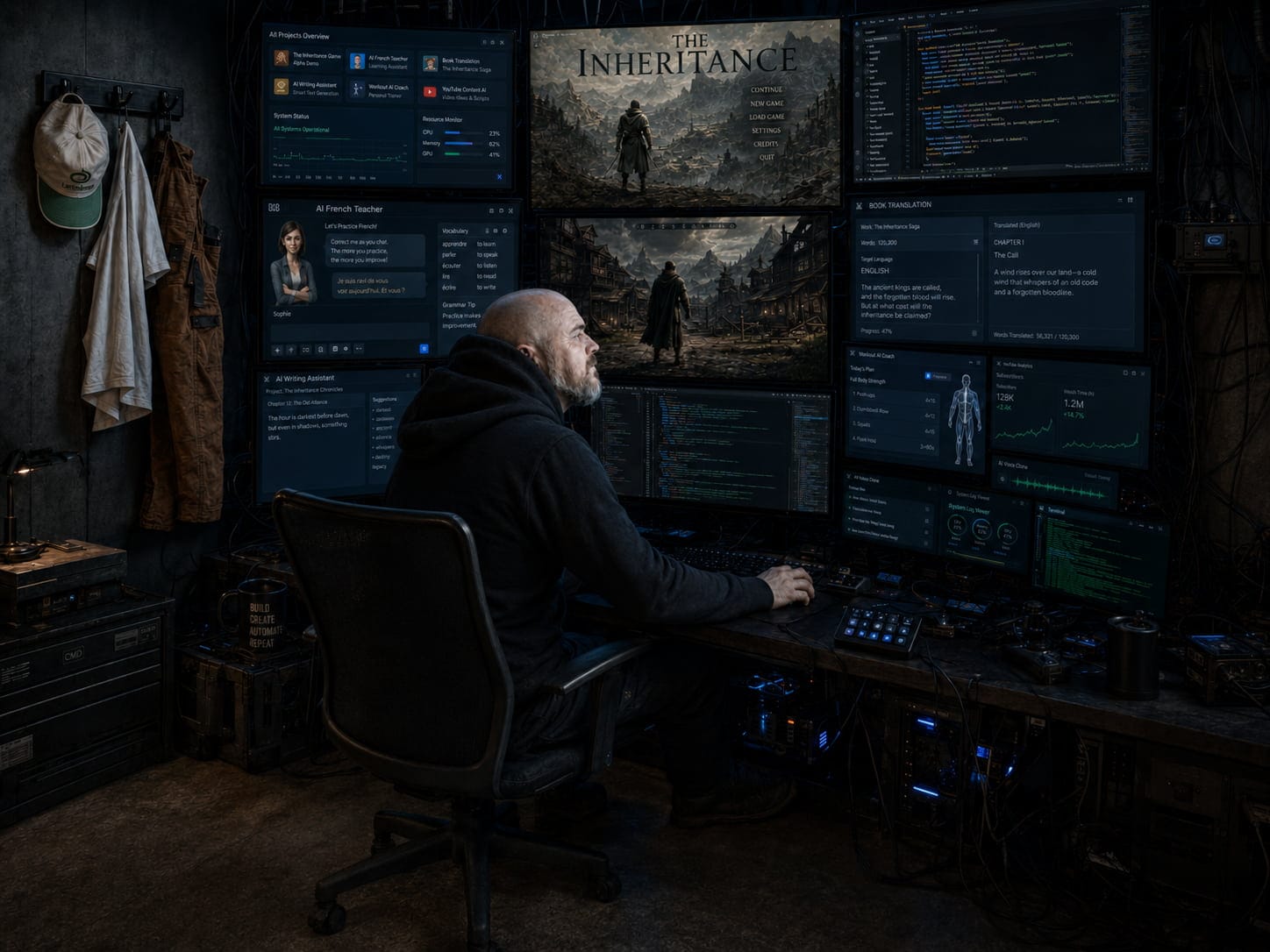
When I saw how good everything quickly became, I got a taste for it and more ideas popped up.
One of them is for Warp News and helps create richer and broader news articles.
The usual workflow for a news article here at Warp News is that I find some source material. Often an article, a press release, a graph, or a report. I give this to WALL-Y, the AI bot that lives in Claude. She turns it into a news article, according to the template we have at Warp News.
I edit a little, often change the headline, and then handle all the manual work with images, paste the text into the publishing tool, add tags, and publish.
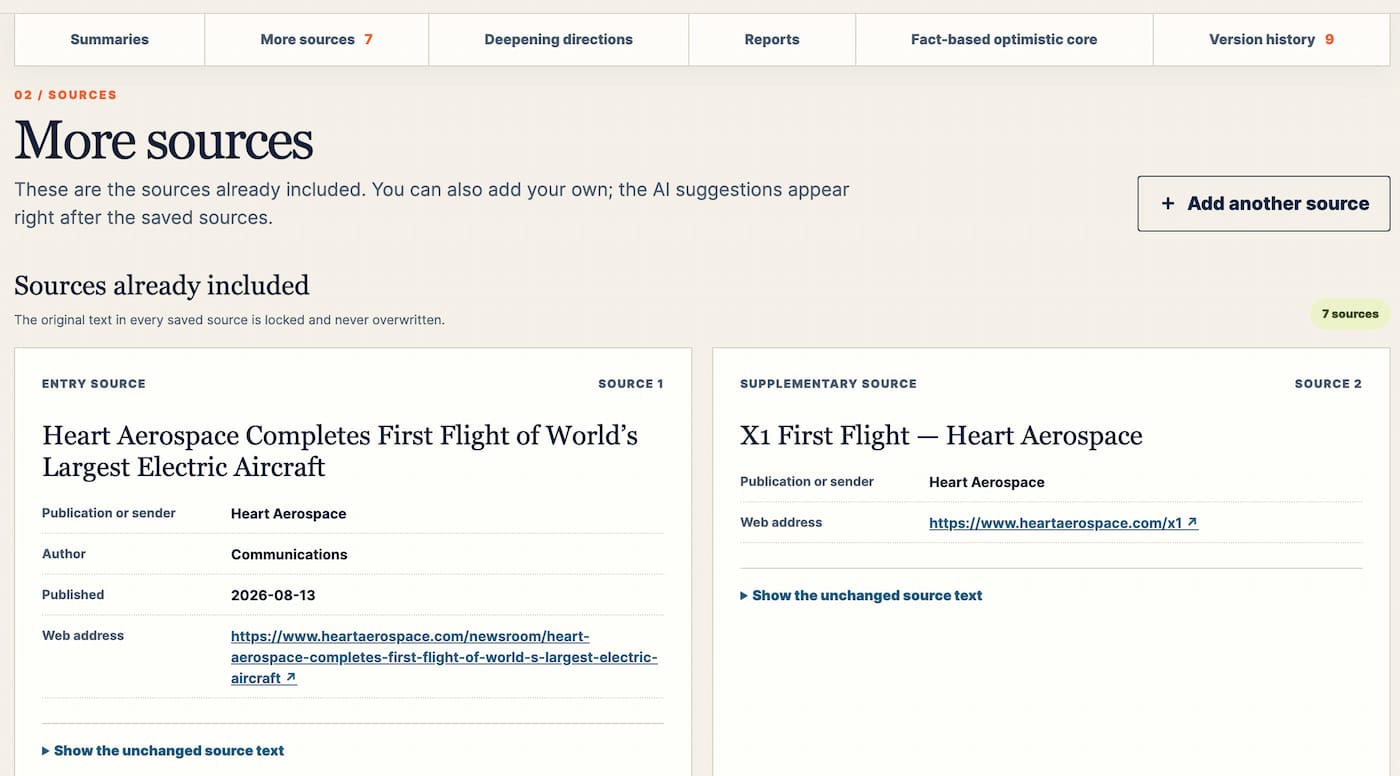
The AI I have now built gets the same input but starts by broadening and deepening the source material. First it looks for more articles or other content that adds meat to the bones, and also suggests in-depth reports on topics that may be relevant.
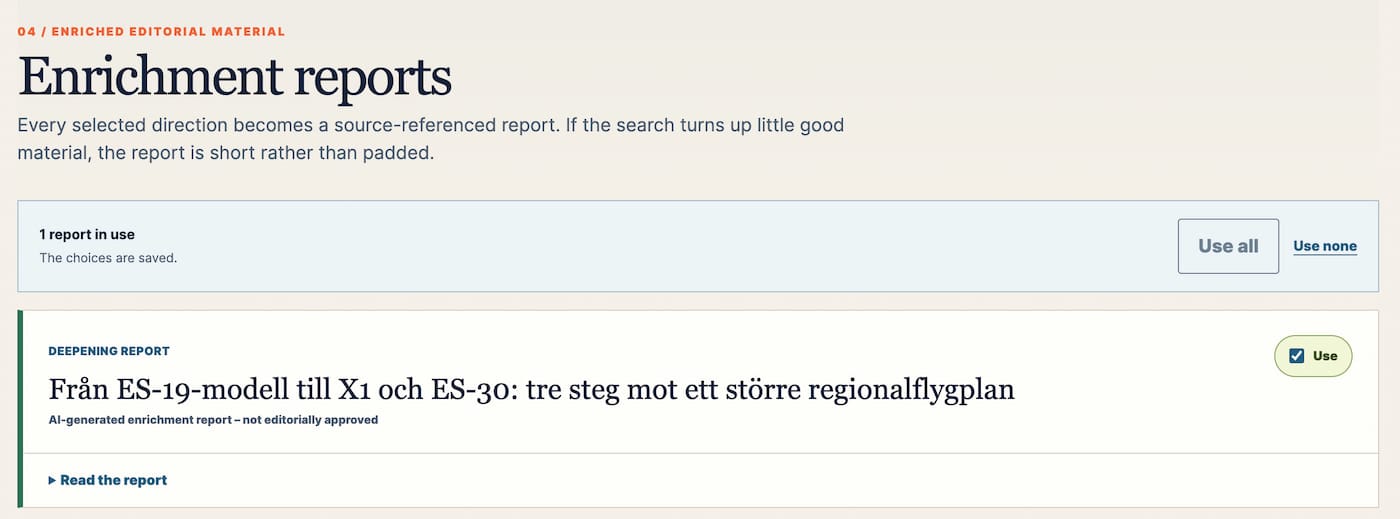
These extra sources and reports become an extensive foundation that the news article is then written from.
The result is a much richer news text. The first example is the news that Heart Aerospace had completed the first test flight of its electric hybrid aircraft, which I published on Monday.
With the previous way of working, that article would have been barely 500 words. Now it came to 1,200 words instead. Not because longer is automatically better, but because it contains more background as well as deeper and broader information.

My goal is that you should be able to read the three summary bullet points and be up to speed on the news. For many, that's enough, but those who get interested can then read on and dig deeper.
Further down the road, we will be able to create truly rich and deep source material, of which only a small part is visible in the news text, but which you as readers can interact with in different ways. Maybe you want it in the form of an explanatory video, a report, or a long article read aloud to you.
Some of this we can figure out in advance and prepare, while other things will be what you create based on the material we have gathered.
The news tool is in its infancy and rather cumbersome to use right now. But the possibilities here are almost impossible to grasp.
Idea --> reality
In The Fifth Acceleration, I wrote in the introduction:
"By bridging the gap between intention and ability, AI opens up a world where we can contribute more of our unique creativity and innovation."
But I don't have any ideas for computer programs I want to build, you might be thinking.
Yes, you do.
But you have to start somewhere for them to emerge. I haven't been walking around with a long list of software ideas in my head, hoping to realize them one day. They have come to me because I use AI. It's only after I start using some new feature that the ideas begin to come, when I see the concrete possibilities.
As I said, I like business tycoon games, and so while playing I have reflected a little on how I would like the games to work. It was never a concrete thought that one day I would build the perfect game for myself, just some loose ideas.
When I had first built websites in Lovable and had some time to spare one weekend, sitting in front of the computer, these games came to mind. Hmm, maybe it's possible to build something like that? So I got started.
It's like walking through a door, and on the other side there are two doors. You step through one of them, and on the other side there are four doors. You go back and open the other door, and behind it are three doors. On the other side of one of them are seven new doors.
That's how it is with ideas. When you build something with AI, you get more ideas, which leads you to try building some of them, which leads to even more ideas.
Since all of this is controlled by our language, the first door is open to everyone with an internet connection. Welcome in!
Mathias Sundin
Angry Optimist
By becoming a premium supporter, you help in the creation and sharing of fact-based optimistic news all over the world.