🔋 Part 3: Towards the energy society – Energy Valley and the power of power electronics
It's an ordinary Thursday in an ordinary conference room. But something unique is taking shape there. With the help of a power few people know about, but one that helps you better understand the future.

Share this story!
This is part 3 about Project Energy Society. Here you'll find part 1 and part 2, and here are more articles about the energy society and EnergyNet.
The meeting begins with a small culture clash.
It's a perfectly ordinary Thursday and we sit down in a perfectly ordinary conference room.
But there we're going to talk about something unique. Something found nowhere else in the world. Whose epicenter, right at that moment, is this perfectly ordinary conference room, in a mid-sized city in southern Sweden.
"Marc," says Jonas Birgersson and smiles. "Just a reminder about the different meeting cultures."
Marc's last name is Weiss, and he throws up his hands in a mea culpa.
"Oh right, sorry!" he laughs.

The conference room is at ViaEuropa in Lund, Sweden, and the meeting has – typically Swedish – begun with a round of the table so everyone gets to introduce themselves. We only made it as far as the first person, however, before Marc Weiss – typically American – started firing off a whole series of questions at her.
Weiss settles down for a moment, and when it's his turn, he introduces himself as a professor at UC Berkeley and CEO of Global Urban Development.
He's a heavyweight in urban development. Former adviser to Bill Clinton, has worked with Steve Jobs, and built the NoMa neighborhood in Washington DC. Among other things.
Weiss is in Lund because he's involved in Project Energy Society, or EnergyNet as it's mostly called. We're all sitting there together in the conference room because the project has gone from theory to practice.
Last year, just after Easter, Broadband Jesus was resurrected as Electricity Jesus when the first installation in Lund was inaugurated.
Two buildings had gotten solar panels and a battery, and were then connected with a freedom cable, so they could share electricity with each other.
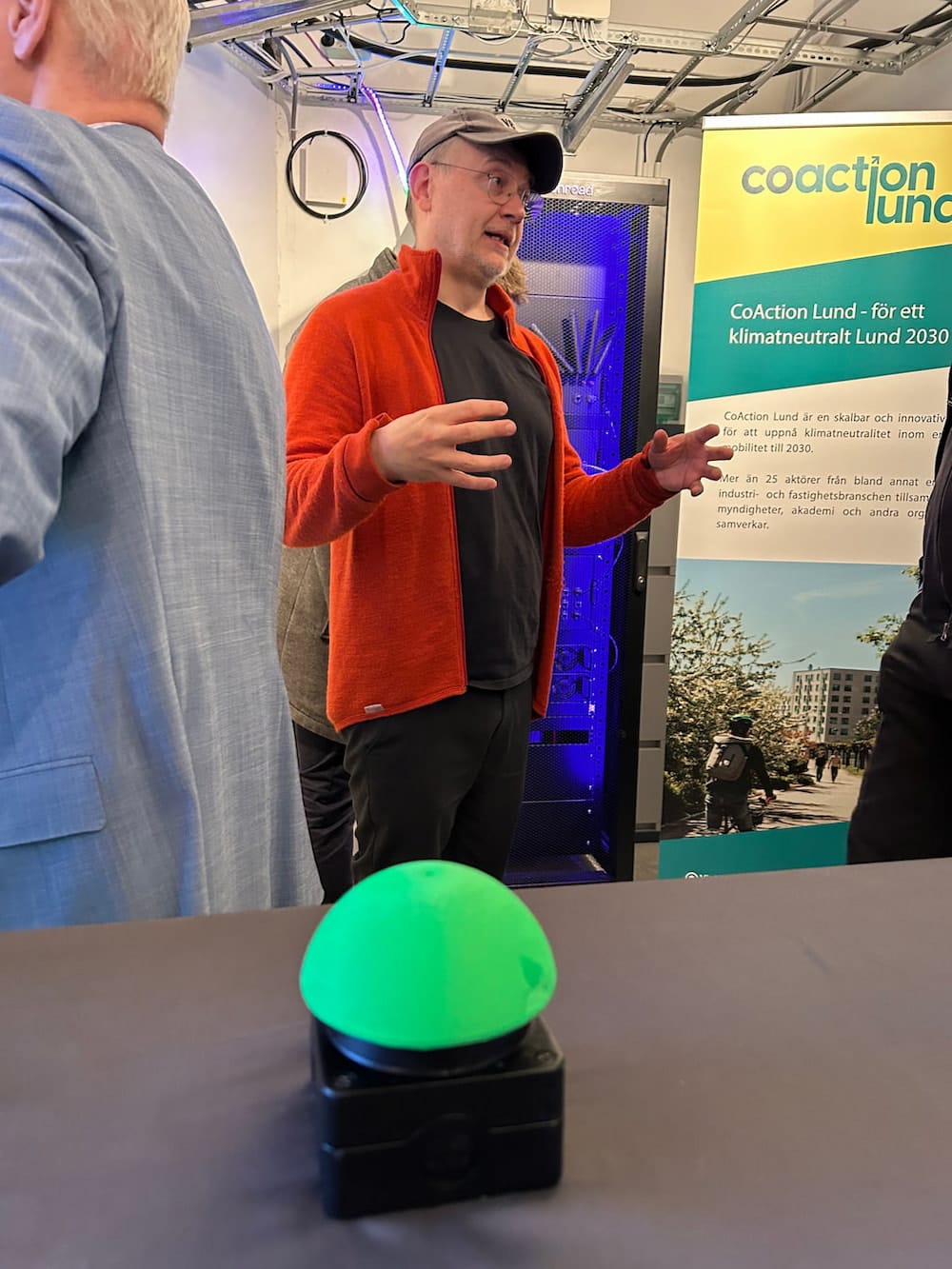
Now, a year later, ten buildings are being connected in the same way in Lund. Over lunch with a couple of people on the project, they tell me they're busy designing EnergyNet for seven new neighborhoods and urban development projects around Sweden.
That's actually exactly why we've gathered in the conference room. Jägersro outside Malmö, best known for its horse-racing track, is set to become a new neighborhood for 4,000 residents. A representative for that project is with us, along with Markus Paulsson, a key person from the City of Lund.
Find someone who talks about you the way Jonas Birgersson talks about power electronics
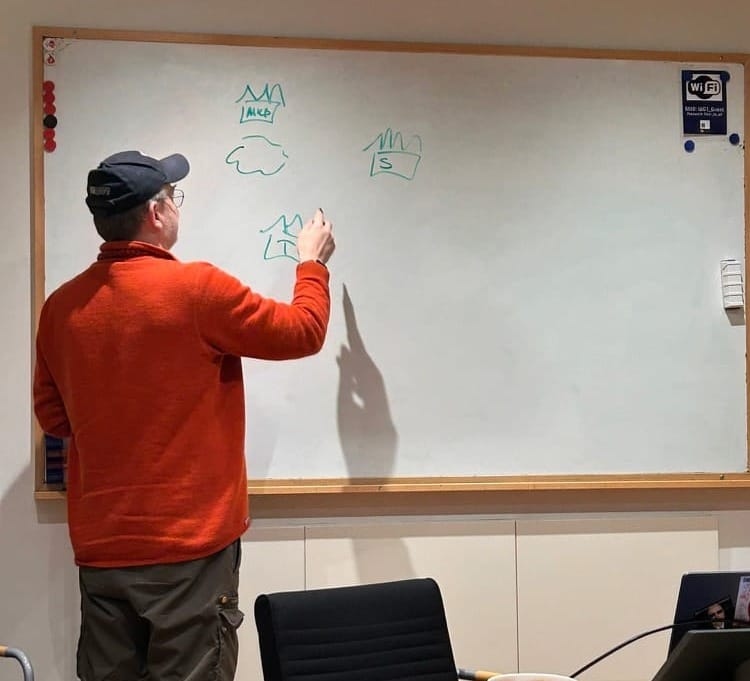
Birgersson starts a PowerPoint presentation but soon jumps up out of his chair and ends up in front of the whiteboard.
There he talks passionately about... power electronics!
You know the meme:

The new version goes: Find someone who talks about you the way Jonas Birgersson talks about power electronics.
If you don't have the same feelings for power electronics as he does – or even know what it is – don't worry! Most people don't.
I didn't get it either until quite recently, but I now realize it's one of those things that's very useful to know about if you want to understand the future. It's one of those technologies that works in the background, but its development over the past few years has been dramatic.
You don't need to understand exactly what power electronics is, but rather what it does and why what's happening now will lead to major changes.
The current electricity grid is a water hose
Let's start with the current grid and the role of power electronics in it.
Think of the electricity grid as an enormous system of water hoses. In a few places, water is pumped into the hoses, and in lots of places you can get water by turning a tap. For water to come out of the tap, the pressure in the hose has to be high enough.
If millions of people suddenly open their taps at the same time, the pressure across the whole system drops. Then the producers have to respond immediately by pumping in more water. If they can't keep up with the sudden demand, the pressure collapses entirely and nobody gets water.
In the same way, electricity is "pumped" into the lines, where it has to be consumed the same microsecond it's produced, and if the frequency in the grid isn't stable, you get a power outage.
The problem is that the electricity grid is, for the most part, dumb as a rock. The grid is blind and can't communicate with the people using the electricity. If I set my electric car to start charging at one in the morning, the car can't tell the grid that at that point in time I'm going to need such-and-such an amount of electricity and politely ask: "Is that okay?"
Instead it just switches the charging on with no warning, and the grid has to make sure it delivers immediately.
Power electronics are the grid's sluice gates
In other words, what would be needed are smart, programmable sluice gates that can sense the pressure themselves and decide exactly how much should be let through at any given moment.
That's what power electronics is.
Power electronics controls and shapes the electricity itself, instead of passively letting it flow wherever the pressure happens to carry it.
Unfortunately, this technology barely exists in the current grid. The reason is that it's very expensive and is only used to move very large amounts of electricity over long distances. That requires enormous converter stations. They're full of advanced equipment – like power electronics – that can handle very high voltage and very large amounts of power.
There you can, to a greater degree, decide how much power should be sent through the connection. You can say: Send 500 megawatts this way. Or 1,000 megawatts that way. Or reduce the flow. Or reverse the direction.
That's why it's so useful when you want to connect two electrical systems without forcing them to dance in exactly the same rhythm.
But this only exists in a few places. Out in the hose system itself, where you and I live, there are no such intelligent sluice gates. There the grid is passive copper and iron, unable to measure, think, or make decisions.
Why don't we build power electronics in everywhere?
The problem, as I said, is the cost. A system like that costs millions of dollars and takes years to build. That's why production is low and the cost trend is poor.
The electric car affects more than vehicles
So why is Birgersson so passionate?
Because something has happened that changes the playing field: The electric car.
An electric car is, in practice, a big battery on wheels, surrounded by power electronics.
The charger is especially significant. An electric-car charger is based on the same basic principle as your phone charger, but handles roughly a thousand times higher power.
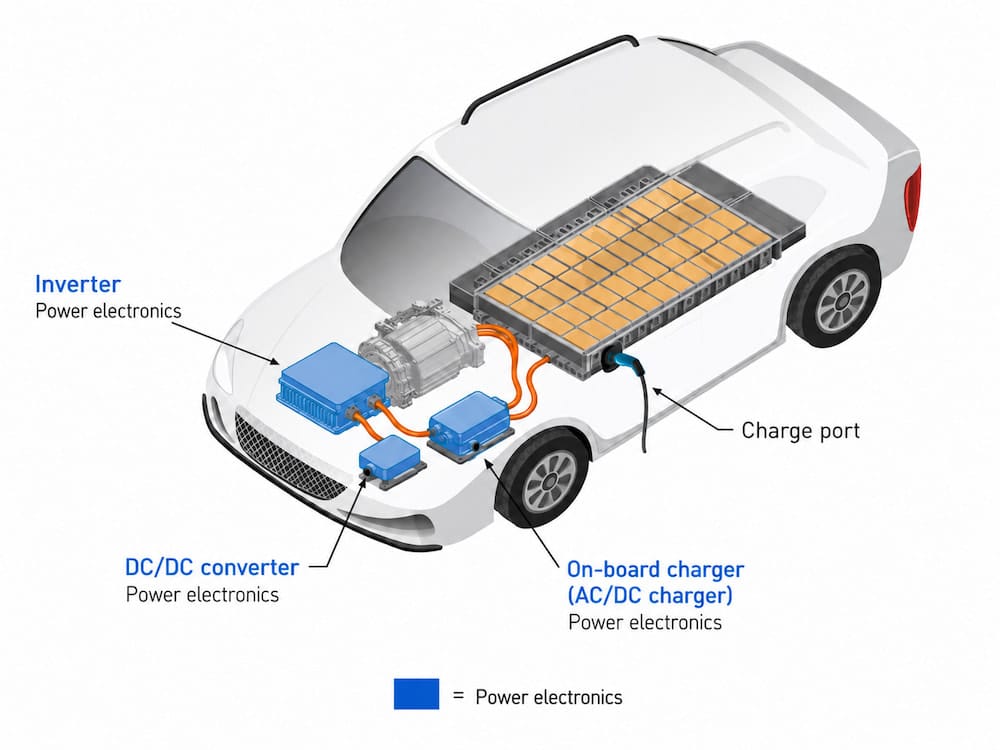
Because sales of electric cars have grown – and are growing – sharply, the use of the cars' power electronics has too. More production means we learn to make it faster, better, and cheaper.
This is called Wright's law. I've written about it several times before, but in short it's a rule of thumb that says that with every doubling of total production, the cost falls by about 20 percent.
If the product you make costs 1,000 dollars per unit when you've made 300 of them, then it drops to 800 dollars once you've made 600. And so on.
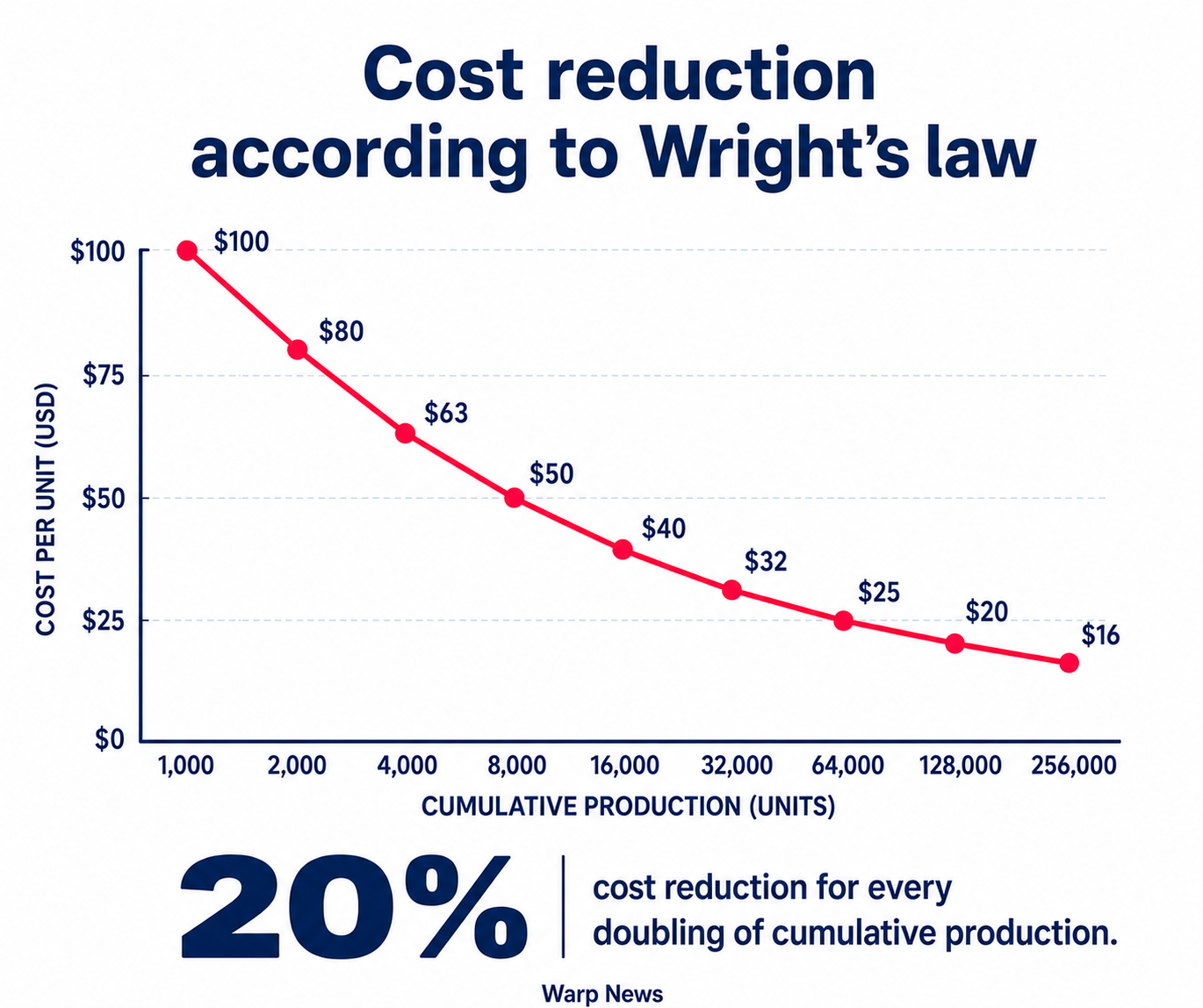
Power electronics has therefore dropped substantially in cost.
The power electronics in electric cars have, roughly speaking, become around 70 percent cheaper per car since the early electric-car phase. But because today's cars also have much higher power and better charging capability, the more relevant figure is per unit of capacity: There the cost drop looks to be around 80–85 percent.
That corresponds to a Wright's law effect of around 19 percent per doubling. Very close to the rule of thumb's 20 percent, in other words.
On top of that, yet another kind of law is at play here: Moore's law. That's a different rule of thumb, which in the case of power electronics says that power density doubles roughly every four years. This trend has been observed by researchers between 1970 and 2020.
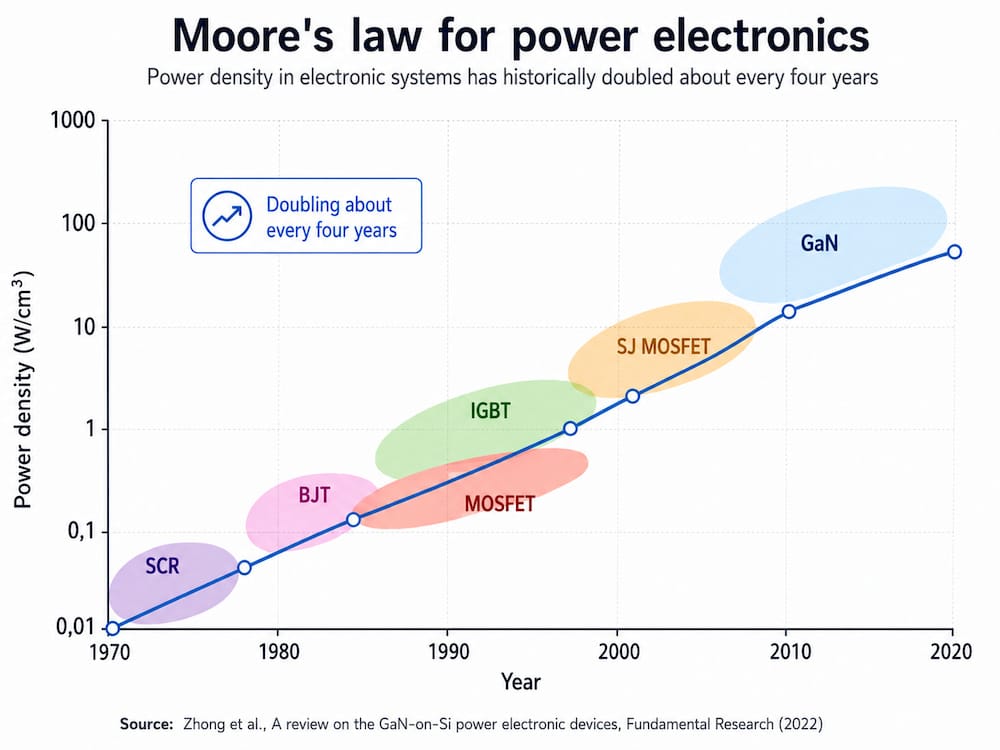
That means a converter of a certain size that handles 100 watts today will handle 200 watts in four years, 400 watts in eight years, 800 watts in twelve years, and so on.
This kind of exponential growth makes the numbers very large very quickly. In the original Moore's law, the number of transistors per chip went from 2,300 in 1971 to over 58 billion, 50 years later.
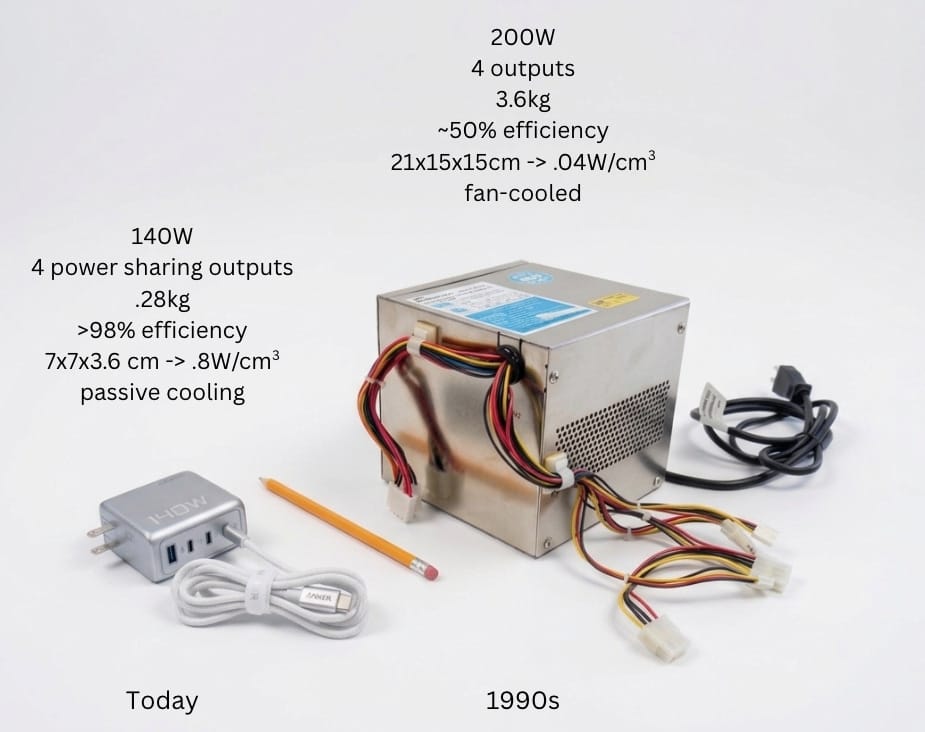
Higher power density means the same small device can do more work, or that the same work can be done by a smaller device. That's good because smaller and lighter power components take up less space, require less material, and often less cooling.
It means that now it's possible, cost-wise, to build the intelligent sluice gates into the system that keep track of and regulate what's happening out in every part of the grid.
The grid is getting more and more expensive
So we just stick power electronics into the current grid and solve the problems? Unfortunately it isn't that simple.
The grid still suffers from the same one-directional logic, even if we made it smarter. Even if you place smart technology closer to the users, the equipment is forced to submit to a grid that is still governed hierarchically and demands strict real-time balancing for the entire system at once.
The current grid has yet another problem: It's massively over-dimensioned and very expensive.
The grid has to handle the very highest peaks in usage, like an extreme cold snap, which might happen once every ten years. There's only one way to do that: To have grids and cables that can handle all the electricity used then.
In the industry it's called "fit and forget." You build a heavily over-dimensioned line, and then you don't have to worry about it anymore. It handles the extreme cases, but the rest of the time this expensive infrastructure largely sits unused.
It's as if we were to triple the number of lanes on every road in order to handle the Easter traffic without delays.
On top of that, the grid components themselves, like power transformers, are getting more expensive and are delivered more slowly.
Naturally, this makes it very expensive to build and maintain the grids.
In other words, it's no surprise that somewhere between 50 and 100 billion dollars will need to be invested in the Swedish grid alone in the coming years. Grids in other countries face investments that are at least as large. Guess what happens to your grid fee then…
The problems can be solved, if we learn from the internet
Despite its cost, the architecture of the grid itself worked reasonably well in the past, when the roles were locked into a handful of large producers and millions of passive consumers.
A problem arises in today's society when consumers suddenly acquire their own "pumps" in the form of solar panels, and start pushing power back into the system when it's sunny, or create massive new drains in the form of fast-charging electric cars.
So Birgersson & co. don't intend to fix the old grid. Instead they're building a new, parallel grid. One that can manage on its own, but can also cooperate with the old grid.
EnergyNet borrows its architecture and its lessons from how the internet works.
The internet isn't one single gigantic network, but a network of smaller networks that communicate with each other through set rules. EnergyNet applies exactly this structure to electricity distribution. It divides the grid into local zones, for example a single building or a block, which can largely function independently, but also talk to and cooperate with the other networks.
This architecture is made possible by power electronics. Especially the energy router, which is an advanced power-electronic machine. In the old system you have a dumb main fuse as your only protection against the grid. Either it's open and the electricity rushes through, or the fuse blows and everything goes dark.
The energy router instead works as a smart, digital sluice gate between your home and the outer grid. It isn't just open or closed. It measures the situation on both sides, negotiates digitally about what should be sent, decides the direction, and lets through only the exact amount of power both sides have agreed on.
For electricity to be sent or received, a digital negotiation has to take place via a shared language, Energy Protocol.
The router simply asks the outer grid:
"I have a surplus of electricity from my solar panels — is there anyone to receive it right now?"
Only when the answer is yes does the sluice gate open. Then the right amount of electricity is sent, in the right direction, at the right time.
This makes it impossible for your house to accidentally disturb the frequency in the large grid, and equally impossible for a disturbance in the rest of the grid to automatically knock out your house.
An everyday version of the same principle already exists in USB. The charger for your computer or phone has a cord with a USB port on one end and a power plug on the other. When you put the plug into the wall socket, you don't have to choose yourself exactly how much electricity should be transferred. The charger and the computer negotiate automatically according to an open standard.
Energy Protocol does something similar, but on a completely different level: between houses, batteries, solar panels, chargers, and local grids.
From real time to near real time
The old grid is fragile because the electricity has to be produced in the exact same microsecond you flip the switch. EnergyNet removes this rigid demand for "strict real time" and instead works in "near real time." Just as the internet uses data buffers so you can stream a movie without it stuttering, EnergyNet uses local batteries as energy buffers. The electricity is packaged and routed based on need and availability.
This architecture changes how we look at power outages. In the old grid, the electricity is either on or off. Lit or dark. EnergyNet makes sure that if the outer grid goes down, your own network can immediately disconnect and live off its own local battery. Through software, the house's most important functions are then prioritized, for example communication, the fridge and freezer, or medical equipment, while the jacuzzi gets cold.
Cheaper and cheaper to build EnergyNet
So the new grid needs batteries. Fortunately, the rise of electric cars has also brought another major advance over the past ten years: cheap batteries.
The same Wright's law has done its job here too. Since 2010, the cost of a lithium-ion battery has fallen by 93 percent. And for a battery in a stationary energy storage system, by 83 percent over the past ten years.
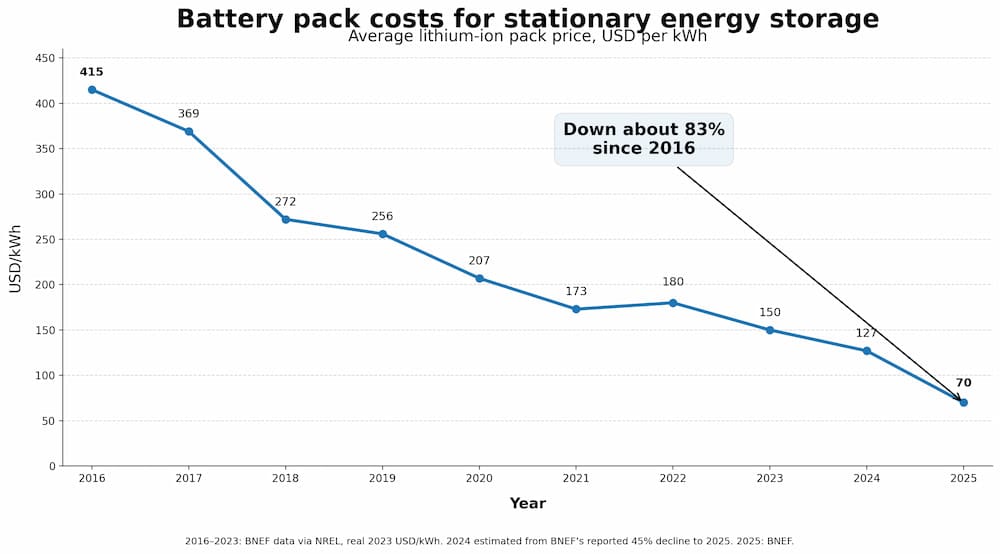
That means it will become cheaper and cheaper over time to build EnergyNet.
If EnergyNet picks up speed, starts spreading across the world, and becomes really big, that will in itself drive down costs, through increased production of the key components.
If you plan for this from the start when building a new neighborhood, it's of course the cheapest option.
That's exactly the message in the conference room to the representative from Jägersro. Build this into the plan and you'll be able to offer your future residents lower energy costs, clean electricity, and on top of that a strong resilience against disturbances. It's of course easier to knock out a grid with a few central points than a network of thousands of grids with no central points.
Energy Valley
But Birgersson isn't content with that. He wants to show that EnergyNet can create positive side effects in the surrounding area.
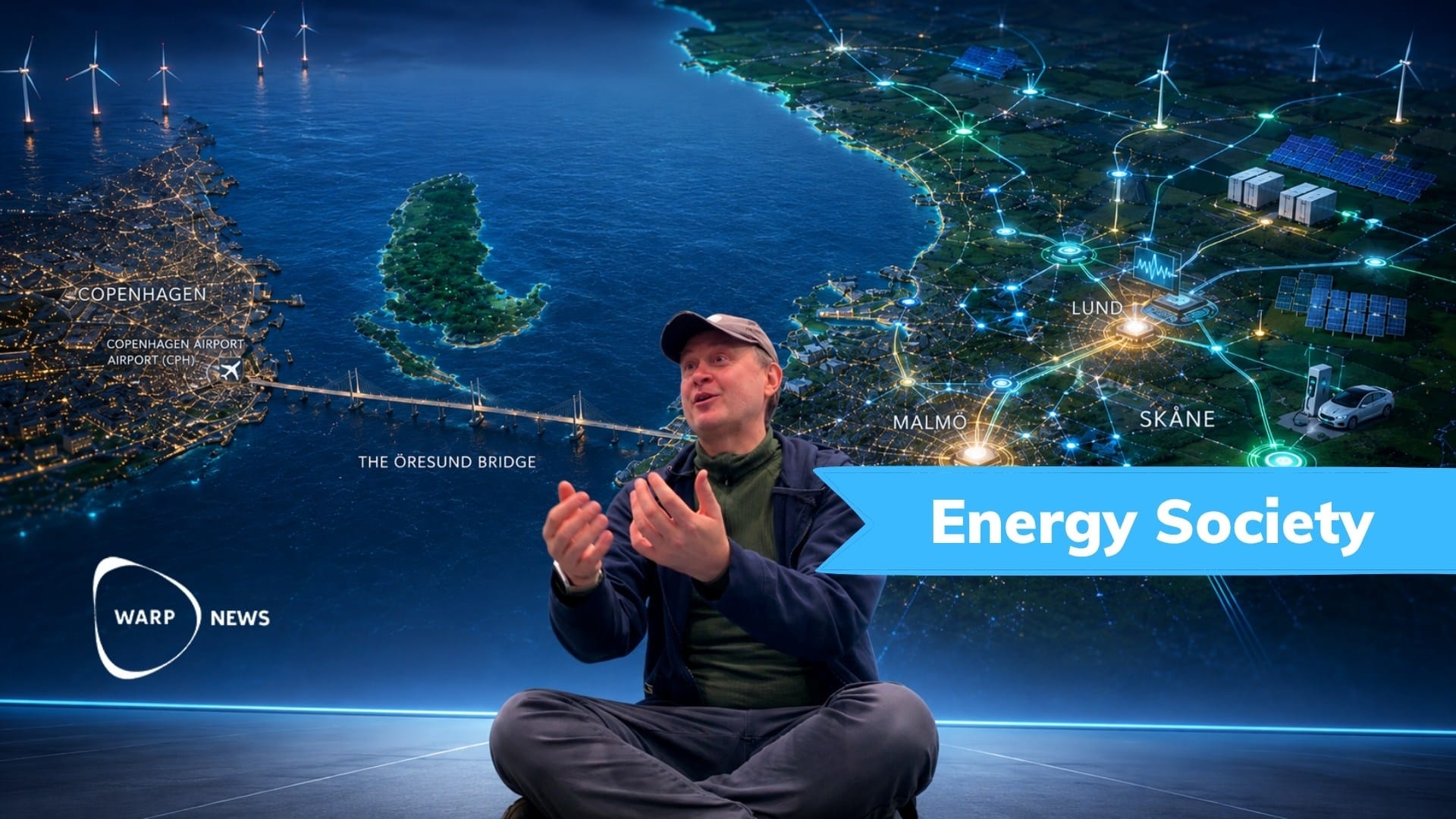
Now he's left the board and returned to the presentation slides. One of them shows a satellite image of the western Skåne–Copenhagen area.
Scandinavian Bay Area, it says.
With a wink, naturally, to California's San Francisco Bay Area, where Silicon Valley is located.
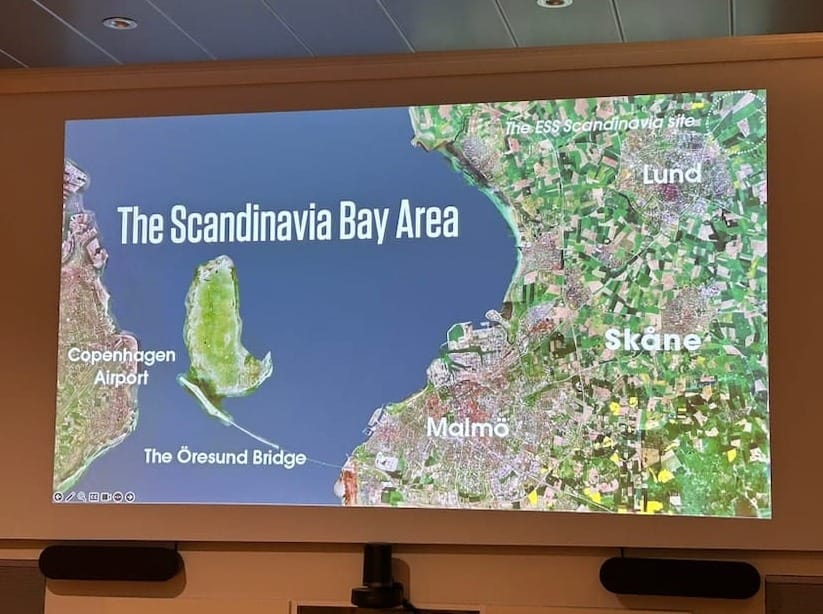
That's one of the reasons Marc Weiss is in the room.
Because he was, in fact, involved in creating the Silicon Valley we know today.
The year was 1981. Ronald Reagan had just taken office as president in a gloomy America. The American economy was wrestling with both high inflation and high unemployment, the steel and auto industries were in free fall, and the nation faced seemingly insurmountable and intense competition from efficient, state-backed Japanese and German industry.
In San Francisco's Bay Area, however, another industry was taking shape. The official birthplace of Silicon Valley is the garage where Bill Hewlett and David Packard built their first products back in the 1930s.
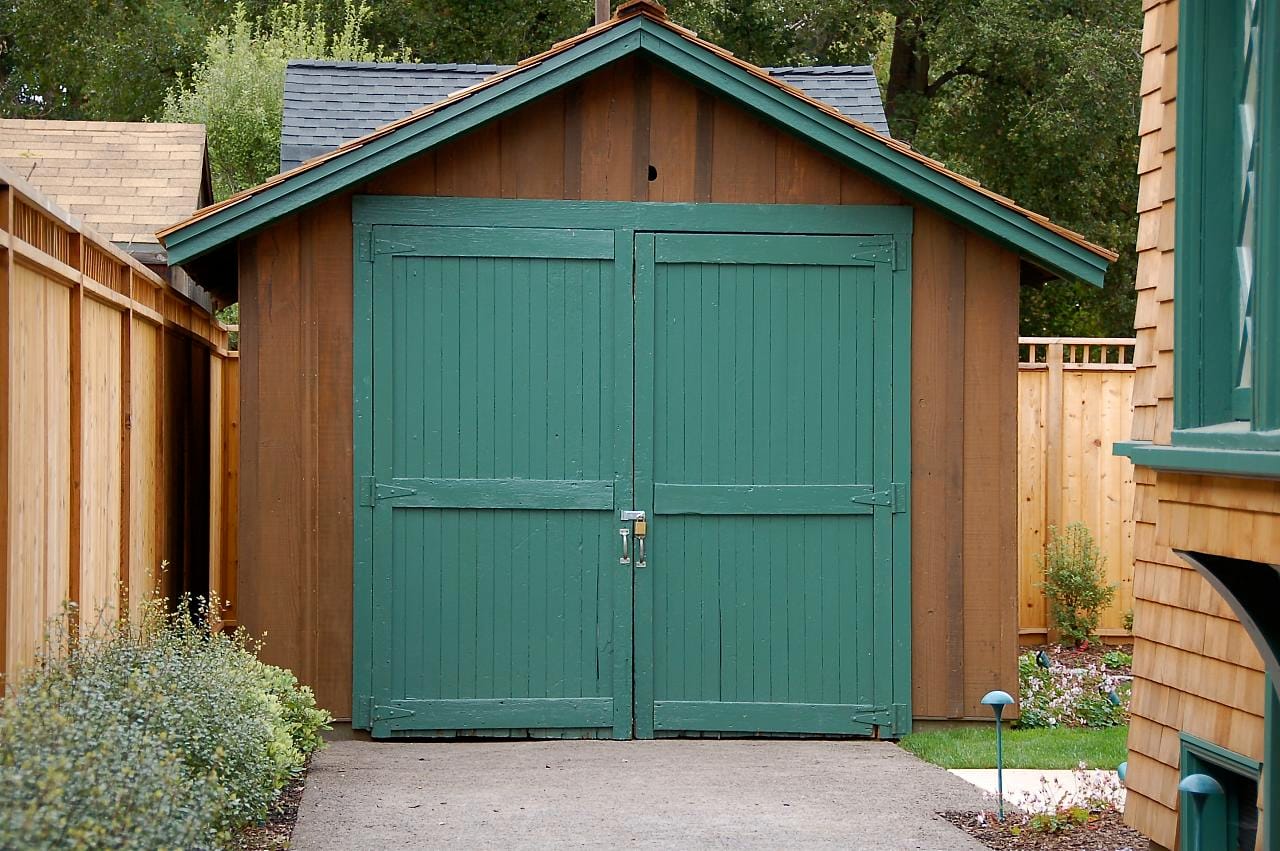
The place got its name only later, after the silicon-using semiconductor industry established itself there in the 1960s.
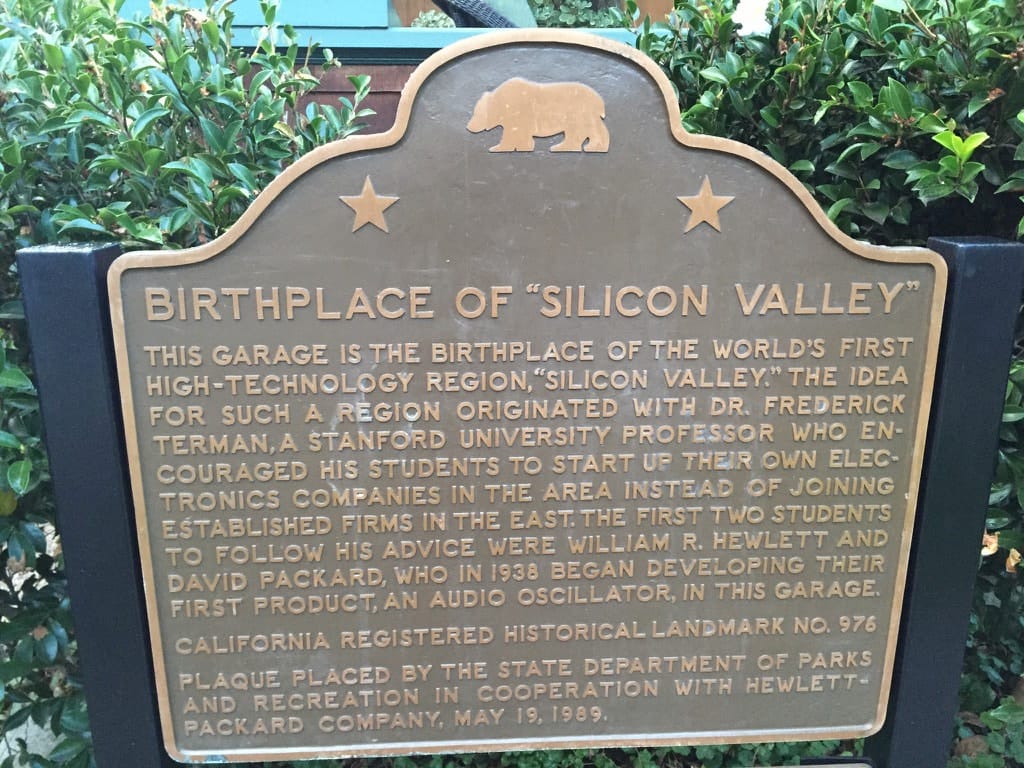
In the early 1980s, the area had reached a critical mass of garage entrepreneurship, exciting companies like Intel and Apple, strong personalities like Steve Jobs, venture capital, and not least research at Stanford.
Even so, Silicon Valley's future as we know it today was not at all predetermined. Several seeds had been sown, but no one knew whether they would grow into the meadow of flowers we have today, or dry out.
California's governor at the time, Jerry Brown, saw an opportunity and in 1981 set up The California Commission on Industrial Innovation. Its two co-chairs were David Packard and Steve Jobs among many other heavyweight names.
In 1982 they presented their proposals in Winning Technologies: A New Industrial Strategy for California and the Nation.
You can summarize the commission's contribution like this:
First, it gave a language to the Silicon Valley model: Innovation as the result of the interplay between universities, capital, entrepreneurs, education, and public policy.
Second, it connected the state's leadership directly with the representatives of the tech sector, which made high technology a central part of California's economic strategy.
Third, it led to, or contributed to, concrete investments in technical education and computer literacy.
Because both the political world and other actors took the strategy to heart, it became exactly the right nourishment for all the seeds that had been sown around the bay.
The commission's deputy director, and one of the report's main authors, was Marc Weiss.
44 years later he's in Lund, ready to use all his knowledge to help create a new valley: Energy Valley.
Seeds have been sown here too.
Here you'll find Lund University's Faculty of Engineering with a power electronics lab.
One of their researchers, Max Collins, now works on the EnergyNet project. He has a background at the neutron accelerator being built in Lund, ESS. There he worked on a very advanced power converter that takes energy from the grid, stores and shapes it, and delivers high-voltage pulses to the klystrons at exactly the right time and with very high quality.
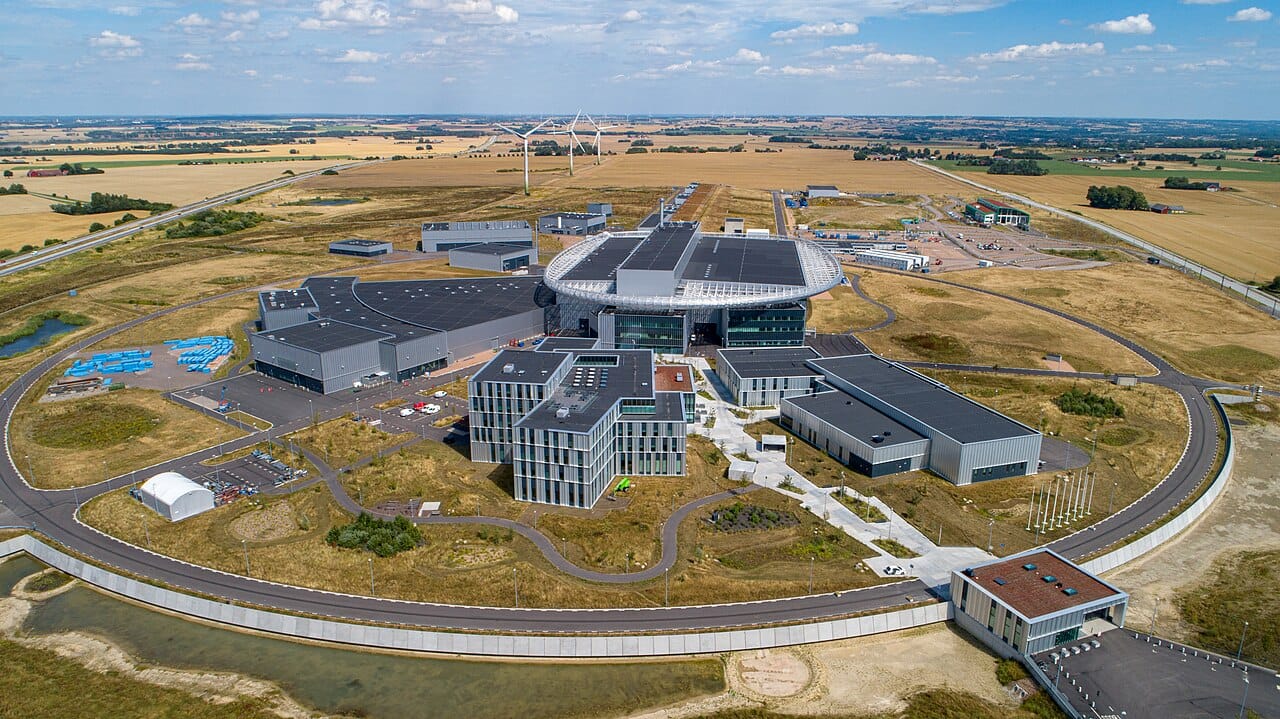
The City of Lund is fully engaged and very active in the project, where, as mentioned, Markus Paulsson has been a driving force from the very beginning. For example, the first EnergyNet was installed in the buildings of two municipal companies.
There are collaborations with both the Californian universities Stanford and UC Berkeley.
The university, municipality, and business community in Lund also have experience forming a successful cluster within biomedicine, which they can now translate to the energy field.
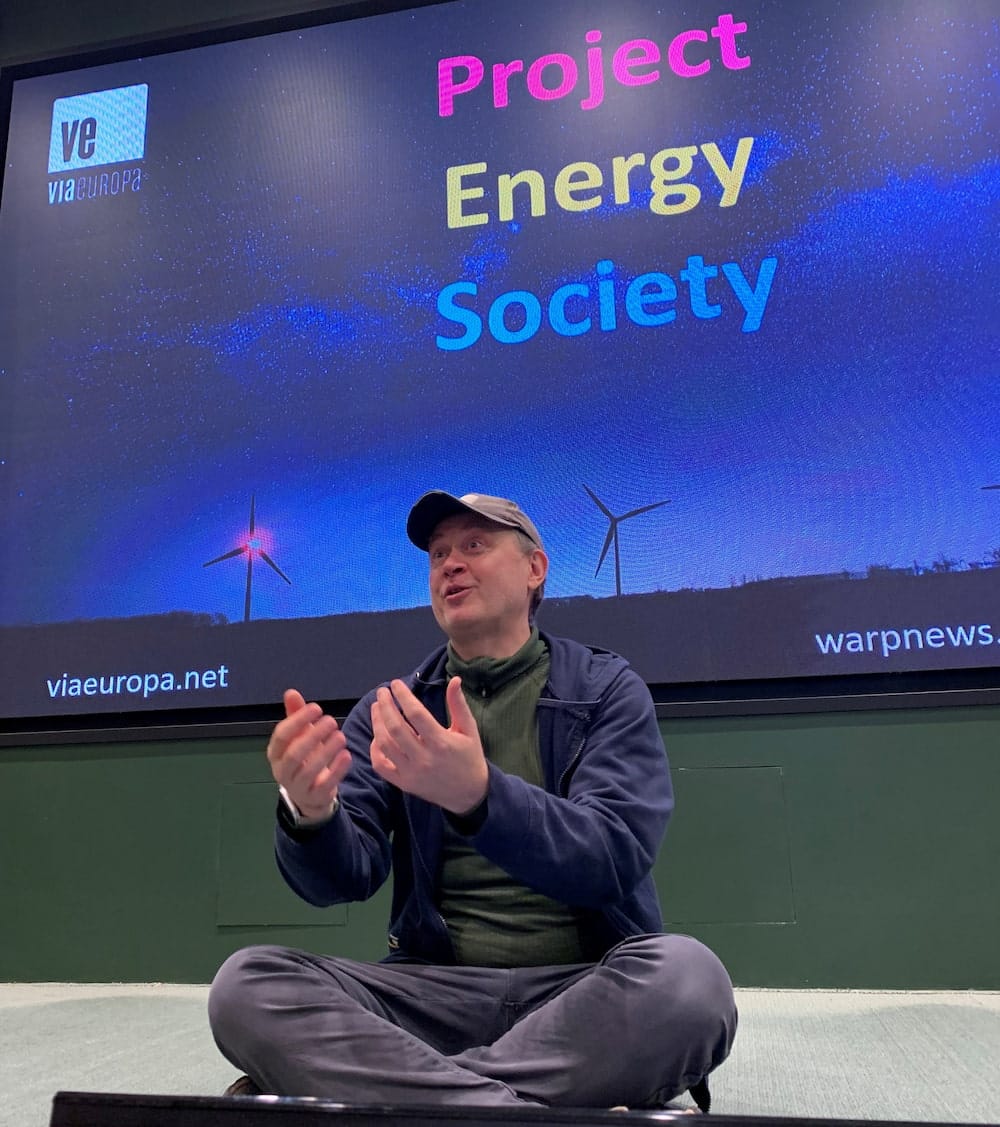
And of course they have the entrepreneur and visionary in Jonas Birgersson and the sharp colleagues and advisers he draws to himself.
He, too, has done this before, but back then it was the telephone network that got a kick in the nuts. He still carries some scars from that time, but those experiences are worth their weight in gold today.
Unique
In my research I can't find anyone in the entire world trying to create anything like EnergyNet. There are plenty of projects about making the current grid a bit smarter, and a few that build new microgrids on a small scale. But no one with the ambition to build an entirely new energy system, and the idea for how it should be done.
Personally, I'm convinced it's possible.
EnergyNet is an idea that is both revolutionary and completely self-evident. The architecture is already proven and the components are readily available and getting ever cheaper.
Nor does it require large financial outlays from taxpayers; instead property owners will be able to look at the numbers, see that it's profitable, and therefore make the investment.
The openness of the project — Energy Protocol is open source, for example — means it can quickly spread across the world, and anyone who wants to can get involved and even build their own grid.
One thing that is needed is political decisions that make it permitted to run electricity cables — the freedom cables — between properties. This is forbidden, or complicated, in large parts of the world.
But not, in fact, within the EU. The area was deregulated within the union a few years ago, and it became possible to create so-called energy communities.
That gives the EU both a head start and an enormous opportunity.
If EnergyNet is rolled out fastest and most widely in the EU, Europe will have the lowest energy costs in the world. It will also have by far the most robust grid in the world, one that can withstand natural disasters, terrorism, and war.
Of course, it also cuts the dependence on gas and oil from despicable dictatorships.
On top of that, it becomes an industry in itself that creates jobs and growth and attracts research, companies, and resources.
The center of that could become Lund, with a surrounding cluster — an Energy Valley — but all of Europe, and ultimately the whole world, will benefit.
Mathias Sundin
Angry Optimist
By becoming a premium supporter, you help in the creation and sharing of fact-based optimistic news all over the world.